LOI Negotiation Explained: Guide for Business Sellers

Navigating LOI negotiations: The pivotal moment that shapes your business sale
As a business owner eyeing an exit, you’ve likely spent years building your company into a valuable asset. But when a potential buyer presents a Letter of Intent (LOI), the real test begins. This non-binding document outlines the preliminary terms of a deal, yet its negotiation can make or break your sale. Mishandling it risks undervaluing your business, exposing weaknesses, or scuttling the transaction entirely.
LOI negotiations set the tone for due diligence, pricing, and final agreements. Sellers who treat them casually often face surprises later—buyers walking away over unresolved issues or demanding concessions. Understanding the process empowers you to protect your interests, signal strength, and steer toward a favorable close. From exclusivity periods to price adjustments, every clause matters.
In this guide, we’ll break down LOI negotiations from a seller’s viewpoint, highlighting pitfalls and strategies drawn from real-world deals. Whether you’re a first-time seller or refining your approach, mastering this stage maximizes your outcome and minimizes stress.
Table of Contents
- Why business owners need to understand LOI negotiation before selling
- LOI negotiation from a seller’s perspective
- How investors view this issue
- Common seller mistakes
- Practical checklist for business owners
- When should sellers start preparing
- How this connects to the overall business sale journey
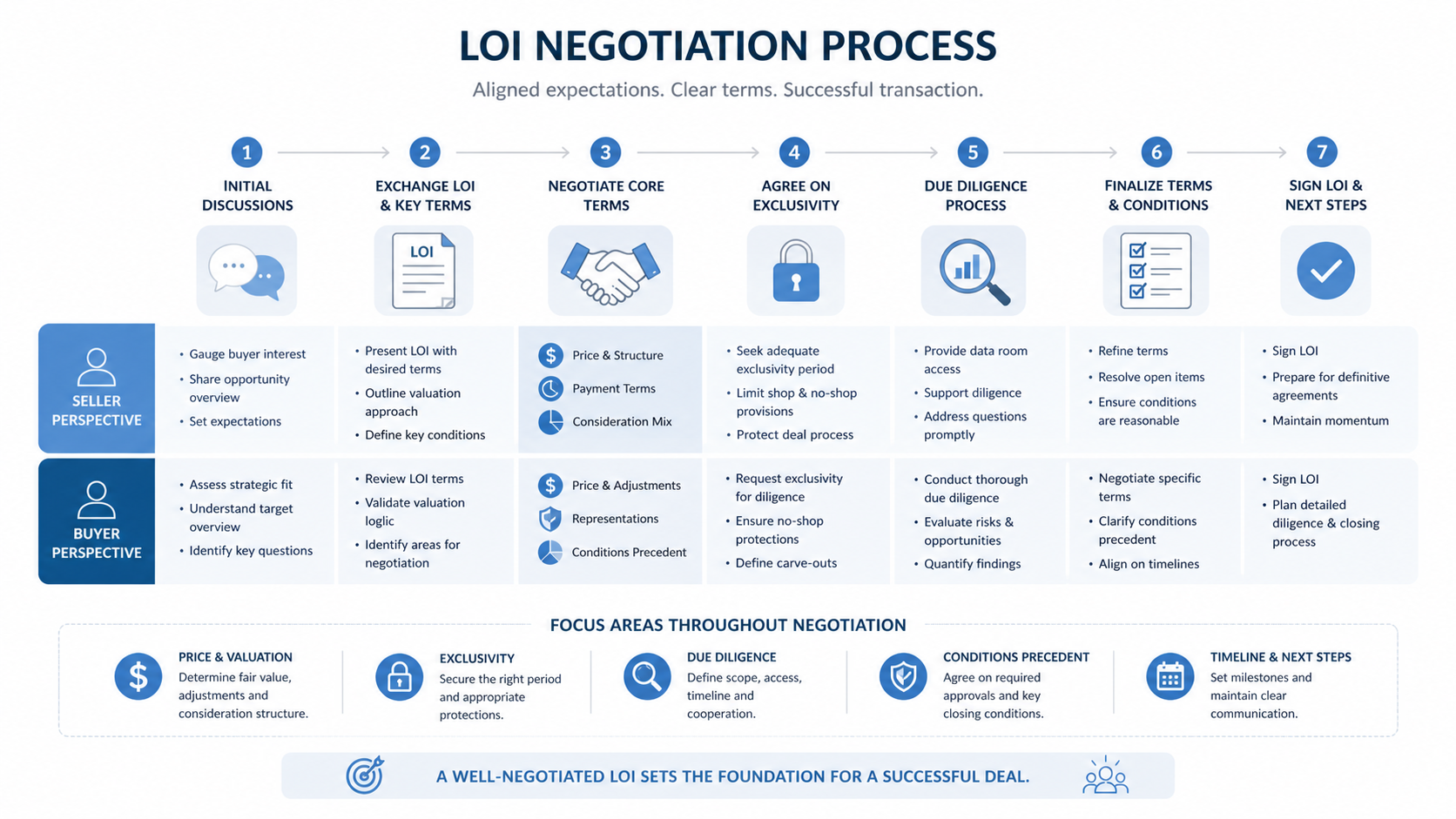
Why business owners need to understand LOI negotiation before selling
LOI negotiation isn’t just paperwork—it’s the foundation of your deal. Many sellers view the LOI as a mere formality, a handshake before the real work. This misconception leads to overlooked opportunities and vulnerabilities. Understanding it ensures you enter due diligence with leverage intact.
Consider the stakes: An LOI typically includes purchase price, payment structure, timelines, and conditions. Weak negotiations here can lock in suboptimal terms. For instance, broad due diligence scopes without limits invite fishing expeditions, where buyers probe endlessly without commitment.
Knowledge of LOI dynamics also helps you qualify buyers early. Serious acquirers propose realistic terms; tire-kickers offer vague LOIs to gain free intel. By grasping negotiation nuances, you filter out low-quality interest, saving time and preserving confidentiality.
Moreover, in competitive auctions, a well-negotiated LOI differentiates your process. Sellers who push for strong protections—like deposits or narrow break fees—signal professionalism. This attracts premium buyers and deters opportunists, ultimately boosting your valuation.
Finally, LOI terms influence post-sale life. Provisions on earn-outs, non-competes, or employee retention affect your legacy. Without insight, you might concede control unnecessarily. Proactive sellers use this stage to align the deal with long-term goals.
LOI negotiation from a seller’s perspective
From your seat, LOI negotiation is about maximizing value while minimizing risks. Start by evaluating the buyer’s proposal against your objectives. Key elements include the headline price, but scrutinize adjustments like working capital pegs or material adverse change clauses.
Prioritize binding provisions: Exclusivity periods should be short—30-60 days max—to maintain leverage. Demand a healthy deposit, say 1-5% of enterprise value, as good faith. This weeds out non-serious parties and provides protection if they back out.
Structure matters too. Push for upfront cash over heavy earn-outs, which tie payouts to uncertain future performance. If earn-outs are inevitable, negotiate clear metrics and dispute resolution mechanisms.
Confidentiality is non-negotiable. Ensure the LOI mandates NDA enforcement during due diligence. Limit the buyer’s access to sensitive data until milestones are met.
Timeline alignment is crucial. Align due diligence with your operational calendar to avoid disruptions. Include outs if the buyer drags feet.
Engage advisors early. M&A lawyers refine language, spotting traps like unlimited indemnities. Their input turns a standard LOI into a seller-friendly document.
In essence, approach as a collaborative yet firm dialogue. Respond promptly but thoughtfully, countering with data-backed rationale. This builds rapport while safeguarding interests.
Key LOI components sellers should focus on
- Purchase price and structure: Fixed vs. contingent; minimize collars or true-ups.
- Exclusivity and deposit: Time-bound no-shop with kill fees.
- Due diligence scope: Defined lists, no open-ended audits.
- Conditions precedent: Narrow MAC clauses, financing contingencies.
- Termination rights: Symmetrical fees for mutual breaches.

How investors view this issue
Strategic buyers prioritize synergies, seeking flexible pricing tied to post-close milestones. Financial buyers focus on downside protection—broad reps, warranties, and escrows. Both demand extensive data access early.
Yet, reputable buyers respect balanced LOIs. They know aggressive terms signal desperation, eroding trust. In tight markets, they offer deposits to stand out.
Understanding this mindset lets you anticipate counters. Frame your asks as mutual benefits: Limited scope speeds closure; deposits confirm commitment.
Common seller mistakes
Sellers often rush acceptance, forgoing review. Always sleep on it and consult experts.
Another pitfall: Ignoring non-price terms. Exclusivity without deposit halts your process.
Over-disclosing prematurely exposes leverage. Stick to teaser info pre-LOI.
Failing to run parallel processes limits options. Negotiate multiple LOIs if possible.
Neglecting reps and warranties—buyers use these for post-close claims. Cap liabilities.
For more on preparing documents that buyers request, check our guide on documents investors request during M&A.
Practical checklist or framework for business owners
Approach LOI negotiation systematically:
- Review internally: Align with advisors on must-haves vs. nice-to-haves.
- Assess buyer quality: Track record, funding, strategic fit.
- Counter strategically: Propose markups on price, shorten exclusivity.
- Secure bindings: Deposit, confidentiality, no reverse break fees.
- Define diligence: Schedule, scope, access controls.
- Plan contingencies: Walk-away triggers, parallel talks if non-exclusive.
- Document everything: Signed amendments for changes.
- Prepare data room: As detailed in our essential seller guide to preparing a data room.
This framework ensures comprehensive coverage. Customize based on deal size and buyer type.
When should sellers start preparing
Begin pre-market. Audit contracts, financials for red flags. Develop a target LOI template outlining ideal terms.
Once indications of interest arrive, simulate negotiations with advisors. This hones responses.
Ideal: 3-6 months pre-sale. Ties into broader readiness—see our factors that increase chances of a successful business exit.
In auction processes, preparation lets you dictate terms from the start.
How this connects to the overall business sale journey
LOI negotiation bridges teaser/marketing to due diligence and SPA. Strong LOIs facilitate smooth transitions, reducing drop-out risks.
It informs valuation—link to our EBITDA guide for pricing context.
Post-LOI, momentum carries to closing. Well-handled negotiations build buyer confidence, easing final hurdles.
To prepare holistically, download our seller checklist.
Ready to start your M&A journey? Get an initial assessment.
Need expert guidance? Book a confidential call with our team.