Documents Investors Request During M&A: Seller’s Essential Guide

The Documents That Can Make or Break Your M&A Deal
In today’s dynamic M&A landscape, particularly in markets like Vietnam that are bucking global trends with accelerating activity, business owners often underestimate the critical role of documentation. Investors demand a comprehensive set of documents during due diligence to assess risks, validate valuations, and ensure smooth transitions. Failing to prepare these can lead to prolonged negotiations, reduced offers, or outright deal collapse. Recent surges in deals, including hiring ramps by major banks in the region, highlight the urgency for sellers to get ahead.
From beneficial ownership disclosures to franchise registrations and corporate restructurings, regulatory shifts are adding layers of complexity. Sellers who organize their documents early not only build buyer confidence but also uncover internal issues that could erode value. This guide breaks down exactly what investors request, why it matters from your perspective as a seller, and how to prepare effectively without the hype.
Table of Contents
- Why business owners need to understand documents investors request during M&A before selling
- Documents from a seller’s perspective
- How investors view this issue
- Common seller mistakes
- Practical checklist for business owners
- When should sellers start preparing?
- How this connects to the overall business sale journey
Why business owners need to understand documents investors request during M&A before selling
Understanding the documents investors will request is foundational to any successful M&A transaction. As a business owner eyeing an exit, you might focus on valuation multiples or finding the right buyer, but due diligence is where deals live or die. Investors use these documents to verify your company’s financial health, legal standing, operational integrity, and growth potential.
In a market showing new momentum and opportunities for acceleration, such as through corporate restructurings, incomplete or disorganized documentation can signal deeper problems. Buyers will discount your enterprise value if they spot inconsistencies in financials or unresolved compliance issues like beneficial ownership regulations. Early preparation allows you to address gaps, strengthen your negotiating position, and potentially increase your sale price by 10-20% through demonstrated transparency.
Moreover, with global outlooks pointing to evolving trends into 2026, sellers who anticipate requests—ranging from standard financial audits to sector-specific filings—avoid surprises. This knowledge empowers you to timeline your preparations realistically, aligning with broader market surges driven by regional deal activity.
Neglecting this step often leads to rushed compilations under pressure, increasing error risks and buyer skepticism. Proactive sellers treat document readiness as a strategic asset, much like optimizing EBITDA in the months leading up to a sale.

Documents from a seller’s perspective
From your vantage as a seller, the document request list feels exhaustive, but it’s systematic. Investors categorize requests into financial, legal, operational, commercial, and HR buckets. Here’s what to expect:
Financial Documents: These form the core. Buyers want audited financial statements for the past 3-5 years, management accounts, tax returns, and cash flow projections. In Vietnam’s context, with new regulations on beneficial ownership, ensure ownership structures are clearly documented to avoid red flags.
- Balance sheets, profit & loss statements, and trial balances.
- Bank statements and reconciliations.
- Debt schedules and loan agreements.
Legal Documents: Contracts, licenses, and compliance records are scrutinized for liabilities. Prepare incorporation papers, shareholder agreements, and any ongoing litigation summaries.
- Material contracts with customers, suppliers, and partners.
- Intellectual property registrations and licenses.
- Regulatory filings, including recent franchise registrations if applicable.
Operational Documents: These reveal day-to-day realities. Provide organizational charts, key policies, and IT system overviews.
Commercial Documents: Sales pipelines, customer lists (anonymized), and marketing plans help validate revenue sustainability.
Gathering these from your perspective means digitizing everything into a secure data room early. Tools like virtual data rooms streamline access while tracking buyer views, giving you insights into their priorities.
How investors view this issue
Investors approach documents with a risk-mitigation lens. Strategic buyers seek synergies and integration ease, while financial buyers focus on cash flow predictability. In surging markets like Hong Kong’s deal scene or Vietnam’s counter-trend resilience, they demand proof of compliance amid new EU directives affecting suppliers and domestic franchise rules.
For instance, discrepancies in financials could indicate aggressive accounting, slashing valuations. Legal docs are probed for change-of-control clauses that might trigger customer exodus. Investors also assess ESG factors through policies and supplier audits, especially with global regulations like the EU CSDDD impacting Vietnam-based operations.
They value well-organized data rooms with clear indexing and Q&A logs. High-quality documents reduce perceived risk, justifying premium multiples. In capital markets contexts, such as tips for German deals, similar rigor applies—timely, accurate disclosures build trust and accelerate closings.
Common seller mistakes
Sellers frequently stumble on document preparation, leading to avoidable setbacks. One prevalent error is procrastination: starting the data room post-LOI when buyers expect immediate access. This delays timelines and erodes momentum. For deeper insights, check our post on common mistakes first-time sellers make.
Another pitfall is incomplete sets. Missing historical financials or unsigned contracts forces back-and-forth, frustrating buyers. Poor organization—scattered files without folders—signals disarray. Overlooking digital trails, like email approvals for contracts, leaves gaps.
Non-compliance with local regs, such as Vietnam’s beneficial ownership truths or franchise updates, raises flags. Finally, emotional attachments lead to withholding sensitive docs prematurely, stalling diligence.
Avoid these by conducting a pre-diligence mock review with advisors.
Practical checklist or framework for business owners
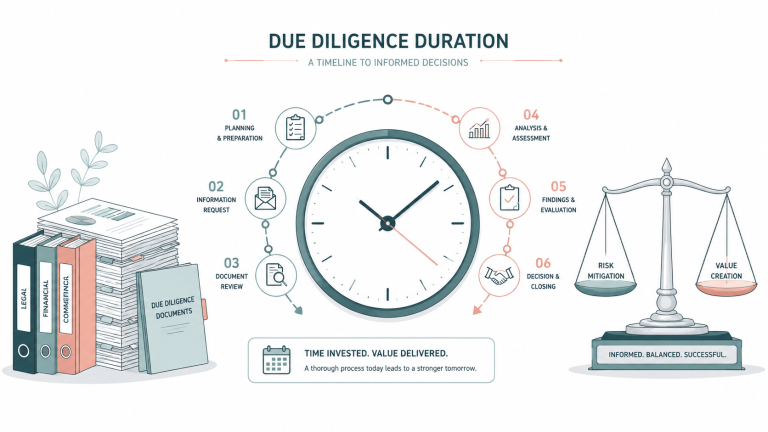
Here’s a step-by-step framework to compile investor-requested documents. Start with a master index matching standard lists.
- Financial Review (Months 1-2): Compile 3-5 years of audited accounts. Normalize for one-offs. Prepare financial statements meticulously.
- Legal Audit (Months 2-3): Catalog all contracts over a materiality threshold (e.g., 5% revenue). Renew licenses.
- Operational Deep Dive (Month 3): Document SOPs, IT assets, and supply chains.
- HR and IP (Month 4): Employment contracts, NDAs, patents.
- Commercial Validation (Ongoing): Customer concentration analysis, sales forecasts.
- Data Room Setup: Use indexed folders, watermark sensitive files.
- Mock Diligence: Simulate buyer requests.
For a full 12-month plan, see our 12-month preparation checklist. Tailor to your sector—urban projects or auto repurposing highlight evolving asset docs.

When should sellers start preparing?
Begin 12-18 months before marketing your business. Align with peak market windows, like Vietnam’s current M&A upswing. Early starts allow financial clean-up and compliance fixes, such as under new ownership rules.
If you’re 6 months out, prioritize financials and legals. Post-LOI, execution speed matters amid project terminations or capital increases signaling market flux.
Timing your sale ties directly to doc readiness—don’t wait for interest to spike.
How this connects to the overall business sale journey
Document preparation is phase 2 of the M&A process: pre-marketing readiness. It follows valuation and precedes LOI. Learn how M&A works in real life.
It integrates with types of transactions—asset vs. share sales demand different docs. Versus raising capital, M&A requires fuller disclosures. Visit our M&A blog for more.
Ready to assess? Start your M&A journey.
Streamline your preparation: Download our seller readiness checklist.
Need expert guidance? Book a confidential call with our team.