After Selling a Business: What Owners Should Prepare For

Introduction: Why Selling the Business Is Not the End of the Journey
For many business owners, selling a company is imagined as a finish line.
The day the deal closes, the wire hits the bank account, and the stress finally ends.
Freedom, relief, and satisfaction are expected to follow.
Yet many former owners describe the period after selling a business as:
- Disorienting
- Emotionally complex
- Surprisingly challenging
Some feel a sudden loss of purpose.
Others struggle with new obligations they didn’t fully anticipate.
Many realize—too late—that they prepared carefully for the sale itself, but not for what comes next.
The truth is simple:
Selling a business is not an ending. It is a transition into a new phase of life, responsibility, and identity.
This article explains what business owners should prepare for after selling their company—financially, professionally, and personally—and how this phase connects to the broader business sale journey.

Table of Contents
- Why business owners need to understand life after selling before the sale
- After selling a business from a seller’s perspective
- How investors view the post-sale period
- Common seller mistakes after closing
- A practical post-sale preparation checklist
- When should sellers start preparing for life after exit?
- How the post-sale phase connects to the overall business sale journey
Why Business Owners Need to Understand Life After Selling Before the Sale
Most owners invest years preparing to:
- Build the business
- Grow revenue
- Optimize valuation
- Close the transaction
Very few invest equal time preparing for what happens after the sale.
This gap leads to:
- Emotional shock after closing
- Poor financial decisions
- Regret about deal structure
- Friction with the buyer post-sale
Understanding the post-sale phase before selling helps business owners:
- Negotiate better deal terms
- Avoid unwanted obligations
- Prepare mentally for change
- Design a clear next chapter
In sell-side M&A, the quality of your post-sale life is shaped during pre-sale decisions.

After Selling a Business From a Seller’s Perspective
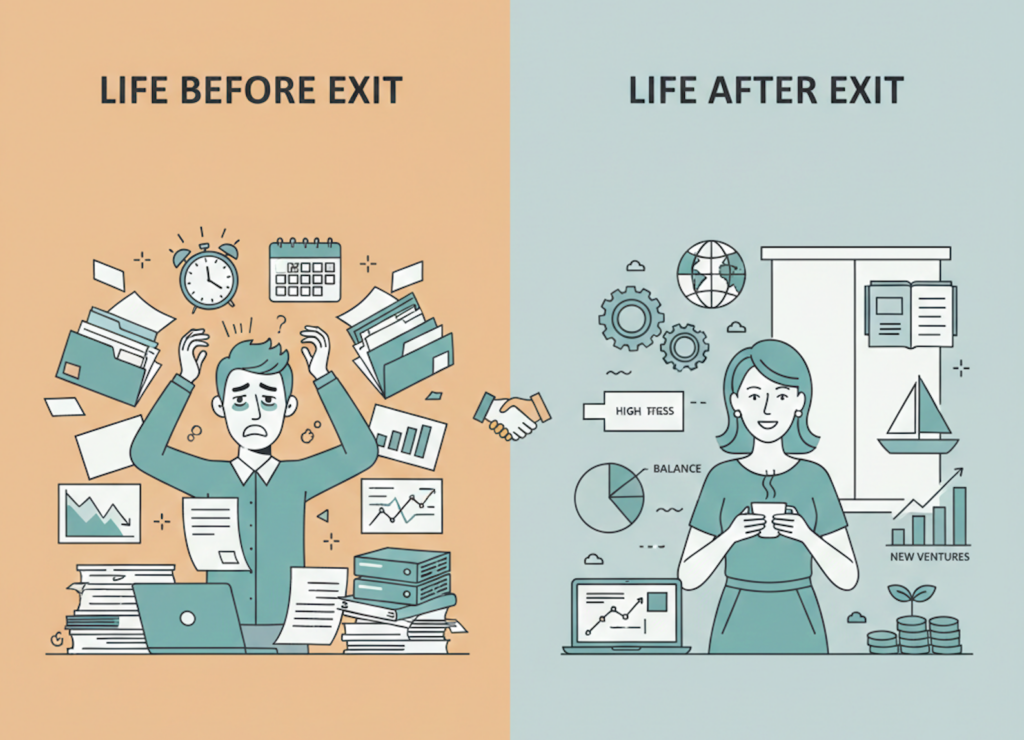
From the seller’s point of view, life after selling a business often unfolds in stages.
Stage 1: Relief and Decompression
Immediately after closing, sellers often feel:
- Relief from pressure
- Mental exhaustion
- Emotional release
This phase can last weeks or months and is completely normal.
Stage 2: Loss of Structure and Identity
Many owners underestimate how much of their identity was tied to:
- Being “the founder”
- Making daily decisions
- Solving problems
- Leading a team
After selling, the sudden absence of these roles can create:
- Boredom
- Anxiety
- A sense of emptiness
This is not failure—it is transition shock.
Stage 3: Reorientation
Eventually, sellers begin to:
- Redefine priorities
- Explore new interests
- Reflect on what they want next
Those who prepared for this phase experience clarity.
Those who didn’t often drift.
How Investors View the Post-Sale Period
Buyers care deeply about what happens after closing—often more than sellers realize.
Why Investors Focus on the Post-Sale Phase
From the investor’s perspective, the post-sale period is when:
- Risk materializes
- Integration happens
- Knowledge transfer occurs
- Performance expectations are tested
Investors ask:
- Will the seller stay engaged if required?
- Will key employees remain?
- Will customers feel continuity?
Typical Post-Sale Expectations
Depending on the deal, investors may expect:
- A transition period (6–24 months)
- Operational handover
- Strategic support
- Relationship continuity
Sellers who misunderstand these expectations often experience:
- Frustration
- Conflict
- Buyer dissatisfaction
Understanding post-sale dynamics helps sellers:
- Negotiate realistic commitments
- Avoid burnout
- Protect personal freedom
Common Seller Mistakes After Closing
1. Underestimating Emotional Impact
Many sellers assume happiness will be automatic.
When it isn’t, they feel confused or disappointed—without realizing this transition is normal and temporary.
2. Accepting Post-Sale Obligations Without Clarity
Some sellers agree to:
- Vague consulting roles
- Open-ended availability
- Aggressive earn-out conditions
These commitments can feel restrictive after the deal closes.
3. Making Poor Financial Decisions Too Quickly
Sudden liquidity can lead to:
- Overconfident investing
- Lifestyle inflation
- Pressure from friends or family
Without a plan, wealth becomes a new source of stress.
4. Losing Purpose Without Replacing It
Work provided:
- Structure
- Social interaction
- Meaning
Removing it without a replacement creates imbalance.
5. Neglecting Health and Relationships
Many owners realize after selling that:
- Health was postponed
- Relationships were deprioritized
Post-sale life is an opportunity—but only if approached intentionally.
A Practical Post-Sale Preparation Checklist
Use this checklist to prepare for life after selling a business.
1. Financial Readiness After the Sale
- Clear understanding of net proceeds
- Tax planning completed
- Investment strategy defined
- Personal spending plan created
Wealth without structure increases anxiety, not freedom.
2. Role & Obligation Clarity
- Defined post-sale role (if any)
- Clear time commitment
- Exit timeline documented
- Earn-out conditions fully understood
Ambiguity becomes frustration.
3. Identity & Purpose Planning
- What will replace daily work?
- What motivates you beyond money?
- What skills or interests do you want to explore?
Purpose doesn’t appear automatically—you design it.
4. Relationship Management
- Communication with family aligned
- Boundaries set with former employees
- Expectations managed with the buyer
Healthy transitions require clear communication.
5. Personal Well-being
- Health routines re-established
- Mental decompression allowed
- Time intentionally unstructured at first
Recovery is part of success.
When Should Sellers Start Preparing for Life After Exit?
Preparation for life after selling should begin before negotiations start.
Recommended Timing
- 1–2 years before exit: Ideal
- During deal negotiation: Essential
- After closing: Often too late
Early preparation allows sellers to:
- Negotiate better terms
- Avoid unwanted commitments
- Mentally detach at a healthy pace
Selling well includes living well afterward.
How the Post-Sale Phase Connects to the Overall Business Sale Journey
The post-sale phase is the final chapter of the seller journey—but it is shaped by every chapter before it.
- Seller Readiness influences emotional readiness
- Valuation & Deal Structure determine financial freedom
- Buyer Selection affects post-sale experience
- Due Diligence sets trust levels
- Negotiation defines future obligations
Sellers who view the sale holistically experience:
- Smoother transitions
- Fewer regrets
- Greater long-term satisfaction
Selling a business is not just a transaction—it is a life event.
If you are thinking about selling your business in the future:
These resources are designed to help you prepare not only for the sale—but for what comes after it.