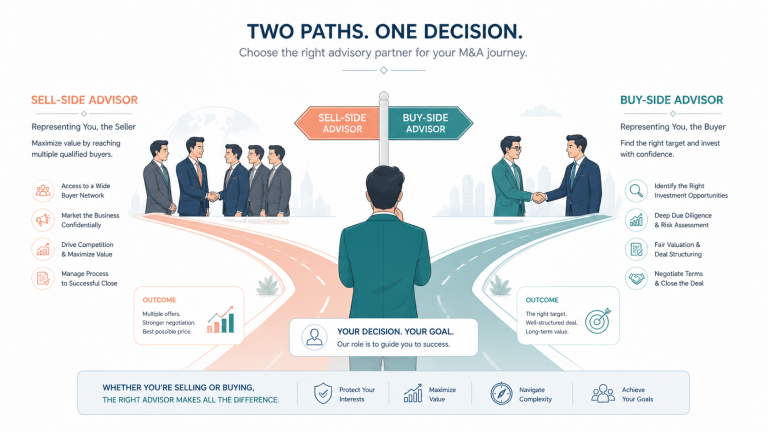
M&A Closing Checklist: Essential Steps for Business Sellers

Mastering the M&A closing: Your last chance to secure maximum value
As a business owner eyeing an exit, you’ve navigated negotiations, due diligence, and valuation hurdles. But the closing phase often trips up even seasoned sellers. This final stretch demands precision—overlooking a single detail can delay your payout, erode value, or derail the deal entirely. Imagine signing documents only to discover unresolved liens or missing approvals that force renegotiation at lower terms.
The M&A closing checklist isn’t just paperwork; it’s your safeguard against these risks. From transfer agreements to post-closing obligations, every step must align perfectly. Buyers scrutinize this phase closely, viewing it as proof of your operational integrity. Get it right, and you walk away with confidence and cash; mishandle it, and you risk reputational damage or legal entanglements.
Drawing from real-world transactions, this guide breaks down the essentials. We’ll explore why preparation matters, common pitfalls, and a practical framework tailored for sellers like you. Whether you’re in manufacturing, tech, or services, these steps apply universally, ensuring a seamless handoff.
Table of Contents
- Why business owners need to understand the M&A closing checklist before selling
- M&A closing checklist from a seller’s perspective
- How buyers view the closing checklist
- Common seller mistakes in M&A closing
- Practical M&A closing checklist for business owners
- When should sellers start preparing for closing?
- How the closing connects to the overall business sale journey
Why business owners need to understand the M&A closing checklist before selling
Closing represents the culmination of months—or years—of effort. Yet many sellers treat it as a formality, assuming lawyers handle everything. This mindset leaves you vulnerable. A comprehensive closing checklist ensures all preconditions are met, from regulatory nods to employee notifications, preventing last-minute surprises.
Consider the stakes: deals worth tens of millions hinge on this phase. Unresolved issues like outstanding taxes or IP disputes can trigger indemnity claims post-closing, eating into your proceeds. Understanding the checklist empowers you to oversee the process, spot gaps early, and negotiate protections in the purchase agreement.
Moreover, buyers expect sellers to drive closing efficiency. Delays signal disorganization, potentially justifying price adjustments. By mastering this, you not only de-risk the transaction but also enhance your leverage. It’s about transitioning smoothly while maximizing your net proceeds—key for funding your next venture or retirement.
In international deals, complexities multiply. Currency fluctuations, cross-border approvals, and differing legal norms demand a robust checklist. Proactive sellers who anticipate these thrive, turning potential chaos into a polished exit.
M&A closing checklist from a seller’s perspective
From your vantage, closing is about delivering the business as promised. Start with document readiness: board resolutions approving the sale, shareholder consents, and executed transfer deeds. Verify all assets listed in schedules match reality—no omissions here.
Financial close-outs are critical. Deliver audited year-end statements, updated working capital figures, and payoff letters for debts. Ensure escrow arrangements reflect negotiated holdbacks for warranties. Your legal team should confirm releases of liens and termination of contracts not assumed by the buyer.
Employee matters can’t be overlooked. Finalize transition services agreements, notify key staff per local laws, and settle incentives. For equity holders, prepare stock certificates or cap table reconciliations. Post-closing, plan for non-competes and earn-outs tied to performance milestones.
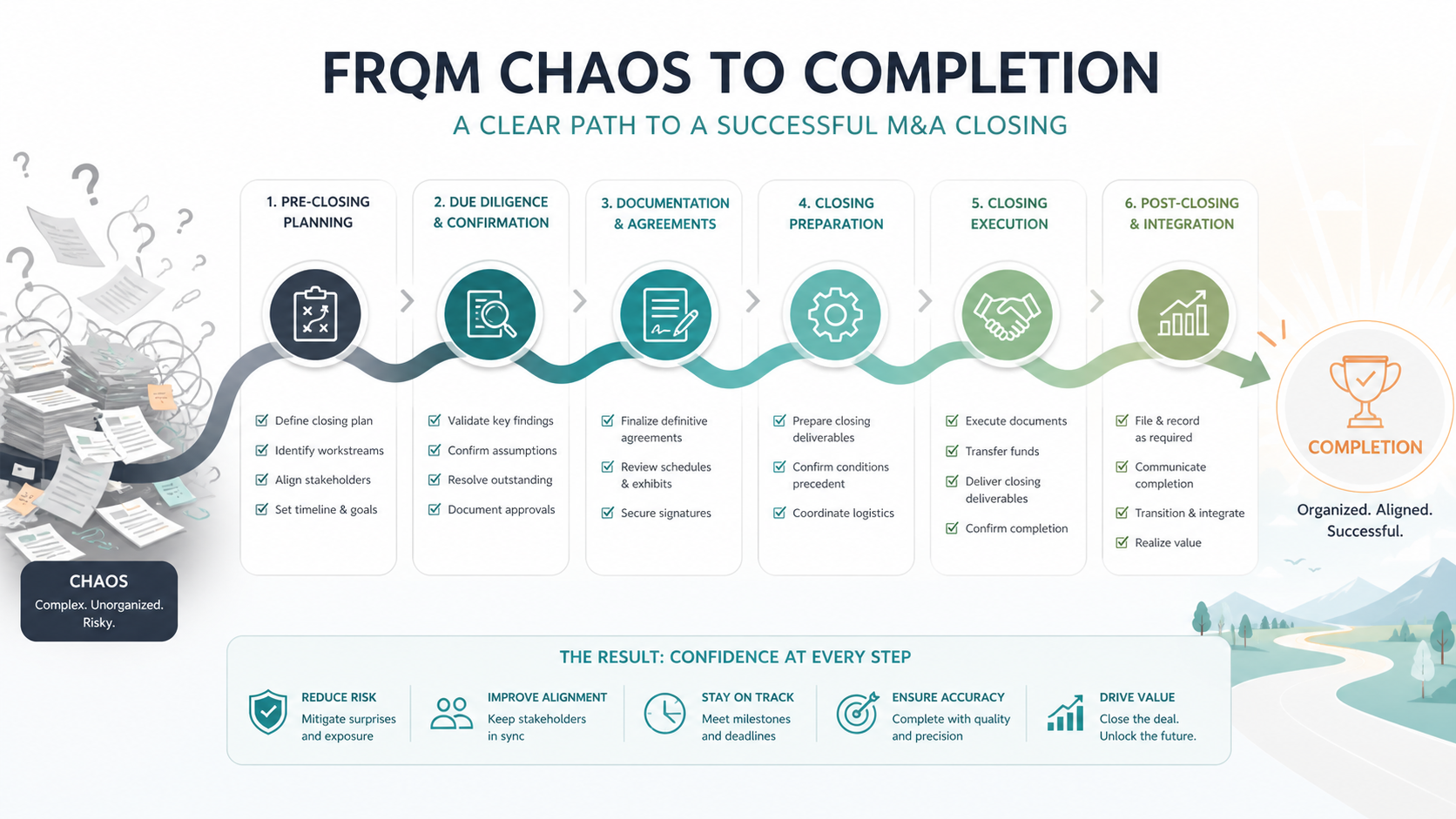
Tailor the checklist to your deal structure—asset vs. share sale alters priorities. In share deals, focus on corporate housekeeping; asset sales emphasize specific transfers. Always align with the definitive agreement’s closing conditions.
How buyers view the closing checklist
Buyers approach closing with skepticism, using the checklist to confirm representations hold true. They demand deliverables like officer certificates affirming no material adverse changes since signing. Compliance with covenants, such as maintaining insurance or operations in the ordinary course, is non-negotiable.
Regulatory filings top their list: antitrust clearances, foreign investment approvals, or sector-specific licenses. In regions like Indonesia, post-merger licenses and deal structure approvals are scrutinized intensely. Buyers also verify third-party consents for key contracts, ensuring no change-of-control disruptions.
Financial accuracy matters most. They pore over closing statements for purchase price calculations, including adjustments for net debt or inventory. Any discrepancies invite disputes. Escrow agents and wire instructions undergo rigorous checks to prevent fraud.
Ultimately, buyers see a flawless closing as validation of your business’s quality. It builds trust for future synergies, while slip-ups raise red flags about hidden liabilities.
Common seller mistakes in M&A closing
Sellers often rush document execution, leading to errors like unsigned exhibits or mismatched schedules. One overlooked signature can postpone closing by weeks, incurring penalties.
Financial reconciliations trip many: failing to update capex or receivables post-signing inflates adjustments against you. Ignoring working capital pegs results in surprises at the wire.
Regulatory oversights are frequent. Assuming local approvals suffice ignores layered requirements, especially in emerging markets where M&A evolves with new structures.
Employee leaks pre-closing breach confidentiality, eroding buyer confidence. Poor transition planning strands buyers with knowledge gaps.
Finally, neglecting post-closing filings—like tax forms or UCC terminations—invites future claims. These pitfalls erode value; awareness averts them.
Practical M&A closing checklist for business owners
Here’s a step-by-step framework to guide you. Customize based on your deal, but cover these essentials.
Pre-Closing (1-4 weeks out):
- Review definitive agreement conditions precedent.
- Prepare board/shareholder resolutions.
- Obtain third-party consents (key customers/suppliers).
- File regulatory notifications (antitrust, FDI).
- Conduct final inventory/physical asset count.
Financial Deliverables:
- Draft closing statement with price calculations.
- Secure lender payoff letters and lien releases.
- Reconcile working capital to peg.
- Prepare escrow agreement and funding instructions.
Legal & Corporate:
- Execute purchase agreement counterparts.
- Deliver officer’s certificate (no MAC).
- Transfer IP assignments, domain names.
- Notify employees/unions per WARN/analogues.
Day-of Closing:
- Confirm all wires cleared.
- Exchange keys/passwords/data room access.
- Sign closing press release if applicable.
Post-Closing (Immediate):
- Update corporate registries.
- Handle tax elections/forms.
- Activate transition services.
- Monitor earn-outs/warranties.
For deeper prep, review our guide on preparing a data room for M&A, as it feeds directly into closing deliverables.
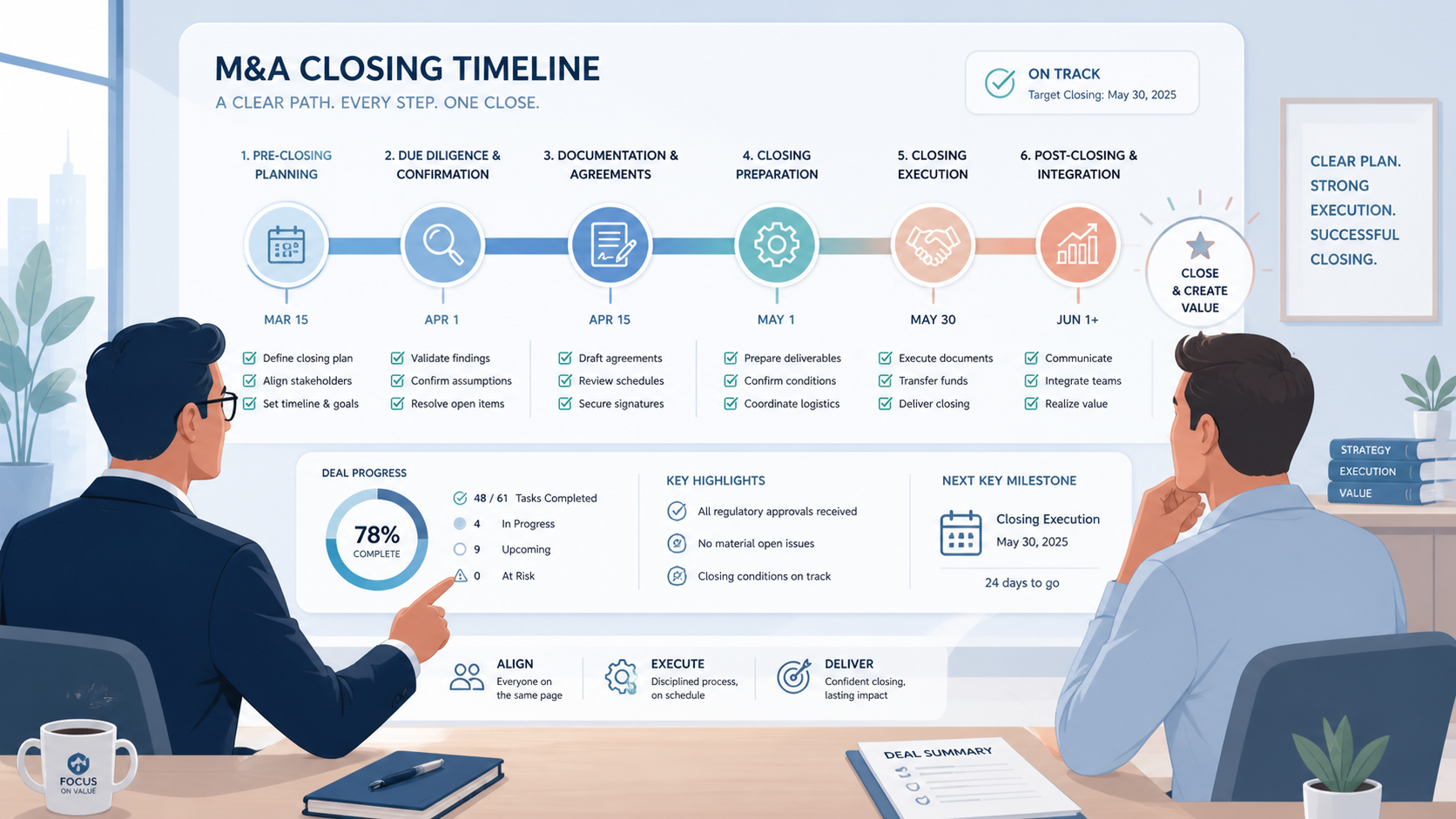
When should sellers start preparing for closing?
Begin at signing, not the night before. Allocate 30-60 days for deliverables, factoring holidays or fiscal year-ends. High-regulation sectors need 90+ days.
Assign a closing coordinator early—your CFO or external advisor—to track progress. Weekly check-ins prevent bottlenecks. If earn-outs loom, align metrics now.
International deals? Start cross-border counsel at LOI stage. This timeline ensures momentum carries to wire day.
How the closing connects to the overall business sale journey
Closing caps the M&A lifecycle: from teaser to term sheet, due diligence to signing. It validates prior stages—strong prep here proves your business readiness.
Links to valuation: accurate closes preserve multiples. Ties to seller readiness via clean data rooms and financials. Post-close, it launches integration, impacting earn-outs.
Explore our M&A blog for more on the full process. To gauge your position, download our seller checklist.
Ready to close confidently? Start your M&A journey or book a confidential call with our advisors.