Why NDAs can make or break your M&A deal from day one
In the high-stakes world of mergers and acquisitions, the nondisclosure agreement—or NDA—often feels like just another piece of paperwork. But for business owners eyeing an exit, it’s far more than that. It’s your first line of defense against sensitive information leaking into the wrong hands, and it sets the tone for the entire deal process. Rush into a poorly negotiated NDA, and you risk exposing trade secrets, customer lists, or financials without recourse. Worse, unfavorable terms can limit your flexibility down the line, turning a potential windfall into a liability.
From my years advising sellers, I’ve seen deals stall because owners didn’t scrutinize the NDA. Buyers push for broad protections that favor them, while sellers sometimes sign off too quickly, eager to move forward. The reality? A well-negotiated NDA balances protection for both sides, paving the way for smooth due diligence. It covers what information is shared, how long it’s protected, and what happens if it’s breached. Understanding these elements isn’t optional—it’s essential to safeguard your business’s value.
This guide breaks down NDA negotiation specifically for sellers. You’ll learn why it matters, key terms to watch, pitfalls to avoid, and a step-by-step framework to handle it confidently. Whether you’re preparing a confidential information memorandum or entering data room access, getting the NDA right early prevents headaches later.

Table of Contents
- Why business owners need to understand NDA negotiation before selling
- NDA negotiation from a seller’s perspective
- How buyers view this issue
- Common seller mistakes
- Practical checklist for business owners
- When should sellers start preparing
- How this connects to the overall business sale journey
Why business owners need to understand NDA negotiation before selling
Consider the core purpose: protecting proprietary data like IP, financials, and strategies. In M&A, buyers need this to assess fit, but sellers must ensure it’s ring-fenced. A weak NDA might allow buyers to shop your info around or use it against you in competitive bids. Strong negotiation ensures mutual obligations, clear definitions, and enforceable remedies.
Moreover, NDAs signal professionalism. Buyers respect sellers who push back thoughtfully—it shows you’re serious and prepared. This early step influences perceptions throughout the process. Neglect it, and you start from a disadvantaged position, potentially facing disputes over data misuse later.
Best strategies for resolving any issues that arise, such as negotiation leverage or structured dispute mechanisms, underscore why upfront clarity matters. Sellers who understand these dynamics maintain control, avoid valuation discounts from perceived risks, and accelerate toward closing.
In international deals, complexities multiply—jurisdictional differences, enforceability across borders. Knowledge here prevents nasty surprises, ensuring your exit aligns with long-term goals.
NDA negotiation from a seller’s perspective
As a seller, your NDA priorities differ from the buyer’s. You want narrow definitions of confidential information to avoid overcommitting everyday data, while securing broad protections for your core assets. Key areas to negotiate include:
- Definition of Confidential Information: Push for specifics—exclude public data, info independently developed by the buyer, or required disclosures by law. Broad buyer drafts often capture too much.
- Duration: Standard is 1-2 years post-termination, but tailor to your IP lifecycle. Perpetual for trade secrets if applicable.
- Permitted Use: Limit to evaluating the transaction only. No using your data for competitive analysis.
- Return or Destruction: Require certification of deletion upon request, with exceptions for legal retention.
- Remedies for Breach: Include injunctive relief alongside damages. Negotiate governing law and jurisdiction favorable to you.
From experience, sellers often template their own NDA for initial outreach, customizing per buyer. This flips the script, letting you control terms early. Include non-circumvention clauses to prevent buyers from poaching your employees or customers post-review.
Balance is key—overly seller-friendly terms might deter interest, but passivity hands leverage away. Aim for reciprocity: mirror obligations so buyers think twice about aggressive asks.
How buyers view this issue
Buyers approach NDAs defensively. They’ve seen deals where leaked info damaged their position or sparked litigation. They favor expansive definitions covering all shared materials, long durations (3-5 years), and unilateral rights to disclose to advisors.
Strategic buyers worry about your data fueling competitors; financial buyers focus on clean IP audits. They push for “no reverse engineering” and audit rights to verify compliance.
Understanding this helps sellers anticipate pushback. Buyers see NDAs as risk allocators—tight terms protect their investment in diligence. Concede on non-essentials like advisor disclosures (with sub-NDA requirements) to build goodwill.
In cross-border M&A, buyers insist on their home jurisdiction for disputes, citing familiarity. Sellers counter with neutral venues or arbitration for efficiency.
Common seller mistakes
Sellers new to M&A often stumble here, costing time and leverage:
- Signing the Buyer’s Template Unreviewed: These are buyer-optimized. Always redline.
- Ignoring Scope Creep: Vague language lets buyers claim anything as confidential.
- Overlooking Exceptions: Fail to carve out public info or regulatory needs.
- Weak Remedies: No specifics on breach consequences leaves you litigating basics.
- Forgetting Non-Solicit: Buyers might hire your team; protect against it.
- Rushing Without Legal Input: DIY saves short-term but risks long-term.
One frequent oversight: mutual vs. one-way NDAs. Insist on mutuality if you’re sharing first. Another: no caps on liability—negotiate them reasonably.
Avoid these by treating the NDA as a mini-contract, not boilerplate.
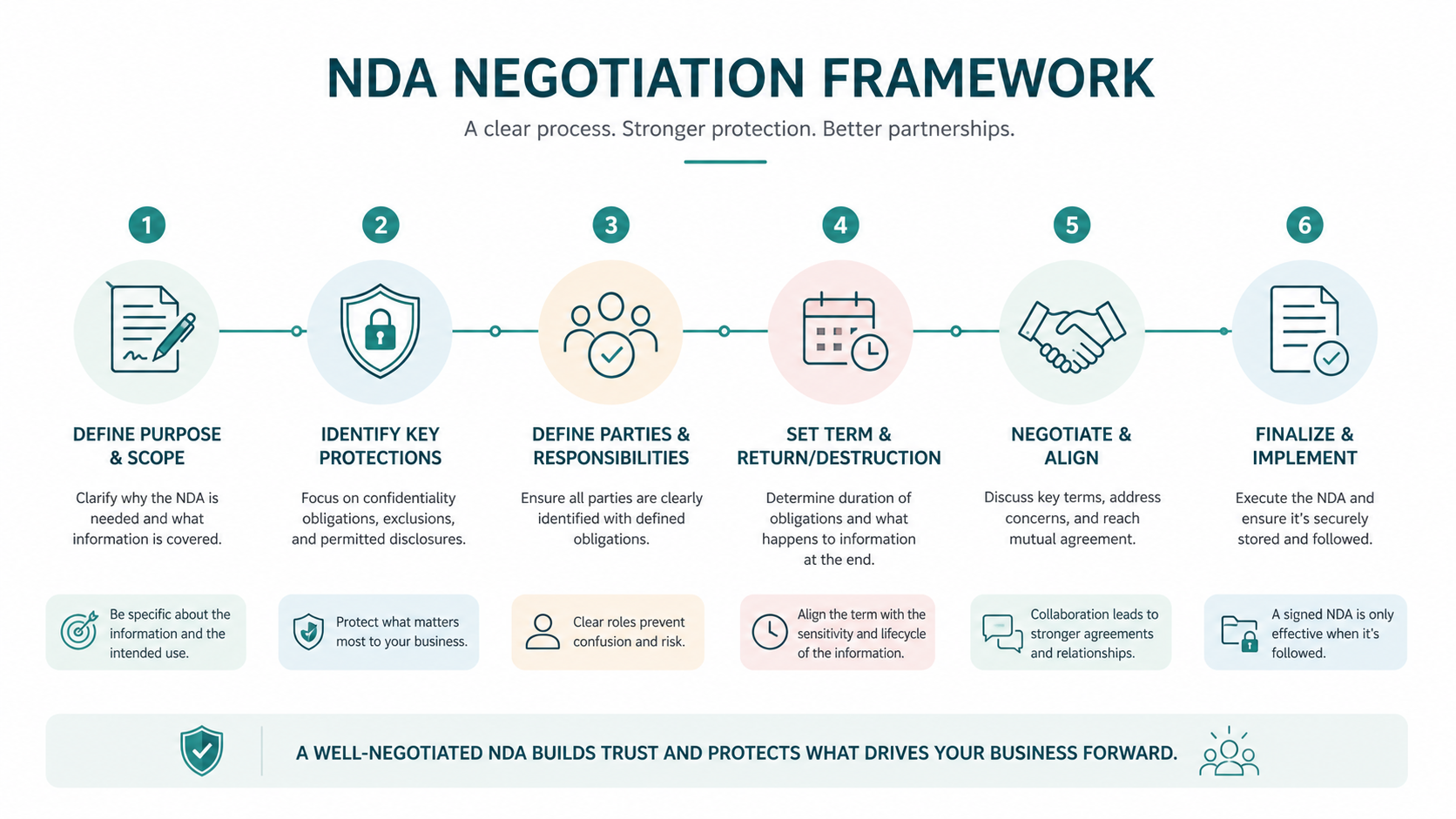
Practical checklist or framework for business owners
- Prepare Your Template: Draft a seller-friendly version covering essentials. Use it for teasers.
- Review Buyer Draft Promptly: Within 48 hours, mark changes in tracked mode.
- Prioritize Must-Haves: Confidential def, duration, use restrictions, remedies.
- Negotiate Commercially: Propose alternatives, not just deletions—e.g., time-limits on no-solicit.
- Seek Mutuality: Ensure symmetric obligations.
- Address International Angles: Specify governing law (yours or neutral), arbitration for disputes.
- Get Sign-Off: Legal review before execution.
- Track Compliance: Log disclosures, monitor access.
Pro Tip: Use a matrix comparing terms across buyers for consistency. This framework minimizes risks while keeping deals moving.
When should sellers start preparing
Begin NDA prep during exit planning, 6-12 months pre-marketing. Review past agreements, update templates, and brief your team on protocols.
Too early risks outdated terms; too late scrambles responses. Align with data room setup, as NDAs precede access.
For startups, tie to growth milestones. Established firms: refresh annually.
How this connects to the overall business sale journey
NDA negotiation kicks off the formal process post-teaser. It unlocks the confidential information memorandum (CIM), due diligence, and LOI. Weak NDAs haunt later stages—e.g., disputes delay closing.
It dovetails with documents buyers request, ensuring safe sharing. Strong NDAs build trust, aiding valuation and terms.
Integrate into your roadmap: readiness audit, marketing, negotiation, close. For deeper prep, check our tips on buyer appeal.
Ready to get started? Download our seller readiness checklist.
Take the next step confidentially. Start your M&A journey or book a confidential call with our advisors.