Spotting the red flags that signal it’s time to exit negotiations
In the high-stakes world of M&A, the thrill of a potential deal can cloud judgment. Business owners often pour years into building their companies, making the prospect of a sale feel like the ultimate validation. But what happens when the deal starts to sour? Recent discussions around Vietnam’s M&A landscape, including overviews of the real estate sector in early 2026 and events like the Vietnam M&A Summit 2025, underscore a volatile market where multi-million-dollar transactions are common, yet not all cross the finish line.
Walking away from a deal isn’t failure—it’s strategic preservation. Sellers who ignore warning signs risk undervaluation, prolonged stress, or even legal entanglements that erode their legacy. Transparency and governance, as highlighted in analyses of what truly drives value in M&A, become critical differentiators. For instance, opaque financials or mismatched expectations can turn a promising opportunity into a nightmare.
This guide equips you with the insights to recognize when to hold firm and when to walk. Drawing from real-world patterns in Vietnam’s evolving startup ecosystem and brand acquisition frenzies in 2025, we’ll explore the seller’s viewpoint, investor perspectives, pitfalls, and actionable steps. Whether you’re eyeing real estate consolidations or tech exits post-Shark Tank investments, knowing your exit ramps ensures you protect your hard-earned equity.
Table of Contents
- Why business owners need to understand when to walk away before selling
- Walking away from a deal from a seller’s perspective
- How investors view this issue
- Common seller mistakes
- Practical checklist for business owners
- When should sellers start preparing
- How this connects to the overall business sale journey
Why business owners need to understand when to walk away before selling
Every M&A process begins with optimism, but statistics show that up to 70% of deals fall apart before closing. For sellers, failing to recognize exit points early can lead to opportunity costs—time diverted from operations, confidential information exposed, or emotional burnout. In Vietnam’s dynamic market, where real estate M&A activity in Q1/2026 positions key players as million-dollar bridges, understanding deal-breakers preserves negotiating power.
Consider the broader ecosystem: Post-Shark Tank capital flows are reshaping startups, yet not every infusion leads to sustainable growth. Sellers must grasp that walking away maintains leverage for better terms elsewhere. It prevents the sunk-cost fallacy, where escalating commitment blinds you to flaws. Strong governance and transparency, pivotal in determining true M&A value, amplify this need—opaque deals rarely deliver promised outcomes.
Moreover, in a year of brand acquisition booms like 2025’s standout transactions, rushing forward risks undervaluation amid market volatility. Owners who master this skill not only safeguard wealth but also enhance future prospects, positioning themselves as savvy players in summits like Vietnam M&A 2025.
Walking away from a deal from a seller’s perspective
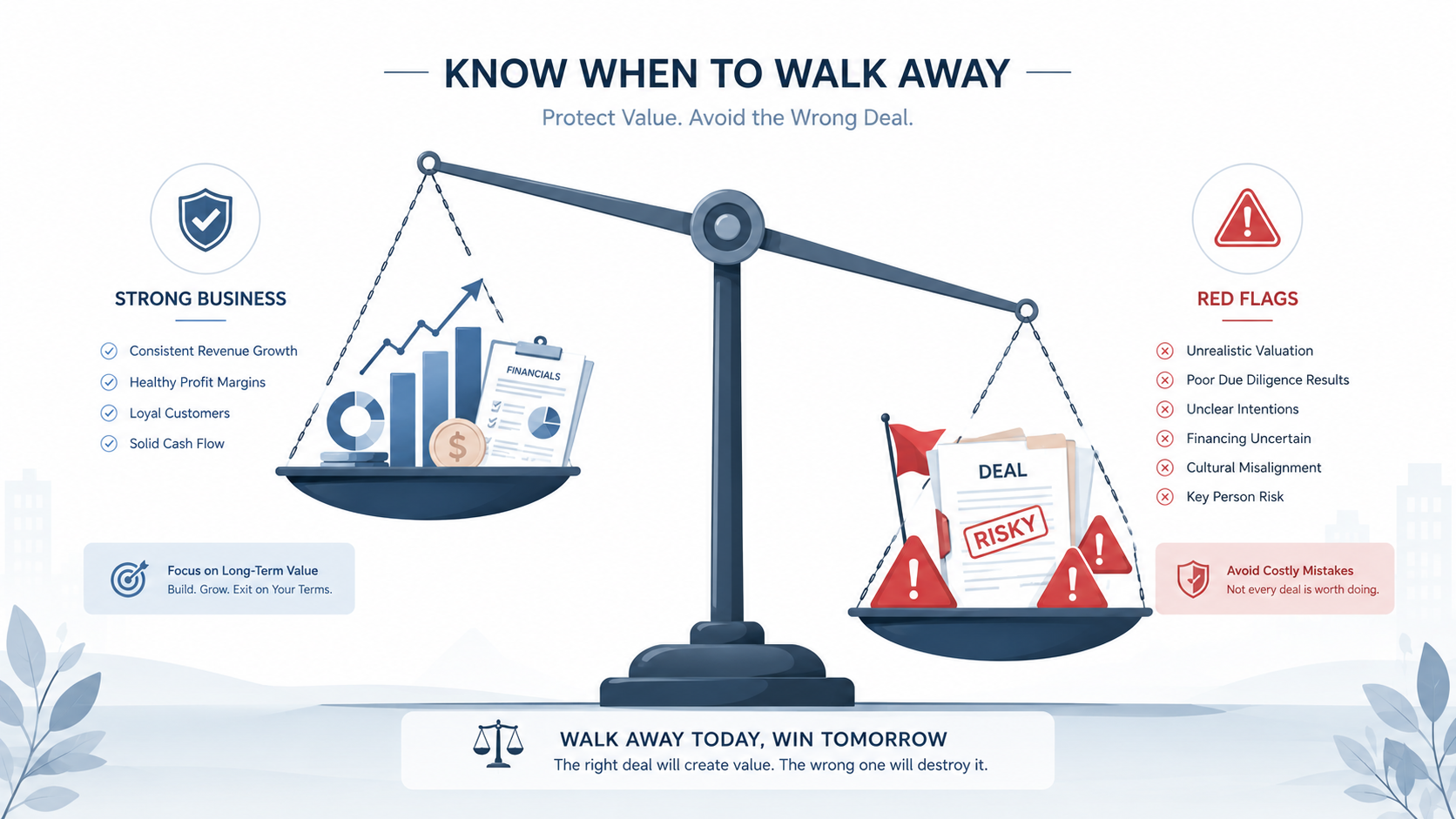
From the seller’s chair, the decision to walk feels personal. You’ve invested sweat equity, and a buyer’s interest validates that effort. Yet, red flags abound: drastic last-minute price cuts, demands for excessive concessions, or buyers dragging feet on due diligence. In real estate M&A, where enterprises must strategize to win, misaligned timelines or regulatory hurdles signal deeper issues.
Key indicators include cultural mismatches—buyers imposing incompatible visions—or unresolved contingencies like financing falls-through. Sellers often overlook emotional tolls: disrupted teams, leaked strategies benefiting competitors. Walking preserves integrity; as seen in startup funding shifts, forcing unfit partnerships dilutes long-term value.
Quantify it: If proposed terms slash your enterprise value by 20-30% from initial LOI, reassess. Prioritize holistic fit over closure pressure. This mindset shift empowers you to pivot to stronger suitors in Vietnam’s competitive arena.
How investors view this issue
Buyers—strategic or financial—approach walking away clinically. They walk when due diligence uncovers hidden liabilities, overinflated projections, or governance gaps. Transparency decides true value; poor records trigger immediate exits. In 2025’s turbulent brand deals, investors bailed on overvalued assets amid race-to-breakthrough pressures.
Strategic buyers prioritize synergies; if integration risks outweigh gains, they bolt. Financial buyers fixate on multiples—valuation multiples that don’t stack up prompt rejection. Vietnam’s real estate M&A demands winning plays; unprepared targets get sidelined.
They view persistent sellers suspiciously—desperation signals distress. Post-Shark Tank, investors seek scalable ecosystems, abandoning misfits. Sellers noting buyer hesitancy should mirror that ruthlessness.
Common seller mistakes
Sellers err by ignoring gut instincts, chasing sunk costs. Common pitfalls: Over-disclosing early, weakening position; accepting vague contingencies; or fixating on headline price ignoring key valuation factors like earn-outs.
- Emotional attachment: Treating the business like a child, blinding to flaws.
- Neglecting benchmarks: No comparable deals, accepting subpar terms.
- Timeline pressure: Rushing amid market hype, like 2025 acquisitions.
- Due diligence blind spots: Skipping legal due diligence prep, inviting surprises.
- One-buyer dependency: No alternatives, trapped in bad negotiations.
These amplify in Vietnam’s M&A, where summits herald new journeys but demand vigilance.

Practical checklist or framework for business owners
Arm yourself with this framework to evaluate deals objectively:
- Valuation alignment: Compare LOI to pre-sale valuation boosts and comps. Walk if >15% deviation unexplained.
- Due diligence readiness: Ensure clean financial due diligence. Red flags: Repeated data requests.
- Terms scrutiny: Analyze reps/warranties, indemnities. Excessive seller liability? Exit.
- Buyer credibility: Verify funding, track record. Soft commitments kill deals.
- Cultural/strategic fit: Simulate post-close; misalignment forecasts strife.
- Timeline health: Delays beyond 90 days signal issues.
- External advice: Consult advisors; solo decisions falter.
- Walk-away clause: Define thresholds pre-LOI.
For real estate winners or startup pivots, adapt to sector nuances like regulatory wins.
When should sellers start preparing
Preparation begins 12-18 months pre-market. Audit governance early—transparency wins bids. Build alternatives; single-buyer reliance is risky. In Vietnam’s post-2025 landscape, align with ecosystem shifts like Shark Tank inflows.
Monthly reviews: Stress-test projections, fortify data rooms. Engage advisors for M&A glossary fluency. Pre-LOI, set walk-away metrics. Early vigilance prevents late regrets.
How this connects to the overall business sale journey
Walking away is integral to the M&A lifecycle—from teaser to close. It links valuation (benchmark offers), due diligence (uncover truths), negotiation (secure terms), and post-sale transition. In Vietnam M&A Summit contexts, it shapes enterprise paths.
Integrate into our M&A blog insights on strategic vs. financial buyers. Mastery ensures optimal exits, avoiding why similars sell differently.
Ready to assess your deal risks? Download our seller checklist.
Thinking of starting your exit? Start your M&A journey.
Need personalized advice? Book a confidential call with our team.