Regulatory Approvals in M&A: Guide for Business Sellers

Regulatory hurdles that could derail your business sale
In the high-stakes world of mergers and acquisitions, few things can sink a deal faster than unexpected regulatory roadblocks. As a business owner eyeing an exit, you’ve poured years into building your company, only to watch months of negotiations unravel because of overlooked approvals from government bodies. Whether it’s antitrust scrutiny, foreign investment reviews, or sector-specific clearances, regulatory approval in M&A is the invisible gatekeeper that demands respect.
Recent trends across Southeast Asia highlight this reality. Vietnam is entering a defining phase of M&A growth, with new laws like the Law on Investment 2025 recalibrating the FDI framework. Meanwhile, the Philippines maintains strict FDI negative lists and sector caps that foreign buyers must navigate. Thailand’s merger control and competition laws require careful assessment by investors, and even established markets like Australia are rolling out mandatory merger regimes. These developments underscore a simple truth: ignoring regulatory dynamics isn’t just risky—it’s a recipe for deal failure.
For sellers, understanding these processes isn’t optional. It shapes deal timelines, valuation, and buyer interest. A smooth approval path boosts confidence; delays erode it. This guide breaks it down from your perspective, arming you with practical insights to safeguard your exit.
- Why business owners need to understand regulatory approval in M&A before selling
- Regulatory approval in M&A from a seller’s perspective
- How investors view this issue
- Common seller mistakes
- Practical checklist for business owners
- When should sellers start preparing
- How this connects to the overall business sale journey
Why business owners need to understand regulatory approval in M&A before selling
Regulatory approval isn’t a box-ticking exercise at the end of the deal—it’s a core element that influences every stage. Without a grasp of these requirements, sellers risk prolonged timelines, renegotiated terms, or outright collapse.
Consider the landscape: Vietnam’s IFC is creating a bigger stage for M&As, signaling increased activity that will draw more scrutiny. Decree 239/2025/ND-CP guides the Investment Law, positioning Vietnam strategically in Asia. Personal data protection under Decree 356 adds layers for tech or consumer-facing businesses. In the Philippines, M&A deals must watch FDI restrictions closely. Thailand demands merger control assessments, while Australia’s new regime mandates notifications.
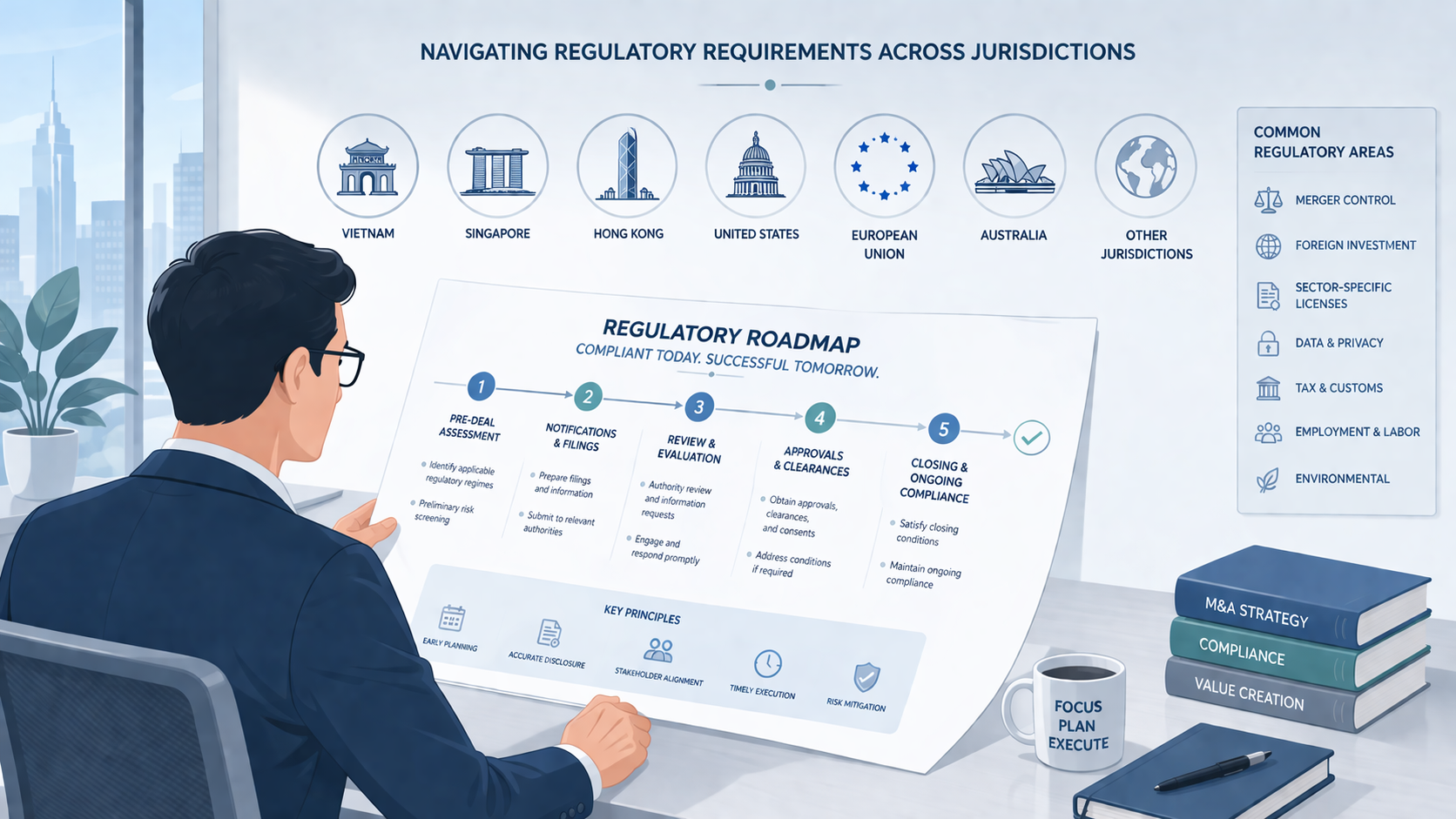
Why does this matter to you? First, it affects deal certainty. Buyers factor in approval risks when bidding; unresolved issues lead to lower offers or walkaways. Second, timelines stretch—some approvals take 6-12 months, eating into your post-sale plans. Third, costs mount with legal fees and compliance work. Proactive sellers who map these early turn potential pitfalls into strengths, making their business more attractive.
Ultimately, knowledge here separates successful exits from frustrating near-misses. It’s about protecting your hard-earned value.
Regulatory approval in M&A from a seller’s perspective
From where you sit, regulatory approval feels like navigating a maze with incomplete maps. You’re focused on operations and growth, not antitrust filings or investment committees. Yet, these processes directly impact your payout and peace of mind.
Key approvals vary by jurisdiction and sector. In growing markets like Vietnam, banking and finance guides highlight evolving rules. M&A is evolving as a new way forward, per regional insights. Sellers must identify triggers: Does the deal exceed thresholds for merger notification? Is foreign ownership capped? For cross-border deals, national security reviews loom large.
Your role? Provide clean, compliant data early. Disclose past filings, licenses, and any red flags like ongoing probes. This builds trust and speeds due diligence. In practice, sellers often prepare a regulatory roadmap alongside financials, outlining expected approvals and timelines.
The payoff is tangible: Deals with pre-cleared paths close faster and at higher multiples. Neglect it, and you’re reactive, vulnerable to surprises.
How investors view this issue
Buyers—strategics or financial sponsors—scrutinize regulatory risks as much as your EBITDA. They model worst-case scenarios: delays inflating holding costs, remedies forcing divestitures, or blocks killing the deal entirely.
In Vietnam, the defining M&A growth phase excites investors, but new investment laws demand recalibration. Philippines sector caps deter hasty bids. Thailand’s competition laws require pre-assessments. PRC rules on FDI add caution for Asia-Pacific plays. Australia’s mandatory regime shifts dynamics for larger transactions.
Investors prioritize ‘clear to close’ deals. They seek sellers who’ve engaged counsel for jurisdiction scans and pre-filings where possible. Comfort letters from regulators can be gold. From their lens, regulatory savvy signals a professional counterpart, reducing execution risk and justifying premium pricing.
As a seller, align with this view: Frame your business as regulatory-ready to stand out.
Common seller mistakes
Sellers trip over regulatory approval more often than they admit. Here are the pitfalls:
- Assuming it’s the buyer’s problem: Wrong. Shared responsibility means your inaction delays everything.
- Ignoring jurisdiction-specific nuances: Vietnam’s Decree 356 on data protection or Philippines FDI lists catch many off-guard.
- Underestimating timelines: Multi-month waits disrupt momentum; budget accordingly.
- Overlooking sector rules: Banking, telecom, or defense face extra hurdles, as noted in Vietnam’s 2025 finance guide.
- Poor documentation: Incomplete compliance records trigger deep dives.
Avoid these by treating regulatory prep like financial audits—routine and rigorous.
Practical checklist or framework for business owners
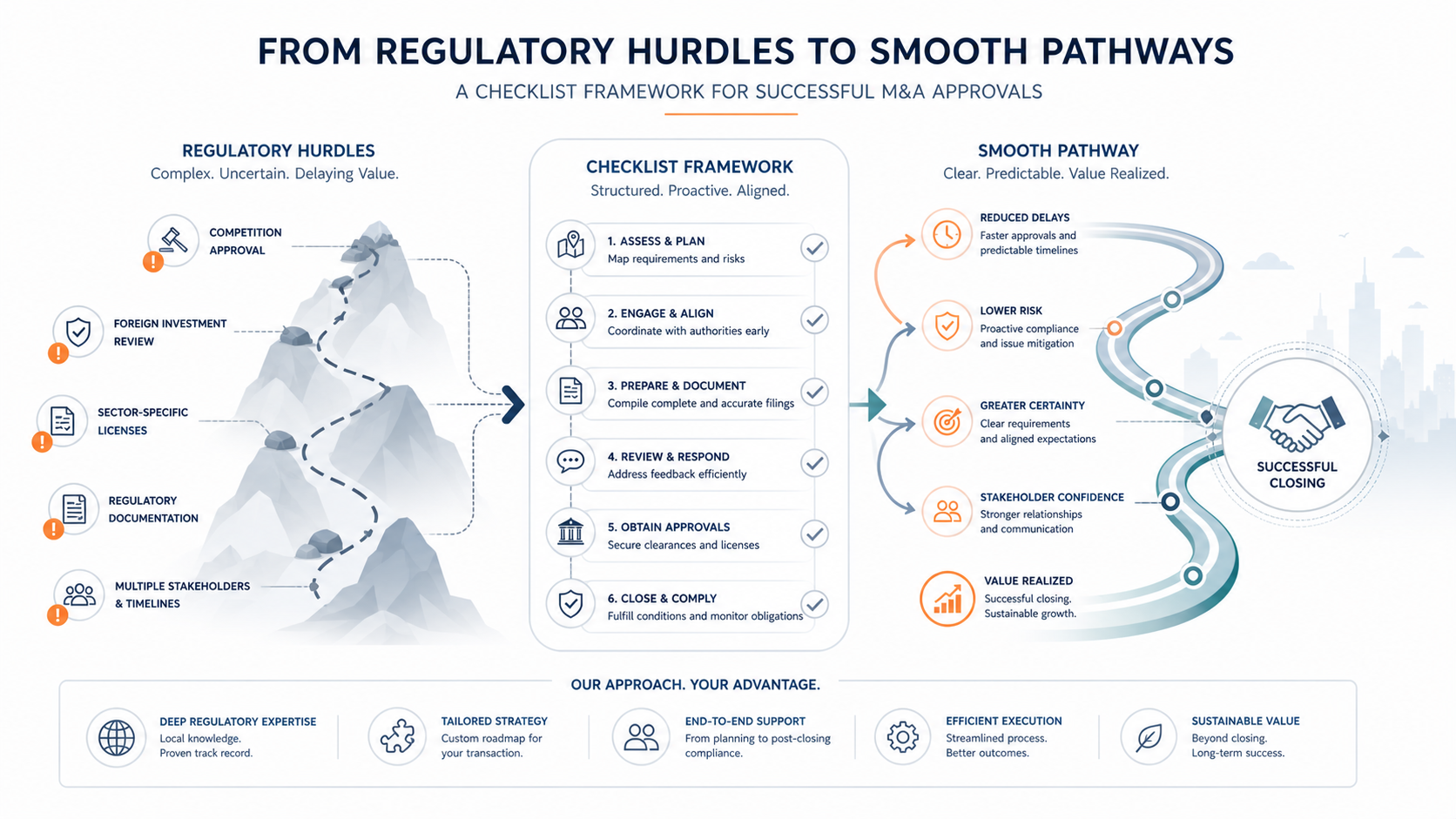
Here’s a step-by-step framework to master regulatory approval:
- Conduct a jurisdiction scan: List all relevant authorities (e.g., competition commissions, investment boards).
- Assess deal triggers: Size-of-transaction tests, market share impacts, foreign ownership limits.
- Gather intel: Review past deals in your sector; note approval stats.
- Engage experts early: Local counsel for filings; model scenarios.
- Build the roadmap: Timeline with milestones, contingencies for remedies.
- Integrate into docs: Include in teaser, CIM; flag in LOI.
- Monitor changes: Laws evolve—Vietnam’s 2025 updates exemplify this.
For more on making your business buyer-ready, check how to make your business attractive to buyers.
This framework turns compliance into a competitive edge. Consult our M&A glossary for key terms.
When should sellers start preparing
Start yesterday—or at minimum, 12-18 months pre-sale. Early prep identifies issues for fixes, like restructuring ownership or curing violations.
Align with your exit horizon: If selling soon, prioritize high-impact areas. For Vietnam-focused deals, track IFC expansions and Decree 239. Philippines sellers eye FDI lists now. Use this phase to download our seller checklist for holistic readiness.
Pro tip: Embed regulatory reviews in annual compliance audits. It keeps you perpetually sale-ready.
How this connects to the overall business sale journey
Regulatory approval threads through the entire M&A process. It informs teasers (flagging clean status), shapes LOIs (with approval conditions), dominates due diligence, and culminates in signing-to-close gaps.
Link it to valuation: Compliant businesses command premiums. Ties to data rooms—include regulatory files there, as in preparing a data room for M&A.
Post-approval, it eases integration. View it holistically: Strong regulatory footing accelerates the journey from intent to cash. Visit our M&A blog for more insights.
Ready to assess your readiness? Download our seller checklist.
Take the first step today. Start your M&A journey.
Need personalized advice? Book a confidential call with our team.


