Key SPA Negotiation Terms Every Business Seller Must Know

Unlocking Maximum Value: The SPA Terms Sellers Must Negotiate
As a business owner eyeing an exit, you’ve likely spent years building your company, navigating challenges, and positioning it for growth. But when it comes to the Share Purchase Agreement (SPA)—the legal backbone of your deal—many sellers treat it as a mere formality. This oversight can cost you dearly. Poorly negotiated terms might lock in a lower effective purchase price, expose you to endless post-closing liabilities, or even unravel the entire transaction.
Imagine agreeing to a headline price that sounds impressive, only to see it chipped away through adjustments, holdbacks, or indemnity claims. In one typical scenario, sellers forfeit 10-20% of value due to unbalanced reps and warranties or aggressive buyer protections. From my experience advising on deals across Southeast Asia, the SPA negotiation is where fortunes are truly made or lost. It’s not just legalese; it’s your safeguard for a clean exit and financial security.
This guide breaks down the essential SPA negotiation key terms from a seller’s viewpoint. We’ll cover why they matter, buyer perspectives, pitfalls to dodge, and a step-by-step framework to strengthen your position. Whether you’re prepping your first sale or refining your strategy, mastering these terms empowers you to protect your legacy and maximize returns.
Table of Contents
- Why business owners need to understand SPA negotiation key terms before selling
- SPA negotiation key terms from a seller’s perspective
- How buyers view these key terms
- Common seller mistakes in SPA negotiations
- Practical checklist for negotiating SPA key terms
- When should sellers start preparing for SPA negotiations?
- How SPA negotiations connect to the overall business sale journey
Why business owners need to understand SPA negotiation key terms before selling?
Entering SPA negotiations without a firm grasp of key terms is like handing over the keys to your business blindfolded. The SPA isn’t just a handshake on price; it’s a 100+ page document that governs every aspect of the transfer, from payment mechanics to post-sale obligations. For sellers, ignorance here leads to value leakage—where the agreed price evaporates through clauses you didn’t scrutinize.
Consider the fundamentals: purchase price adjustments based on working capital can swing by millions if definitions are buyer-favorable. Indemnity baskets and caps determine how much risk you shoulder after closing. Without understanding these, you risk signing away control over your payout. Moreover, in competitive markets, buyers push standardized templates loaded with protections. Savvy sellers counter this by prioritizing seller-friendly language early.
Beyond finances, SPA terms affect your personal life. Non-compete clauses could limit future ventures, while transition services lock you in longer than planned. Data from recent deals shows that prepared sellers negotiate 15-25% better net proceeds by focusing on these levers. Ultimately, knowing SPA key terms shifts you from reactive signatory to proactive partner, ensuring the deal aligns with your exit goals.
SPA negotiation key terms from a seller’s perspective
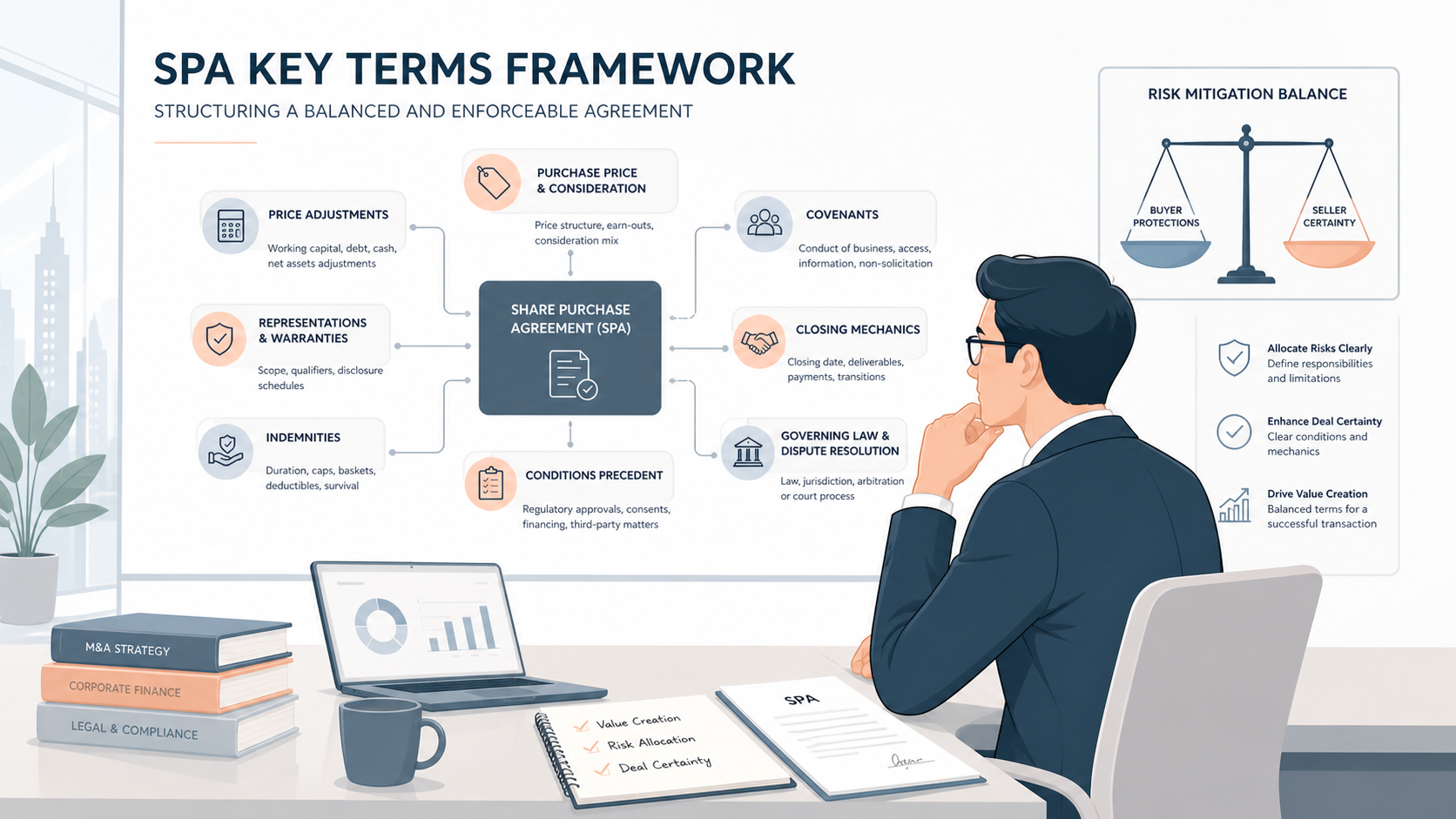
Purchase Price and Adjustments: This is your headline number, but watch the mechanics. Enterprise Value minus Net Debt plus/minus Working Capital adjustments are standard. Push for a target working capital pegged to historical averages, not buyer ideals. Include a collar mechanism to cap swings—say, ±10%—and favor post-closing true-ups over pre-closing estimates to avoid disputes.
Representations and Warrantaries (R&Ws): Buyers demand broad disclosures about your business’s health. Limit these to fundamental matters (title, authority) with qualifiers like “materiality” and “knowledge.” Negotiate survival periods to 12-18 months, not indefinite. Use a disclosure letter to qualify reps without weakening them.
Indemnities and Escrow: The real post-closing battleground. Aim for a high indemnity cap (e.g., 10-15% of price) and a deductible (1% threshold). Prefer de minimis claims exclusions. For escrow, negotiate 5-10% holdback for 12-18 months, with clear release schedules tied to no claims.
Conditions Precedent and MAC Clauses: Ensure buyer financing and regulatory approvals are their burden. Soften Material Adverse Change (MAC) clauses to exclude market-wide events or known risks.
Earn-Outs and Milestones: If included, define metrics clearly (e.g., audited EBITDA) with seller protections like no adverse changes in accounting policies. Cap downside adjustments.
Non-Compete and Restrictive Covenants: Keep duration to 1-2 years, geography reasonable, and scope tied to your current business. Negotiate carve-outs for passive investments.
These terms interlock—strong price protections bolster indemnity limits. Always tie negotiations to your overall economics.
How buyers view these key terms?
Buyers approach SPA terms with risk mitigation in mind, viewing your business through a diligence lens. They prioritize ironclad R&Ws to uncover hidden liabilities, hence broad language and long survival periods. Price adjustments protect against overpayment if working capital is lean or debt balloons.
Indemnities are their safety net; they push uncapped fundamentals (fraud, taxes) and high escrows to cover unknowns. Earn-outs bridge valuation gaps, aligning on future performance they control post-close. MAC clauses give exit ramps if red flags emerge.
Strategic buyers may flex on non-competes to secure talent, while financial buyers hammer covenants to preserve value. Understanding this mindset lets you anticipate pushes and offer concessions (e.g., extra disclosures) for wins elsewhere. It’s a balance—buyers want downside protection without scaring off sellers.
Common seller mistakes in SPA negotiations
Sellers often stumble into traps that erode value. First, accepting buyer templates verbatim: these are stacked against you. Always redline with your counsel.
Overlooking definitions: “Material Adverse Effect” or “Working Capital” ambiguities favor buyers in disputes. Neglecting R&W insurance: it can shift indemnity risk to insurers, but ensure seller-favorable policies.
- Rushing closing conditions: Weak regulatory outs expose you to delays.
- Ignoring interdependencies: A low escrow might trigger broader indemnity expansions.
- Underestimating transition obligations: Vague services agreements lead to prolonged involvement.
- Failing to model net proceeds: Headline price dazzles, but run scenarios including all adjustments.
Another pitfall: emotional concessions on personal terms like non-competes amid price fatigue. Always sequence negotiations—economics first.
Practical checklist for negotiating SPA key terms
Approach SPA talks systematically. Here’s a seller-focused framework:
- Pre-Negotiation Prep: Model purchase price mechanics. Review diligence findings to anticipate R&W pushes. Define your ‘must-haves’ (e.g., escrow <10%).
- Initial Markup: Propose seller-marked draft with balanced language. Anchor on your terms.
- Prioritize Levers: Rank terms by value impact: price adjustments > indemnities > covenants.
- Key Term Targets:
- Concession Strategy: Trade non-core items (e.g., broader disclosures) for economics.
- Review Loops: Involve financial advisors for math checks; legal for language.
- Sign-Off: Simulate closing statement; confirm net proceeds.
Tailor to deal size—smaller transactions allow more seller concessions.

When should sellers start preparing for SPA negotiations?
For complex businesses, 3-6 months pre-LOI: Draft seller-side term sheet. This builds muscle memory and identifies gaps like IP clean-up. Early prep turns negotiations into refinements, not battles.
How SPA negotiations connect to the overall business sale journey
SPA talks cap the M&A process but stem from upstream prep. Strong seller readiness—like clean financials and data rooms—feeds better terms. Link to preparing a data room, which minimizes diligence surprises impacting R&Ws.
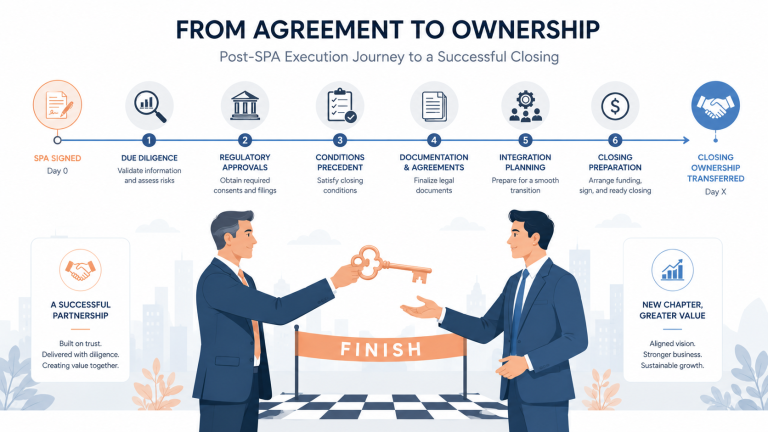
Post-SPA, focus shifts to closing conditions. It ties into making your business attractive, as covered in our insights on buyer appeal. For terminology clarity, check our M&A glossary.
Ready to strengthen your position? Vietnam M&A Market offers practical guidance throughout.
Streamline your prep with our seller readiness checklist. Download our seller checklist.
Begin your exit process today. Start your M&A journey.
Need tailored advice? Book a confidential call.