What Happens After Signing the SPA? A Seller’s Guide

The Final Stretch: What Comes After Signing the SPA
Signing the Share Purchase Agreement (SPA) feels like crossing the finish line, but in the world of M&A, it’s more like starting the victory lap. Many business owners celebrate too early, only to encounter unexpected hurdles that delay closing or erode value. The post-SPA phase bridges the commitment to completion, involving due diligence wrap-up, regulatory approvals, and pre-closing adjustments. Mishandling this stage can lead to renegotiated terms, indemnity claims, or even deal collapse.
For sellers, this period demands vigilance. Buyers will scrutinize operations closely, testing representations and warranties. Financial tweaks, like working capital adjustments, often surprise unprepared owners. Legal and regulatory filings add layers of complexity, especially in cross-border deals. Understanding these steps empowers you to protect your interests, ensure a smooth handover, and maximize proceeds. This guide breaks it down practically, drawing from real seller experiences to help you navigate confidently.
Table of Contents
- Why business owners need to understand the post-SPA process before selling
- Post-SPA process from a seller’s perspective
- How buyers view this phase
- Common seller mistakes
- Practical checklist for the post-SPA phase
- When should sellers start preparing?
- How this connects to the overall business sale journey
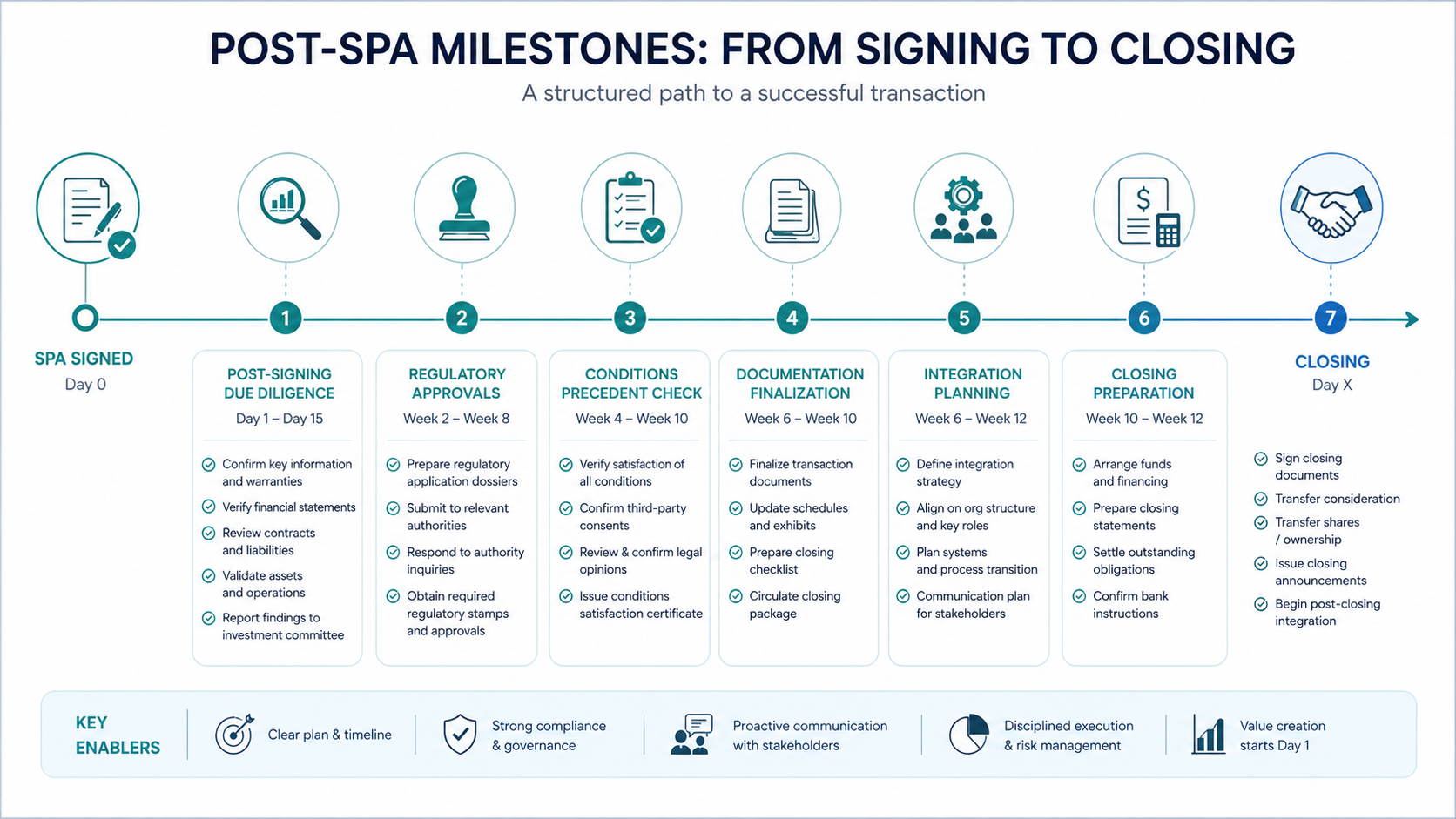
Why business owners need to understand the post-SPA process before selling
Knowledge of the post-SPA timeline is crucial because this phase can last 30 to 180 days, depending on deal size and jurisdiction. Sellers who overlook it risk value leakage through purchase price adjustments or breach claims. For instance, if operations falter post-signing, buyers may demand concessions.
Understanding prevents complacency. Many owners assume the SPA locks in terms, but conditions precedent—such as regulatory nods or no material adverse changes—must be met. In competitive markets, buyers use this window to reassess, potentially walking if issues arise. Proactive sellers coordinate with advisors early, aligning teams for efficiency.
Financially, it’s pivotal. Net working capital true-ups can swing proceeds by 5-10%. Legal pitfalls, like undisclosed liabilities surfacing, trigger escrows eating into your payout. By grasping these dynamics pre-sale, you build safeguards into the SPA, like caps on indemnities, positioning for a stronger close.
From a strategic angle, this phase tests business continuity. Key employees might jump ship, or customers react to rumors. Prepared sellers maintain stability, preserving enterprise value. Ultimately, mastery here turns potential pitfalls into seamless transitions, securing your legacy and financial goals.
Post-SPA process from a seller’s perspective
As a seller, post-SPA unfolds in distinct stages. First, confirmatory due diligence ramps up. Buyers verify SPA reps with site visits, employee interviews, and data room dives. Expect requests for updated financials or customer contracts—respond promptly to avoid delays.
Next, regulatory filings kick in. In Vietnam, this means State Securities Commission reviews for certain thresholds, or competition authority checks for market share impacts. Internationally, CFIUS or similar may apply for foreign buyers. Sellers prepare documents meticulously, often with legal counsel.
Pre-closing covenants govern operations: run the business as usual, no major changes without consent. This includes capex freezes or debt restrictions. Monitor closely; deviations invite disputes.
Closing mechanics follow: wire transfers, share handovers, resignations. Post-closing, earn-outs or escrows activate. Sellers often stay on briefly for transition services agreements (TSAs), aiding knowledge transfer without full commitment.
Throughout, communicate via a deal coordinator. Track milestones with a shared timeline. This seller-centric view emphasizes control, minimizing surprises.
How buyers view this phase
Buyers see post-SPA as risk mitigation. They’ve committed but seek confirmation before funding. Due diligence confirms no skeletons; any found prompts negotiations or termination rights.
Financial buyers focus on numbers—EBITDA stability, working capital pegs. Strategic buyers prioritize integration fit, assessing cultural alignment via management meets.
They monitor MAC clauses vigilantly, ready to pull if events erode value. Escrows cover unknowns, typically 10-15% of price held 12-18 months.
Regulatory hurdles worry them most in emerging markets. Delays erode synergies. Thus, they push for tight timelines and seller cooperation.
Understanding buyer psychology helps sellers anticipate demands, fostering trust for smoother closes.

Common seller mistakes
Sellers often falter by disengaging post-SPA. Treating it as “done” leads to sloppy responses, frustrating buyers and risking deadlock.
Another pitfall: ignoring covenants. Unauthorized hires or contracts trigger breaches, inviting claims.
Financial mismanagement tops the list. Draining cash or manipulating working capital prompts aggressive adjustments, slashing payouts.
Underestimating regs delays deals. Incomplete filings or antitrust oversights extend timelines, incurring costs.
Finally, poor transition planning. Abrupt exits leave buyers scrambling, damaging goodwill and earn-outs.
Avoid these by staying involved, documented, and advised.
Practical checklist or framework for business owners
Here’s a step-by-step framework to master post-SPA:
- Assemble the team: Retain lawyers, accountants, and a coordinator immediately post-signing.
- Update due diligence materials: Provide latest financials, contracts within 48 hours of requests.
- Prepare regulatory submissions: Draft filings with authorities; aim for submission within 10 days.
- Monitor operations: Weekly reviews against covenants; report variances proactively.
- Calculate working capital: Peg to SPA definition; use neutral accountant if disputed.
- Plan transition: Draft TSA; identify key knowledge holders.
- Secure closing docs: Board resolutions, releases, wires ready one week prior.
- Post-close follow-up: Track escrows, earn-outs; resolve claims swiftly.
Download our seller checklist for a detailed template tailored to this phase.
Customize this to your deal, reviewing weekly.
When should sellers start preparing?
Begin pre-SPA, during negotiations. Negotiate clear timelines, definitions, and remedies. Build a data room with evergreen updates.
Three months pre-sale, audit operations for covenant compliance. Train deputies to reduce founder dependency.
Align advisors on regs early. Model financials for adjustments.
Post-signing execution starts day one, but foundational prep ensures agility.
How this connects to the overall business sale journey
Post-SPA caps the M&A process: prep, marketing, diligence, SPA, execution, close. It tests prior stages’ solidity.
Strong prep yields cleaner SPAs, fewer issues here. Links to valuation—stable ops justify multiples. Ties to exit success factors like clean books.
Read more on factors that boost exit success. For the full journey, start your M&A journey.
Integrate with TSAs for smooth handover, preserving value.
Ready to navigate post-SPA confidently? Download our seller readiness checklist.
Take the next step in your exit. Book a confidential call with our advisors.
Begin today. Start here – the journey for business sellers.