Safeguarding your business secrets from the start of the sale process
When you’re preparing to sell your company, the excitement of a potential exit can quickly turn into anxiety if sensitive information falls into the wrong hands. Imagine sharing detailed financials, customer lists, or proprietary strategies with a prospective buyer, only to see that data leaked or misused. This isn’t a rare horror story—it’s a real risk in every business sale. Non-disclosure agreements, or NDAs, serve as your first line of defense, but they’re not always straightforward. Do you really need one? When should you use it? And what happens if you skip it?
As a business owner eyeing an exit, understanding NDAs isn’t just legal housekeeping; it’s about protecting the very value you’re trying to sell. Buyers want deep insights to assess your company, but without proper safeguards, that transparency can backfire. In my experience advising sellers through dozens of transactions, rushing into discussions without an NDA has led to competitive threats, stolen ideas, and even derailed deals. On the flip side, a well-crafted NDA builds trust and sets professional boundaries from day one.
This guide breaks down everything you need to know about NDAs in the context of selling your business. We’ll explore why they’re essential, how they work from your viewpoint, buyer perspectives, pitfalls to avoid, and a step-by-step framework to get it right. By the end, you’ll have the clarity to decide when and how to deploy an NDA effectively, ensuring your sale process stays secure and on track.
Table of Contents
- Why business owners need to understand NDAs before selling
- NDAs from a seller’s perspective
- How investors view this issue
- Common seller mistakes
- Practical checklist for business owners
- When should sellers start preparing
- How this connects to the overall business sale journey
Why business owners need to understand NDAs before selling
Before diving into due diligence or even initial conversations, NDAs are the gatekeeper to your company’s confidential information. Selling a business involves revealing trade secrets, financial projections, operational details, and customer data—elements that could devastate your competitive edge if exposed. Without a solid grasp of NDAs, sellers risk voluntary disclosure to unqualified parties, leading to information asymmetry where buyers gain leverage without commitment.
Consider the stakes: your business’s intellectual property, client relationships, and strategic plans represent years of hard work. An NDA ensures that any information shared is contractually protected, with clear consequences for breaches. It’s not merely a formality; it’s a tool that signals professionalism and weeds out unserious inquiries. Sellers who skip or mishandle NDAs often face prolonged sale timelines, reduced valuations due to perceived risks, or outright deal collapses when leaks occur.
Moreover, in competitive markets, multiple buyers may enter the fray. An NDA standardizes protections across discussions, preventing one buyer from using your data against another. Understanding this upfront empowers you to control the narrative, maintain valuation integrity, and focus on qualified prospects. It’s the foundation upon which trust is built, turning a potentially chaotic process into a structured path to exit.
NDAs from a seller’s perspective
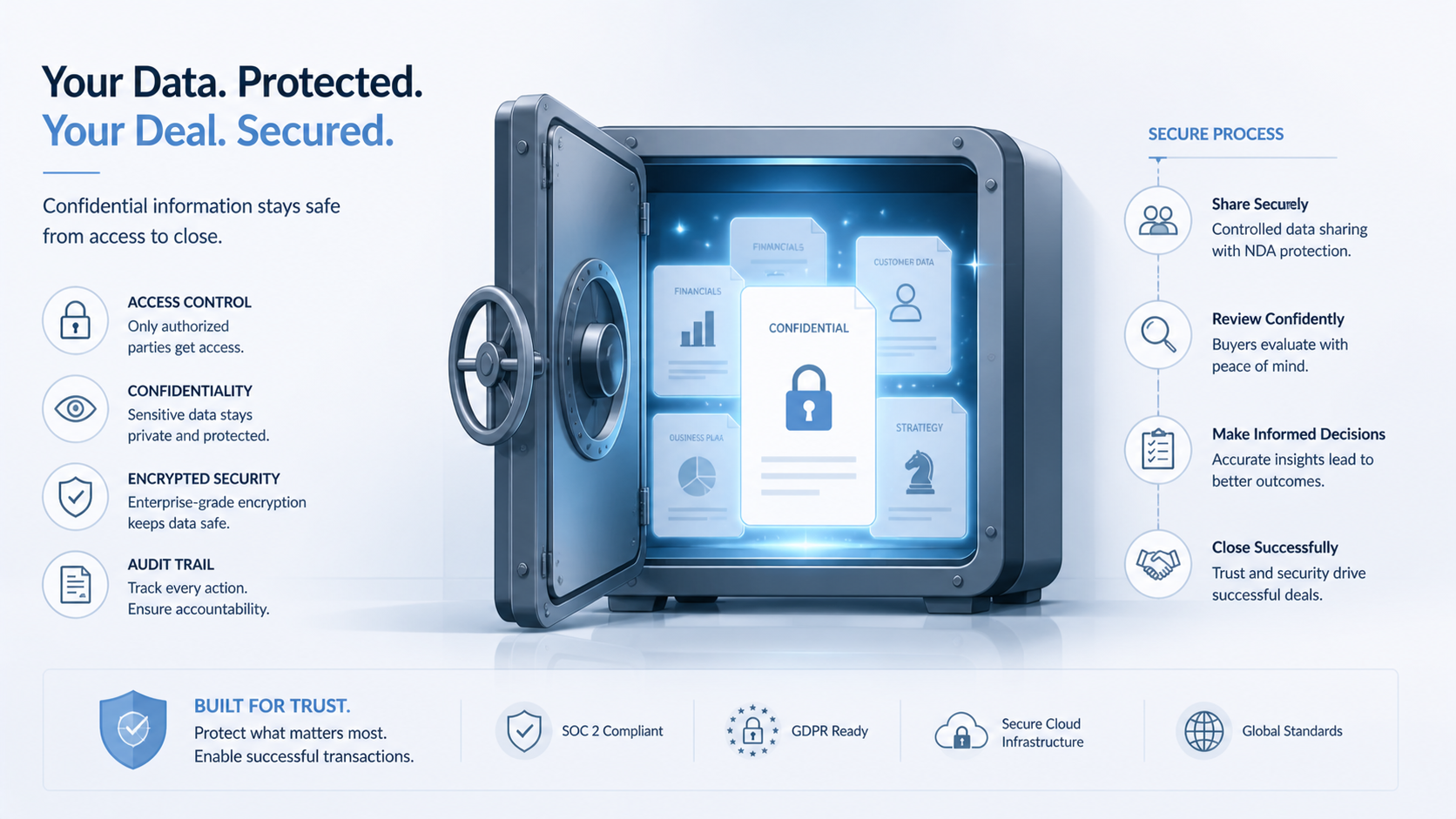
From where you sit as the seller, an NDA is your shield. It defines what constitutes confidential information—broadly covering financial statements, contracts, IP, and even verbal discussions if specified. Key clauses include the scope of disclosure, permitted use (solely for evaluating the purchase), duration (often 1-2 years post-termination), and remedies for breach, such as injunctions or damages.
You’ll want a mutual NDA if both sides share sensitive data, but seller-initiated one-way NDAs are standard at the teaser stage. Customize it to your business: for tech firms, emphasize IP; for service businesses, protect client lists. Avoid overly restrictive terms that scare off buyers, like perpetual confidentiality, which courts may deem unenforceable.
In practice, present the NDA early—after a teaser but before any substantive info. Use it to qualify buyers: their willingness to sign quickly reveals intent. Track versions and signed copies meticulously. If disputes arise, a well-drafted NDA provides leverage, often resolving issues without litigation. Ultimately, it’s about balancing protection with deal momentum.
How investors view this issue
Buyers and investors see NDAs as a necessary evil—a sign of a serious seller but also a potential hurdle. Strategic buyers worry about overreach that limits their ability to assess risks or synergies. Private equity firms, accustomed to standardized templates, push back on seller-heavy terms, preferring mutual agreements that protect their own strategies.
They value NDAs that are concise and reasonable: clear definitions, standard exclusions (public info, independently developed data), and no non-compete clauses, which belong in the main agreement. Investors use NDAs to compartmentalize information, often limiting access to need-to-know teams. A pushy NDA can signal desperation or hidden issues, cooling interest.
That said, reputable buyers embrace them as industry norm, viewing non-signers as red flags. In cross-border deals, they insist on governing law aligned with their jurisdiction. Understanding this helps sellers negotiate efficiently, fostering rapport rather than friction.
Common seller mistakes
Sellers often trip over NDAs in ways that undermine their position. First, sharing data before an NDA: even casual chats can imply waivers. Always lead with anonymity via teasers.
Second, using generic templates without tailoring. Boilerplate NDAs from online sources lack business-specific protections and may conflict with local laws. Third, failing to enforce: not monitoring compliance or pursuing breaches erodes credibility.
Fourth, one-size-fits-all approach. Not distinguishing between teaser NDAs (light) and full due diligence NDAs (comprehensive). Fifth, ignoring mutual needs—refusing reciprocity alienates PE buyers. Sixth, perpetual terms that buyers reject outright.
Other pitfalls include vague definitions (leading to disputes), no return/destruction clauses for data post-deal, and overlooking affiliates/agents. These errors invite leaks, valuation hits, or legal fees. Learn from them to stay ahead.
For deeper insights on preparing your documents securely, check out our guide on preparing a data room for M&A.
Practical checklist or framework for business owners
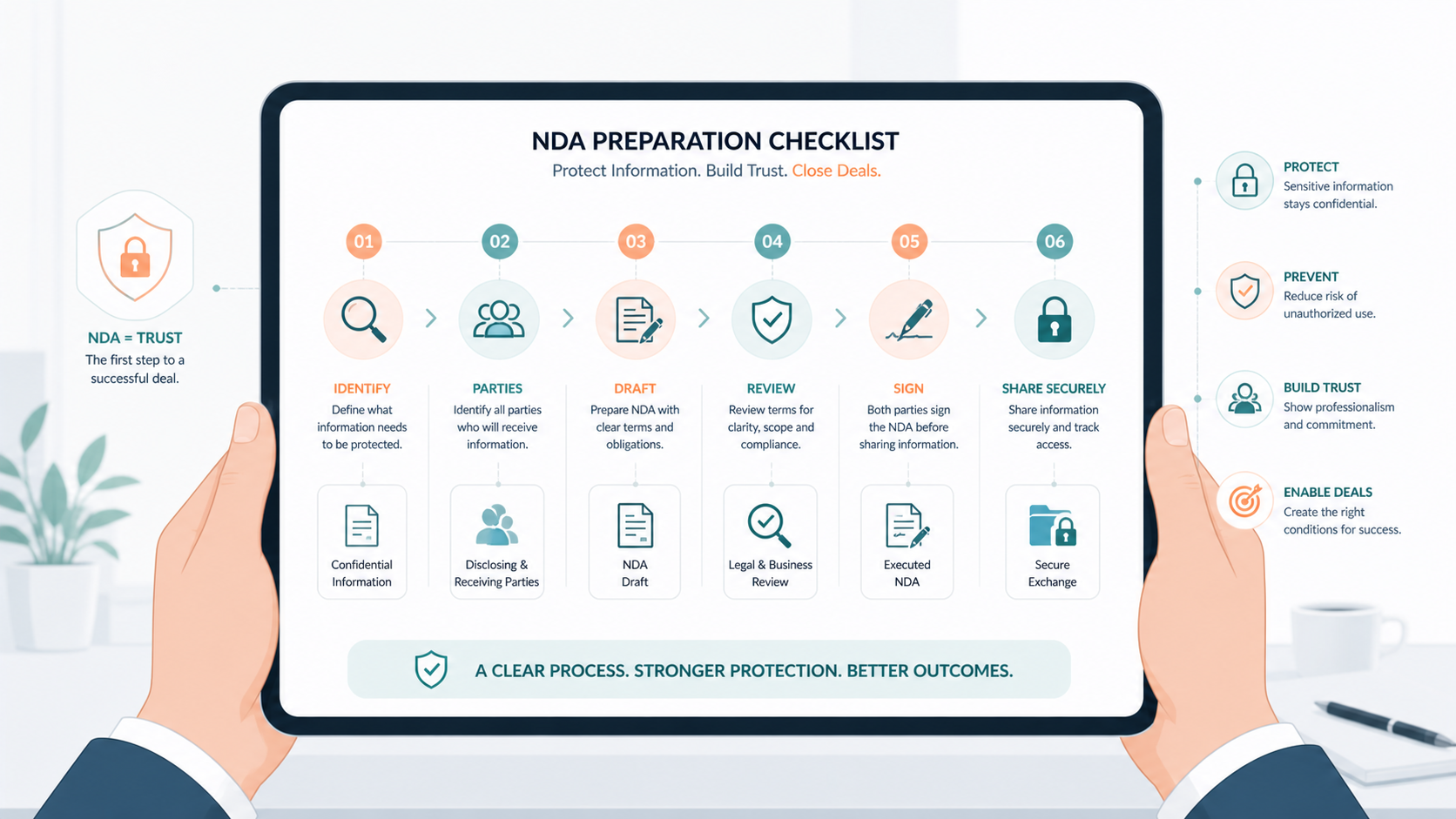
Here’s a step-by-step framework to handle NDAs effectively:
- Assess your info assets: Inventory sensitive data (financials, IP, customers) and classify by sensitivity.
- Draft or select template: Use advisor-reviewed NDA with clear definitions, scope, duration (18-24 months), and remedies.
- Teaser first: Share anonymized summary to gauge interest before NDA.
- Present NDA: Send via DocuSign or tracked email; set 48-hour response deadline.
- Negotiate smartly: Be flexible on non-essentials; hold firm on core protections.
- Sign and track: Maintain signed copies, access logs, and watermark docs.
- Phase appropriately: Lighter NDA for initial talks, fuller for diligence.
- Monitor and enforce: Use NDAs with audit rights; act swiftly on suspicions.
- Consult experts: Involve lawyers early for complex deals.
This checklist minimizes risks. Download our seller checklist for more preparation tools.
When should sellers start preparing
Begin NDA readiness 6-12 months before marketing your business. Align it with overall prep: clean books, stabilize operations. Draft templates now, as legal review takes time.
If unsolicited interest arises, have NDAs prepped. For auctions, prepare tiered NDAs. Don’t wait for LOIs—protections are needed from teaser stage. Early preparation prevents rushed, flawed agreements.
How this connects to the overall business sale journey
NDAs thread through the entire M&A process. They kick off with teasers, underpin CIM access, govern diligence, and persist post-close. They link to data rooms, where controlled sharing occurs. A strong NDA enhances attractiveness by demonstrating governance.
It ties into valuation—protected info ensures accurate assessments. In the journey: prep phase (draft NDAs), marketing (sign with prospects), diligence (expand scope), closing (return data). Integrate with making your business attractive to buyers.
Explore more at our M&A blog or M&A glossary.
Ready to protect your deal? Book a confidential call with our advisors.
Start your preparation today. Get an initial assessment.