Should You Sell While Your Business Is Growing? A Seller’s Guide

Timing your business sale during rapid growth: A high-stakes decision
As your business surges forward—revenues climbing, market share expanding, and opportunities multiplying—the question arises: is now the moment to sell? Many owners face this dilemma when growth accelerates, tempted by premium valuations and eager buyers. Yet, selling too soon can leave money on the table, while waiting risks a downturn that erodes value. In dynamic markets like Southeast Asia, where emerging economies are vying for growth leadership, timing becomes even more critical. Vietnam’s M&A landscape in 2025, for instance, highlights opportunities reshaped by disciplined capital allocation, underscoring the need for strategic exits amid expansion.
This isn’t just about cashing out at a peak; it’s about ensuring your growth story resonates with buyers who can sustain it post-sale. Investors scrutinize whether that upward trajectory is sustainable or a fleeting spike. Misjudge this, and you could face prolonged negotiations, reduced multiples, or deal collapse. Drawing from global M&A trends pointing to a positive 2026 outlook, successful sellers align their exit with proven scalability. Whether you’re in critical minerals supply chains or other high-growth sectors, understanding when to sell during growth separates those who maximize returns from those who regret the timing.
In this guide, we’ll explore the nuances from a seller’s viewpoint, investor expectations, pitfalls to avoid, and a practical framework to decide if now is right. With businesses like Murphy Oil seeing rallies tied to Vietnam’s next steps, the window for growth-fueled deals is open—but narrow.
Table of Contents
- Why business owners need to understand selling during growth before exiting
- Selling while growing from a seller’s perspective
- How investors view growth-stage businesses
- Common seller mistakes when timing a growth sale
- Practical checklist for deciding to sell during growth
- When should sellers start preparing for a growth-timed exit?
- How this connects to the overall business sale journey
Why business owners need to understand selling during growth before exiting
Growth is the holy grail for business owners, signaling vitality and potential. But when it accelerates, the pressure to sell intensifies. Buyers offer attractive premiums, fearing they’ll miss the wave. Yet, without a deep grasp of growth-stage selling, owners risk undervaluing their enterprise or selecting the wrong partner.
Consider the broader context: EY emphasizes leveraging M&A and divestitures now, as market conditions favor strategic moves. In vertical FDI expansions, companies build global supply chains by acquiring growing assets. Selling during growth lets you capture peak multiples, but only if your story holds up under due diligence. Owners who rush in without assessing sustainability often see offers slashed when projections falter.
Understanding this equips you to negotiate from strength. You’ll know how to demonstrate that your growth isn’t a bubble—backed by recurring revenues, scalable operations, and defensible moats. This knowledge prevents key factors affecting business valuation from working against you. In regions like Vietnam, where legal policies aim to attract foreign investment, aligning your growth narrative with investor incentives can unlock higher bids. Ignoring these dynamics? You might exit at 4x EBITDA instead of 8x.
Beyond valuation, it shapes your post-sale life. Selling a thriving business means transitioning to a buyer who can scale it further, preserving your legacy. Without this insight, you could end up with a fire-sale price or a deal that unravels.
Selling while growing from a seller’s perspective
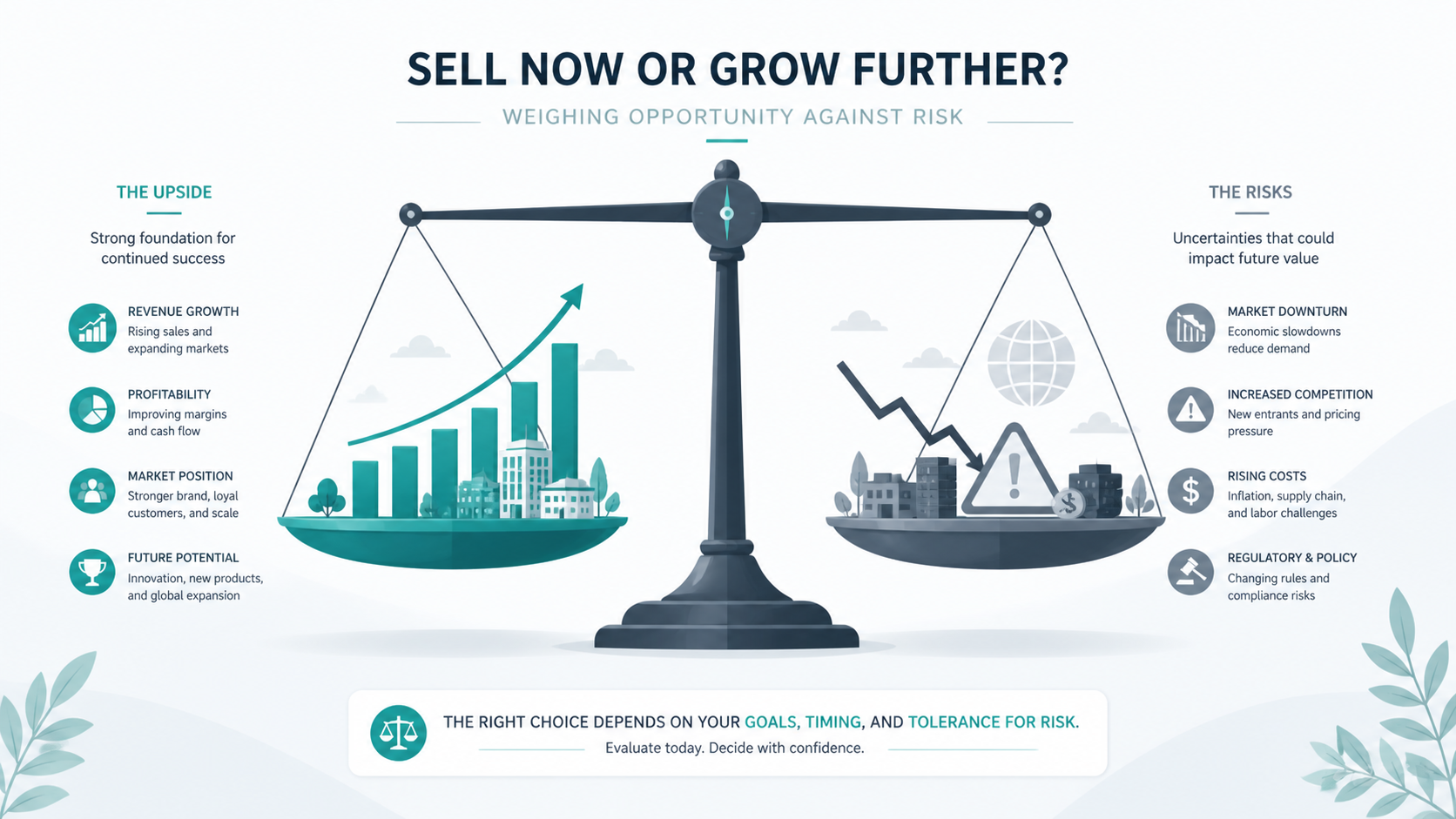
From the owner’s chair, growth feels exhilarating. Orders are pouring in, teams expanding, and profits soaring. Selling now seems intuitive—lock in gains before competition erodes your edge. ARC Group notes M&A activity in the $100B fragrance market, where growing brands fetch premiums from strategics seeking market share.
Benefits abound: higher multiples during upcycles, as buyers pay for momentum. Your business commands attention in a deal process, shortening timelines. Cash proceeds fund new ventures or retirement, free from operational risks like economic shifts. In Vietnam’s critical minerals industry, supply chain plays attract FDI, rewarding sellers who time growth peaks.
But pitfalls lurk. Growth often masks underlying issues—customer concentration, founder dependency, or unproven scalability. Buyers discount for these, probing if revenues will sustain post-you. Personally, emotionally detaching from a rocket-ship business is tough; many second-guess after signing.
Sellers succeed by quantifying growth drivers: Is it market tailwinds, product innovation, or execution? Document this rigorously. Tie it to frameworks like valuation multiples, where high-growth firms trade at 1.5-2x standard peers. In Southeast Asia’s pursuit of emerging market dominance, growth sellers stand out if they prove regional scalability.
How investors view growth-stage businesses
Buyers—private equity, strategics, or family offices—love growth but demand proof. They ask: Can this scale without you? Is the trajectory hockey-stick or linear? PwC’s global trends signal optimism for 2026, but disciplined buyers focus on unit economics amid volatility.
PE firms model future cash flows aggressively, applying haircuts to optimistic projections. They favor businesses with 20-30%+ YoY growth backed by LTV:CAC ratios under 3:1. Strategics, like those in vertical FDI, seek synergies—your growth must integrate into their chain. Vietnam M&A 2025 trends show capital discipline reshaping deals; investors prioritize resilient growers.
They scrutinize capex needs: High-growth often means reinvestment, eroding near-term EBITDA. EBITDA becomes king, adjusted for owner perks. Red flags? Churn rates rising or margins compressing. Positive signals: Diversified clients, IP barriers, recurring revenue >50%.
In a post-Trump 2.0 world, UBS quick takes suggest policy shifts impacting deals—growth in advanced industries like China’s innovation push influences benchmarks. Investors buy trajectories, paying up for proven methods.
Common seller mistakes when timing a growth sale
Enthusiasm blinds many. Mistake one: Selling prematurely. Growth feels endless, but markets shift—e.g., Murphy Oil’s rally hinges on Vietnam policy steps. Wait for validation like multi-quarter consistency.
Two: Overhyping projections. Buyers slash offers if forecasts lack historical backing. Three: Ignoring buyer fit. A PE shop might strip costs, clashing with your culture. Four: Neglecting prep. Without clean financials, due diligence drags.
Five: Founder dependency. Growth tied to you tanks value—read factors increasing exit success. Six: Timing market peaks poorly. Global divestiture waves per EY reward prepared sellers, but laggards suffer.
Avoid by benchmarking against peers. Toms Shoes case illustrates cause-driven growth sustaining value, but M&A demands transferable momentum.
Practical checklist for deciding to sell during growth
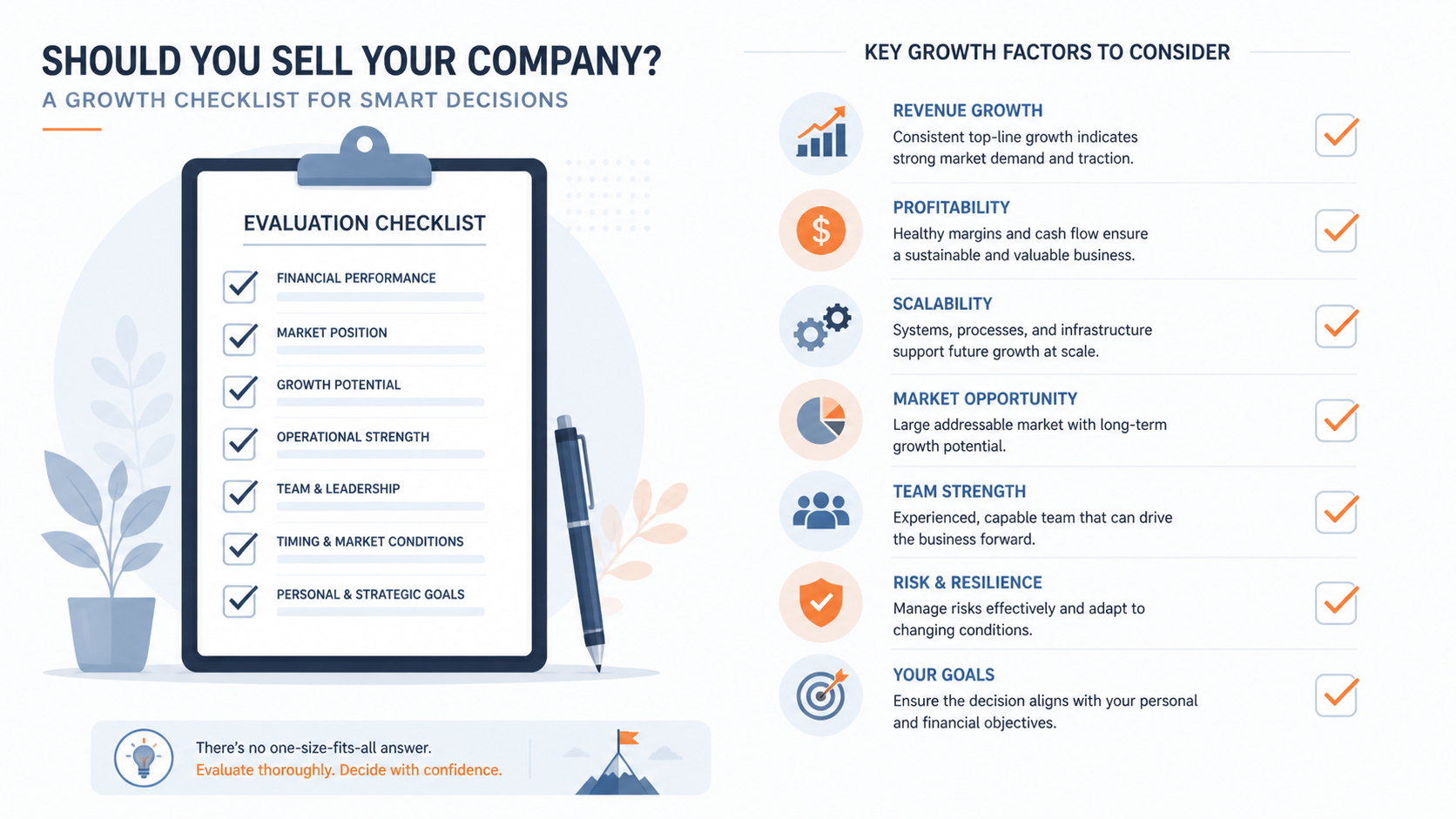
1. Validate sustainability: Track 6-12 months of accelerating KPIs—revenue, margins, customer acquisition.
2. Benchmark multiples: Compare to sector peers; aim for growth premium.
3. Stress-test projections: Model base/worst/best cases; ensure break-even at 70% growth.
4. Assess readiness: Clean books, data room prepped—see preparing a data room.
5. Market scan: Gauge buyer interest via advisors.
6. Personal audit: Are you burnout-ready? Legacy protected?
7. Legal scan: Vietnam’s FDI policies offer tailwinds—align contracts.
8. Exit modeling: Net proceeds after tax/capex.
When should sellers start preparing for a growth-timed exit?
Begin 12-24 months ahead. Early: Build management depth, diversify revenue. 6-12 months: Engage advisors, refine teaser. 3-6 months: Full process launch.
Triggers: Growth >25% sustained, market hot (e.g., Vietnam 2025), personal milestones. Delay if scaling hurdles loom.
How this connects to the overall business sale journey
Selling during growth amplifies every stage: Valuation hinges on trajectory—link to why similar businesses sell differently. Prep emphasizes scalability. Due diligence tests claims. Post-close, earn-outs tie to continued growth.
Integrate into exit strategy planning. Advisors at Vietnam M&A Market guide seamlessly. Check our M&A glossary for terms; visit our M&A blog for more.
Ready to assess your growth exit? Download our seller readiness checklist.
Start your journey today. Begin the exit process or book a confidential call with an M&A advisor.