How to Make Your Business Investable: Guide for Sellers

Turning your business into a buyer’s dream acquisition
As a business owner contemplating an exit, you’ve poured years into building what you believe is a solid company. But when the time comes to sell, many discover that what feels valuable to them doesn’t always translate to investor appeal. Investors scrutinize every aspect, from financial cleanliness to operational scalability, and overlooked gaps can slash your valuation by 20-30% or kill the deal entirely.
Making your business investable isn’t about flashy marketing—it’s about systematically addressing the risks and opportunities that buyers care about most. This means clean books, transferable leadership, defensible competitive edges, and a clear growth trajectory. Without this preparation, even profitable businesses languish on the market.
In Vietnam’s dynamic M&A landscape, where foreign investors seek stable footholds amid rapid growth, investability is the key differentiator. Owners who invest time upfront close deals faster and at higher multiples. This guide breaks it down practically, drawing from real seller journeys to help you avoid common pitfalls and position your company as irresistible.
Table of Contents
- Why business owners need to understand investability before selling
- Investability from a seller’s perspective
- How investors view this issue
- Common seller mistakes
- Practical checklist for business owners
- When should sellers start preparing
- How this connects to the overall business sale journey
Why business owners need to understand investability before selling
Investability refers to how attractive your business is to potential acquirers or investors—not just based on current profits, but on its potential for seamless transition and future growth. For sellers, grasping this early prevents shocks during due diligence, where buyers dissect your operations.
Without investability, deals drag or collapse. Buyers walk away from businesses overly reliant on the founder, burdened by messy contracts, or lacking documented processes. Understanding this upfront lets you prioritize fixes that boost value, like normalizing EBITDA or diversifying customer bases.
Seasoned sellers know that preparation signals professionalism. It shortens timelines from 12 months to 6-9 and lifts offers. Ignoring it leaves you reactive, negotiating from weakness as issues surface late.
Consider the ripple effects: poor investability erodes trust, invites lowball bids, and complicates tax-efficient exits. Proactive owners who build investability create leverage, turning a standard sale into a premium transaction.
Investability from a seller’s perspective
From where you sit, investability starts with self-assessment. Ask: Can my business thrive without me? Is revenue predictable and scalable? Sellers often overlook how personal involvement creates perceived risks.
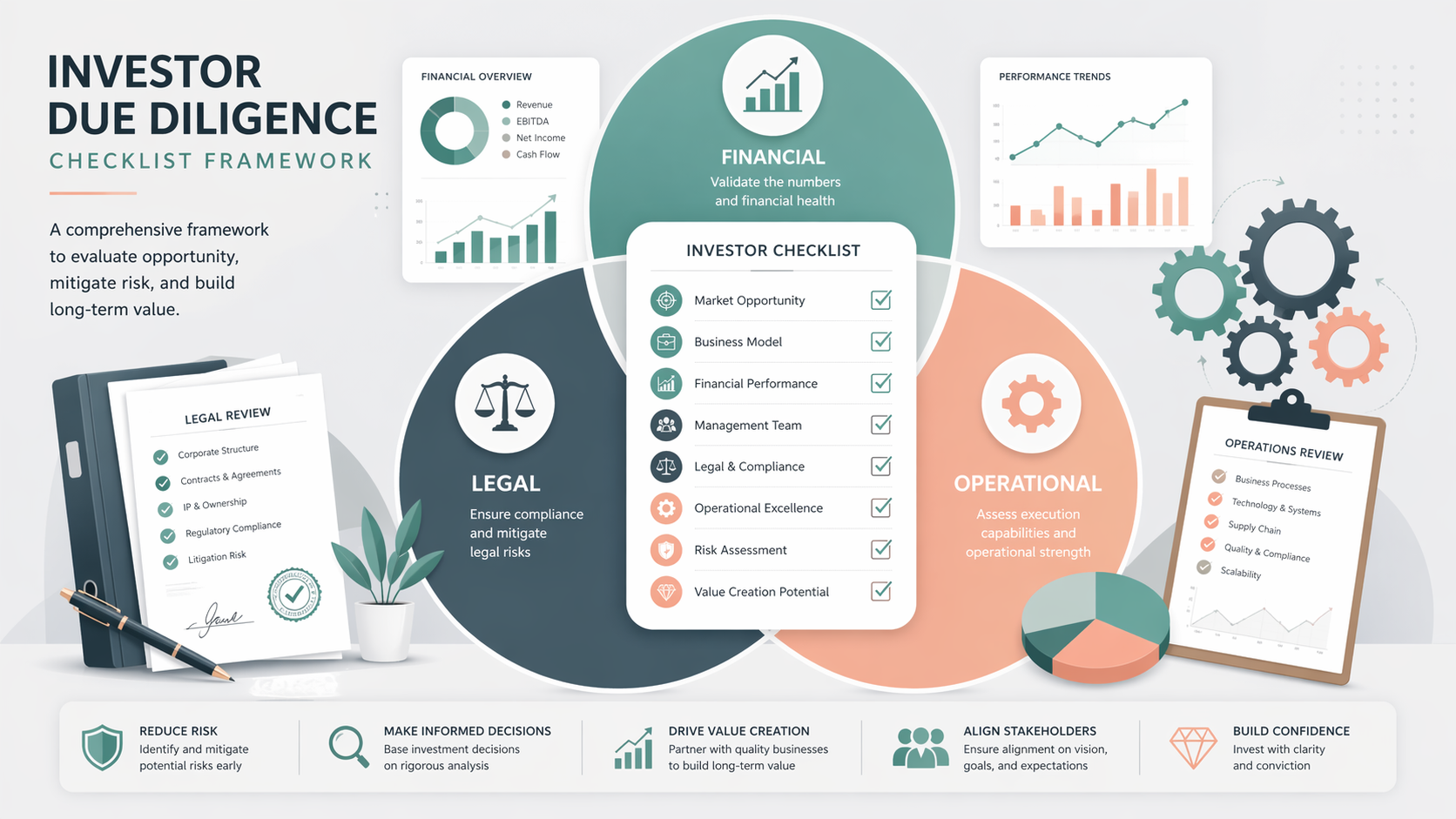
Key pillars include financial transparency, operational robustness, legal cleanliness, and strategic positioning. For instance, recurring revenue streams make your company more investable than one-off projects. Documented SOPs (standard operating procedures) prove scalability.
Sellers should focus on transferability. Train deputies to handle core functions, reducing founder dependency risk. Clean up customer concentrations—aim for no single client over 20% of revenue.
Growth potential excites buyers. Demonstrate untapped markets or efficiency gains through data. In competitive sectors like manufacturing or tech services in Vietnam, highlighting export readiness or digital transformation elevates appeal.
Ultimately, view your business through a buyer’s lens: low-risk, high-upside. This mindset guides targeted improvements, maximizing exit value.
How investors view this issue
Buyers—strategic corporates or private equity—evaluate investability through risk-adjusted returns. They seek businesses with strong moats, like proprietary tech or loyal customers, that integrate effortlessly post-acquisition.
Financials are table stakes: audited statements showing normalized earnings. Investors discount EBITDA heavily for one-time boosts or related-party transactions. They favor prepared financial statements that reveal true profitability.
Operational due diligence uncovers scalability. Fragmented teams or undocumented processes signal integration headaches. Legal reviews flag IP disputes or non-competes, derailing deals.
Strategic fit matters too. Investors prioritize synergies—cost savings or market expansion. In Vietnam, they chase firms with compliant governance, ESG alignment, and forex-hedged operations.
Quantitatively, investable businesses command 4-8x EBITDA multiples versus 2-4x for unprepared ones. Buyers pay premiums for ‘plug-and-play’ assets, minimizing post-deal capex.
Common seller mistakes
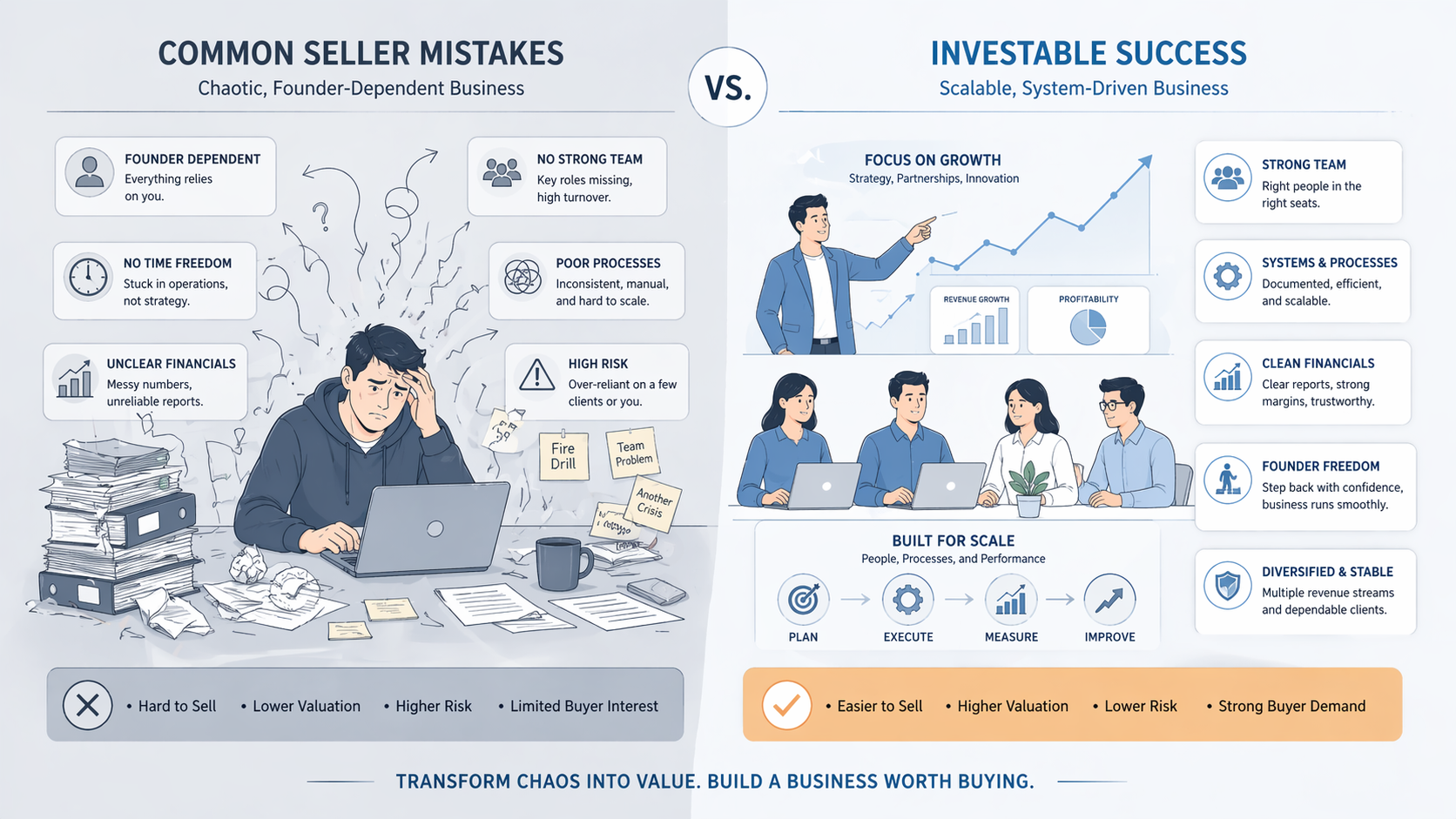
Sellers frequently underestimate preparation depth. One pitfall: delaying financial clean-up, leading to valuation disputes. Unnormalized expenses inflate earnings artificially, eroding credibility.
Another: ignoring legal housekeeping. Pending lawsuits or unclear titles halt momentum. Review all contracts for change-of-control clauses that could trigger terminations.
Founder dependency tops the list—buyers demand proof of team strength. Without it, they haircut offers or demand earn-outs. Read our post on founder dependency risks for deeper insights.
Overvaluing based on emotion ignores market comps. Sellers skip competitive analysis, pricing unrealistically. Poor customer diversification exposes to churn risks.
Rushing without a 12-month runway amplifies errors. Hasty sellers miss optimizing working capital or IP protection. Avoid these by benchmarking against peers early.
For more on first-time pitfalls, check common mistakes first-time sellers make.
Practical checklist or framework for business owners
Here’s a step-by-step framework to build investability. Start 12-18 months out, aligning with our 12-month preparation checklist.
- Financial Optimization (Months 1-6): Audit books, normalize EBITDA, prepare three years of management accounts. Eliminate related-party deals.
- Legal & Compliance (Months 3-9): Conduct full legal audit. Secure IP registrations, resolve disputes. Ensure legal preparation covers contracts and licenses.
- Operational Maturity (Months 6-12): Document SOPs, cross-train staff. Implement KPI dashboards for visibility.
- Commercial Strength (Ongoing): Diversify revenue, lock key clients. Build sales pipeline data.
- Governance & HR (Months 9+): Formalize board, ESOPs. Demonstrate leadership depth.
- Strategic Narrative (Final 3 Months): Craft CIM (confidential information memorandum) highlighting growth levers.
Track progress quarterly. Engage advisors for objectivity—M&A glossary terms like CIM clarify jargon.
This framework has helped sellers add 15-25% to valuations by addressing blind spots systematically.
When should sellers start preparing
Begin when exit thoughts emerge, ideally 12-24 months pre-market. Early action allows organic fixes, avoiding forced changes that buyers spot.
Triggers include stagnating growth, personal fatigue, or market peaks—like Vietnam’s FDI surges. Assess readiness via self-audit; if below 70%, delay listing.
Timing ties to cycles: Sell in upswings when multiples peak. Preparation buffers downturns, keeping options open.
Link this to deciding when is the right time to sell. Procrastination costs multiples; foresight preserves value.
How this connects to the overall business sale journey
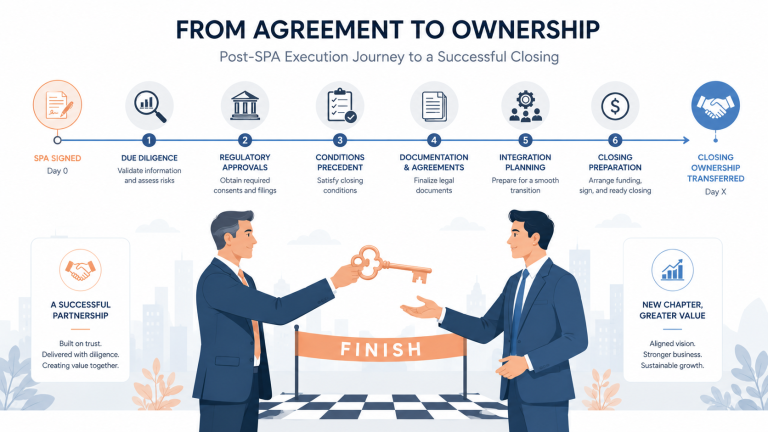
Investability preparation is the foundation of the M&A process. It feeds into teaser creation, NDA signings, and data room setup—smooth execution hinges on it.
Post-prep, engage intermediaries for buyer outreach. Due diligence validates your work; strong investability accelerates VDD (vendor due diligence).
It influences deal structure: Investable firms secure cash deals over earn-outs. Connects to tax planning and post-sale life.
Explore more at our M&A blog. For tailored advice, book a confidential call with our advisors.
Ready to assess your business? Download our seller checklist.
Take the first step today. Start your M&A journey.