Earn-Out Negotiation Risks: What Sellers Must Watch Out For

Earn-outs: The double-edged sword in business sales
As a business owner eyeing an exit, you’ve likely heard about earn-outs. They’re pitched as a way to bridge valuation gaps, letting sellers capture upside from future growth while buyers minimize risk. But beneath the appeal lies a minefield of negotiation risks that can erode your payout, prolong disputes, or even derail the deal entirely.
Imagine agreeing to an earn-out tied to revenue targets, only to watch post-closing changes in buyer operations sabotage those goals. Or worse, vague metrics leading to endless arguments over calculations. These aren’t rare horror stories—they’re common pitfalls in M&A transactions where sellers leave money on the table. Understanding earn-out negotiation risks isn’t optional; it’s essential for protecting your hard-earned equity.
In this guide, we’ll break down why these structures matter, how they play out from your side of the table, what buyers really think, and the mistakes that trip up even seasoned owners. You’ll get a practical framework to negotiate smarter, spot red flags early, and align earn-outs with your reality. Whether you’re prepping your first sale or refining an exit strategy, mastering this can mean millions in preserved value.
Table of Contents
- Why business owners need to understand earn-out negotiation risks before selling
- Earn-out negotiation risks from a seller’s perspective
- How investors view this issue
- Common seller mistakes
- Practical checklist or framework for business owners
- When should sellers start preparing
- How this connects to the overall business sale journey

Why business owners need to understand earn-out negotiation risks before selling
Earn-outs have surged in popularity, especially in volatile markets or when buyer-seller valuations clash. They defer a portion of the purchase price—often 20-40%—to be paid later based on hitting predefined milestones like revenue, EBITDA, or customer retention. For sellers, this seems like a win: get credit for growth you drove. But without grasping the risks, you could end up with a fraction of what you expected.
The core issue? Earn-outs shift control post-closing. Buyers influence the metrics through their decisions, from resource allocation to accounting tweaks. If not negotiated tightly, these can undermine performance. Sellers who ignore this face payment shortfalls averaging 30-50% of the earn-out value in disputed deals, based on real M&A outcomes.
Moreover, earn-outs complicate tax treatment and personal guarantees. You might owe taxes upfront on the full headline price, only to fight for the contingent portion. Legal disputes can drag on for years, tying up cash and energy better spent on your next venture. Business owners who dive in blind risk not just financial loss, but reputational damage in tight-knit industries.
Preparation starts with realism. Review your financials through a buyer’s lens: are your projections aggressive? Do you have ironclad data to back targets? Understanding these risks empowers you to push for upfront payments or hybrid structures, preserving deal momentum while safeguarding value. It’s about negotiating from strength, not desperation.
In Vietnam’s dynamic M&A scene, where cross-border deals amplify complexities, local owners especially need this knowledge. Foreign buyers often favor earn-outs to hedge against integration hiccups, making seller awareness a deal-maker.
Earn-out negotiation risks from a seller’s perspective
From where you sit, earn-outs promise to capture the full value of your growth trajectory. You’ve built the pipeline; why shouldn’t you get paid if it converts? Yet, the risks stack against sellers due to information asymmetry and post-close power dynamics.
First, metric manipulation. Buyers might reclassify revenue or adjust EBITDA add-backs differently than you anticipated. A classic trap: “one-time” expenses under your watch become recurring under theirs, tanking targets. Sellers report cases where buyer-led cost synergies—promised as upside—actually hurt short-term metrics.
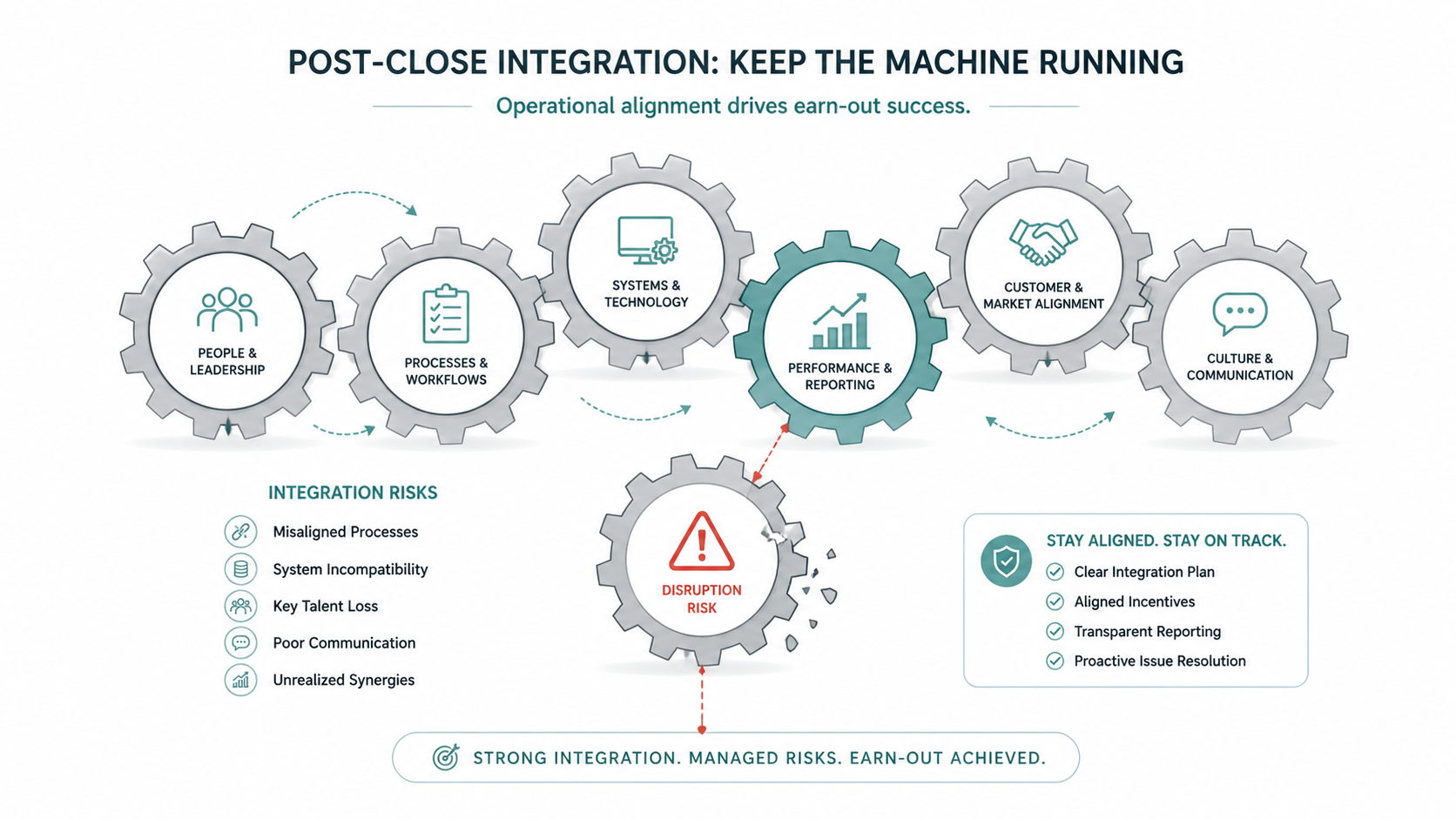
Second, operational interference. Post-closing, the business integrates into a larger entity. Resource shifts, like redirecting sales teams to parent priorities, can derail your milestones. Without protective language, you’re stuck watching your earn-out evaporate.
Third, dispute mechanics. Who audits calculations? Independent accountants sound neutral, but their fees often fall on the loser, incentivizing aggressive buyer positions. Arbitration clauses help, but they cost time and money.
Tax risks loom large too. In many jurisdictions, earn-outs are taxed as ordinary income at higher rates if not structured as equity-like. For Vietnamese sellers, this interacts with capital gains treatments, potentially inflating your liability.
Duration matters: short earn-outs (1-2 years) expose you to cyclical blips; longer ones risk buyer fatigue or divestitures. The seller’s view demands caps on buyer discretion, clear definitions, and acceleration triggers—like change of control protections.
To mitigate, insist on seller-friendly baselines. Reference our detailed guide on EBITDA in M&A for aligning metrics properly.
How investors view this issue
Buyers love earn-outs for risk transfer. They pay less upfront, aligning seller incentives with integration success. Private equity firms, in particular, use them to fund add-ons without overpaying for unproven growth.
From their perspective, your projections are optimistic—after all, you’re motivated to sell high. Earn-outs let them “prove it” post-close. They scrutinize historical trends, discounting outliers you might highlight. If your business relies on founder relationships, they’ll bake in transition risks via steep targets.
Investors also weigh opportunity cost. Holding earn-out notes ties capital; they prefer clean exits. Thus, they push for buyer-favorable terms: subjective adjustments, no caps on shortfalls, and their accountants as arbiters.
In cross-border deals, currency fluctuations or regulatory shifts become excuses for adjustments. Vietnamese buyers might emphasize local market volatility, while foreigners focus on global benchmarks.
Smart investors signal good faith with balanced proposals—say, 50/50 upfront/contingent—but always protect downside. Understanding this mindset lets you counter with data: audited forecasts, third-party validations, or milestone accelerators tied to mutual KPIs.
Ultimately, buyers see earn-outs as insurance. Your job: price the premium correctly so it doesn’t over-insure their risks at your expense.
Common seller mistakes
Sellers trip over earn-outs repeatedly, often from over-optimism or haste. Here’s a rundown of the biggest pitfalls:
- Vague definitions: Terms like “net revenue” without specifying inclusions/exclusions invite fights. Always define every variable explicitly.
- No protections against buyer actions: Failing to cap integration impacts or require “business as usual” covenants leaves you exposed.
- Overly ambitious targets: Pegging to 20%+ growth ignores realities like market slowdowns. Base on conservative scenarios.
- Ignoring dispute resolution: Defaulting to courts instead of expedited arbitration prolongs pain.
- Tax blindness: Not modeling contingent payments’ tax hit upfront erodes net proceeds.
- Shortchanging duration: One-year earn-outs miss multi-year ramps in B2B or tech.
Case in point: A software firm targeted 15% EBITDA growth, but buyer consolidation shifted customers, missing the mark by 40%. No adjustment clause meant zero payout. Avoid by stress-testing terms pre-LOI.
Another error: Accepting subjective metrics like “customer satisfaction.” Stick to objective, verifiable data. Check our valuation multiples guide for tying earn-outs to proven benchmarks.
Practical checklist or framework for business owners
Negotiate earn-outs like a pro with this step-by-step framework:
- Assess necessity: Can you close the valuation gap upfront? If not, quantify the earn-out portion realistically.
- Define metrics tightly: Use historical averages for baselines. Specify calculations, e.g., “EBITDA per audited GAAP, excluding synergies.”
- Build in protections: Require buyer consent for material changes; include true-up mechanisms and caps on adjustments.
- Set dispute rules: Independent accountant first, then binding arbitration within 30 days.
- Model scenarios: Run best/worst cases with advisors. Ensure minimum guarantees cover taxes.
- Include accelerators: Payments on early achievement or change of control.
- Document everything: Full audit rights, monthly reporting.
Pro tip: Cap earn-out at 1.5x base for balance. For Vietnamese firms, address forex risks explicitly. Download our seller checklist for a full prep template.
When should sellers start preparing
Don’t wait for term sheet talks. Begin 6-12 months pre-sale. Audit financials for metric consistency; build a forecast model with sensitivities. Engage tax counsel early for structuring.
Simultaneously, normalize operations to prove sustainability sans founder. This bolsters your case against heavy earn-outs.
If valuation gaps loom, test buyer appetite via teasers highlighting earn-out potential. By LOI stage, have counter-proposals ready.
For startups, prep from seed: track KPIs longitudinally. Established firms: annual “exit readiness” reviews including earn-out sims. Early prep turns risk into leverage.
How this connects to the overall business sale journey
Earn-outs thread through the entire M&A process. They emerge in valuation—check our tips on attracting buyers—influence due diligence via data scrutiny, and peak in definitive agreements.
Post-close, they demand ongoing engagement, affecting your non-compete. Link to data room prep: robust financials preempt disputes. See our M&A blog for more on the journey.
Holistically, strong earn-out handling signals sophistication, boosting multiples. Integrate into your exit plan for seamless transitions.
Ready to safeguard your exit? Download our seller readiness checklist.
Start your M&A journey today – get an initial assessment.
Need expert guidance? Book a confidential call with our advisors.