Realistic Timeline for Selling Your Business: A Seller’s Guide

Why rushing a business sale often leads to regret
Selling a business is a milestone many owners dream of, but the excitement can quickly turn to frustration when timelines stretch far beyond expectations. Imagine spending months in protracted negotiations only to watch your valuation erode due to incomplete preparations or external market shifts. In Vietnam’s dynamic M&A landscape, where deals are reviving amid subdued regional activity, understanding the realistic timeline is crucial. Recent developments, such as reforms beginning to take effect and opportunities reshaped by disciplined capital, signal a fresh cycle of activity. Yet, factors like US tariffs on Vietnamese exports via the July 2025 Executive Order add layers of complexity, potentially delaying closings.
Business owners often underestimate the process, assuming a quick six-month sale. Reality hits with due diligence dragging on, regulatory approvals stalling, or buyers pulling back amid global uncertainties. Vietnam is bucking the global M&A trend, with its market showing revival, but sellers who ignore the full timeline risk suboptimal outcomes. This guide breaks it down practically, drawing from key guidelines and processes in mergers and acquisitions, comparisons of M&A laws, and strategic guides for foreign investors. Whether relocating production to Vietnam or pursuing local deals, preparation is key to aligning with investor expectations.
Table of Contents
- Why business owners need to understand the realistic timeline before selling
- Realistic timeline from a seller’s perspective
- How investors view this issue
- Common seller mistakes
- Practical checklist for business owners
- When should sellers start preparing?
- How this connects to the overall business sale journey
Why business owners need to understand the realistic timeline before selling
Grasping the realistic timeline empowers sellers to set expectations, allocate resources effectively, and avoid the sunk costs of rushed efforts. In Vietnam’s M&A scene for 2025 and beyond, where a comprehensive strategic guide highlights opportunities for foreign investors, timing influences everything from market positioning to deal structuring.
Without this foresight, owners face prolonged uncertainty. Vietnam’s M&A market is poised for growth, bucking global trends with revival amid Southeast Asia’s subdued dealmaking. However, external pressures like analyzing US tariffs on exports underscore the need for buffers in timelines. A comparison of M&A laws reveals varying approval processes that can extend from weeks to months depending on deal size and sector.
Owners who timeline correctly can front-load value creation, making their business more attractive. This understanding prevents overcommitment to buyers demanding unrealistic speeds, preserving leverage. Ultimately, it ties into broader seller readiness, ensuring the exit aligns with personal and financial goals.
Realistic timeline from a seller’s perspective
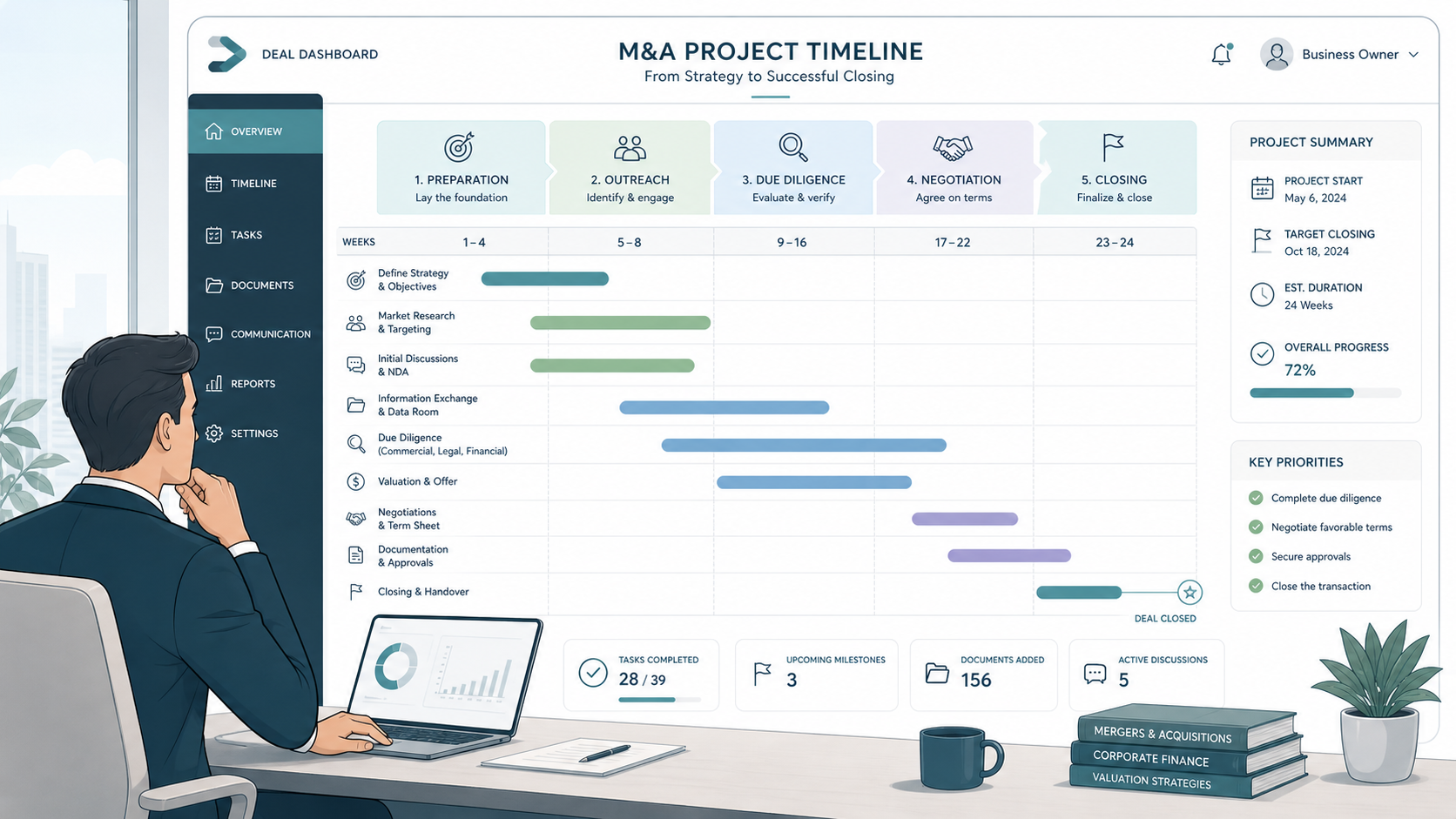
Marketing and buyer outreach follow for 3-6 months, involving teasers, NDAs, and initial bids. Due diligence then dominates for 3-9 months, where buyers scrutinize operations, contracts, and compliance—especially under Vietnam’s key M&A guidelines and processes. Closing wraps up in 1-3 months, navigating approvals and final terms.
Sector specifics matter; even in robust areas like Vietnam’s coffee market, with its deep consumer insights and prospects, supply chain reviews extend timelines. Relocating production for US businesses introduces additional audits. Total time varies by complexity: simple asset sales might compress to 9 months, while control stakes hit 24+ amid reforms taking effect.
Foreign investors, guided by 2026 strategic outlooks, seek stability amid tariffs and law comparisons. They allocate time for Vietnam-specific hurdles like competition approvals or foreign ownership caps. A well-timed process signals professionalism, boosting bid confidence. Conversely, sellers pushing aggressive schedules risk scaring off quality buyers, settling for distressed pricing.
- Underestimating due diligence: Expecting two weeks instead of months, delaying responses erodes trust.
- Ignoring market cycles: Launching amid Vietnam’s revival is smart, but global M&A slumps prolong hunts.
- Poor phasing: Overlapping prep and marketing causes chaos.
- Neglecting buffers: Tariffs or regulatory shifts, like those in the July 2025 order, add unforeseen delays.
- Founder dependency: Without team buildup, transitions extend closings.
Avoiding these preserves value, as seen in fresh M&A cycles driven by effective reforms.

Practical checklist or framework for business owners
Months 1-6: Foundation Building
- Assess business health: Normalize financials, calculate EBITDA.
- Build independence: Strengthen management, document processes.
- Legal audit: Review contracts, IP, compliance with M&A laws.
- Download our seller checklist to track progress.
Months 7-12: Optimization and Teaser Prep
- Enhance attractiveness: Cut non-core assets, boost recurring revenue.
- Valuation benchmarking: Use common methods for sellers.
- Engage advisors: Select M&A experts familiar with Vietnam processes.
Months 13-18: Marketing and Negotiation
- Launch teasers: Target strategic buyers, including those relocating production.
- Manage LOIs: Negotiate terms without rushing diligence.
Months 19-24: Diligence and Close
- Facilitate audits: Provide requested documents promptly.
- Regulatory filings: Account for approvals.
- Finalize SPA: Buffer for adjustments.
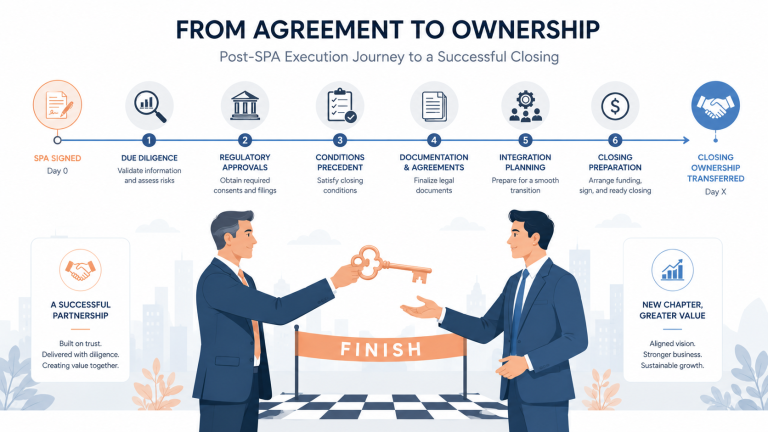
This framework aligns with introductions to key guidelines, ensuring smooth execution.
How this connects to the overall business sale journey
When should sellers start preparing?
Ready to map your timeline? Download our seller checklist.
Begin today. Start your M&A journey or book a confidential call with an advisor.