Unpacking the distinct dynamics of M&A in Vietnam
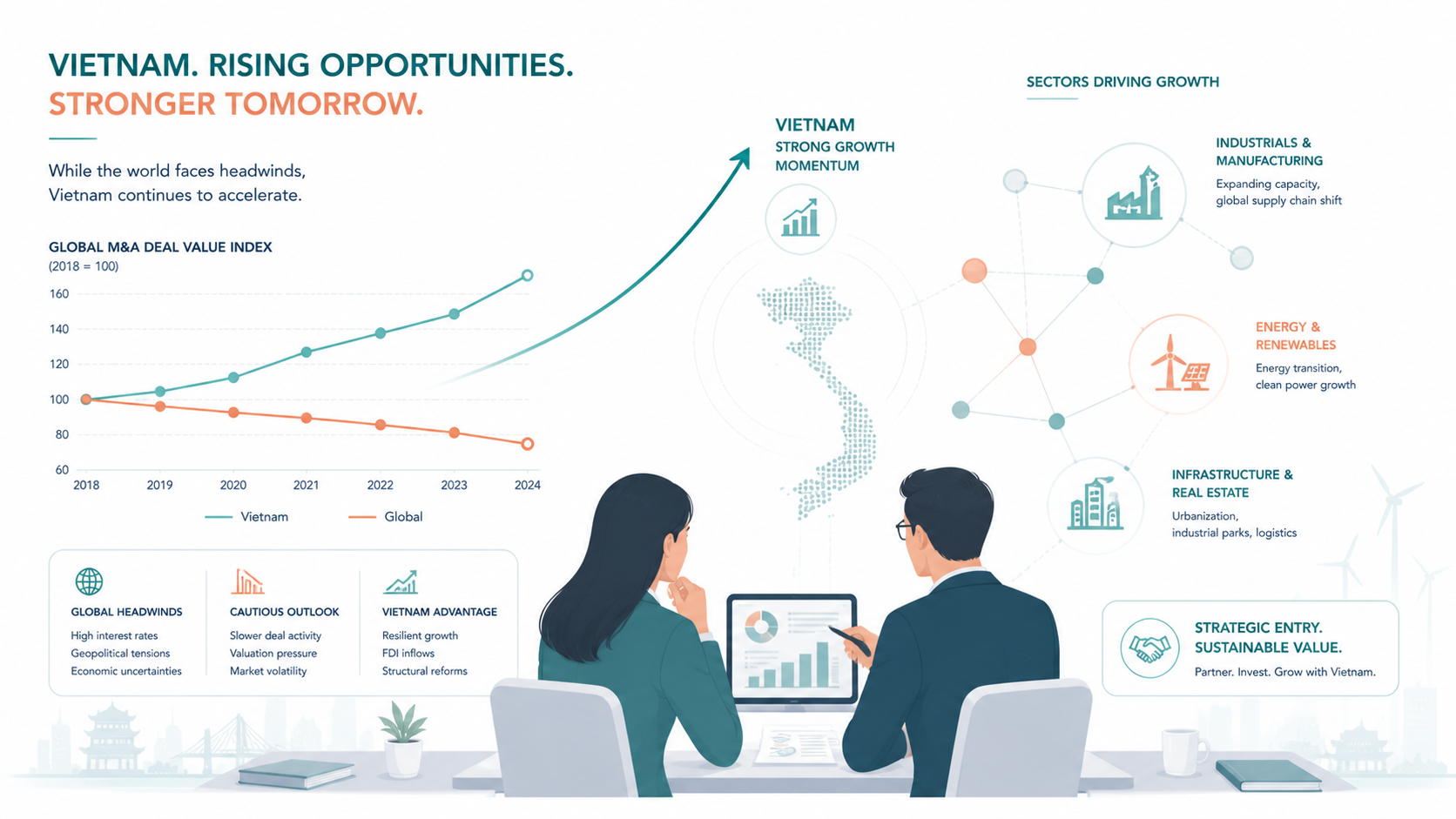
As a business owner contemplating an exit, you’ve likely heard the buzz around mergers and acquisitions. But in Vietnam, the landscape isn’t just another iteration of global trends—it’s carving its own path. While many markets grapple with slowdowns, Vietnam is bucking the trend in the global M&A landscape, drawing foreign capital into sectors like real estate, where investments are pouring in steadily. Foreign M&A is boosting confidence in industrial and energy sectors, and a wave is sweeping through healthcare, albeit with persistent legal hurdles.
This divergence stems from Vietnam’s unique position as a model for developing countries, as noted by international experts. Yet, challenges like the EU adding Vietnam to its list of non-cooperative jurisdictions introduce tax and compliance implications that sellers must navigate carefully. Comprehensive strategic guides for foreign investors highlight M&A opportunities through 2026, signaling sustained interest. For sellers, understanding these differences means positioning your company not just to attract buyers, but to close deals without unnecessary friction.
In this guide, we’ll explore why these nuances matter, how they play out from a seller’s viewpoint, investor perspectives, pitfalls to avoid, and a practical framework to prepare effectively. Whether you’re in real estate, healthcare, or beyond, grasping Vietnam’s M&A specifics can safeguard your valuation and accelerate your exit.
Table of Contents
- Why business owners need to understand M&A in Vietnam before selling
- M&A in Vietnam from a seller’s perspective
- How investors view M&A in Vietnam
- Common seller mistakes
- Practical checklist for business owners
- When should sellers start preparing?
- How this connects to the overall business sale journey
Why business owners need to understand M&A in Vietnam before selling?
Before diving into a sale, every business owner must recognize that M&A in Vietnam operates under a distinct set of rules and opportunities compared to mature markets like the US or Europe. Globally, deals might hinge on standardized due diligence and predictable regulatory timelines. Here, however, foreign capital is pouring into the real estate market, and M&A serves as a new way for growth, yet legal hurdles persist across sectors like healthcare.
Without this insight, sellers risk undervaluation or deal collapse. For instance, while Vietnam bucks global M&A slowdowns, the EU’s classification of Vietnam as a non-cooperative jurisdiction brings heightened tax scrutiny. Ignoring this could trigger compliance issues that scare off buyers. Moreover, foreign M&A is instilling confidence in industrial and energy sectors, but sellers unfamiliar with local nuances might miss leveraging these trends.
Understanding these differences equips you to highlight your business’s alignment with hot sectors—think real estate’s appeal as a prime investment destination or healthcare’s ongoing wave. It also prepares you for Vietnam’s recognition as a model for developing countries, which attracts strategic investors seeking stability amid regional volatility. Ultimately, this knowledge prevents surprises, from prolonged approvals to overlooked tax implications, ensuring your exit maximizes value.

M&A in Vietnam from a seller’s perspective
From the seller’s seat, M&A in Vietnam feels like navigating a high-growth highway with occasional regulatory speed bumps. Unlike in Western markets where processes are often streamlined, here deals thrive on relationships and local expertise. A complete guide to mergers and acquisitions underscores the need for tailored strategies, especially as foreign investors eye comprehensive paths into 2026.
Sellers benefit from robust sector momentum: foreign capital flooding real estate positions property firms for premium exits, while industrial and energy players gain from inbound M&A boosting sector confidence. Healthcare sees a wave of activity, offering opportunities if you’re positioned right. However, persistent legal hurdles demand early preparation—think detailed contract reviews under Vietnamese law, which can differ markedly from international norms.
Tax and compliance add layers: the EU’s non-cooperative list means buyers will probe your structure rigorously, potentially adjusting offers downward if risks surface. Yet, positives abound—Vietnam’s status as a development model draws patient capital, favoring sellers who demonstrate scalability. Success stories, like law firms earning awards for navigating these waters, show that proactive sellers close faster and at better multiples. Focus on clean financials, sector relevance, and advisor networks to turn these differences into advantages.
How investors view M&A in Vietnam
Investors see Vietnam’s M&A market as a beacon amid global caution. Bucking the trend, it’s alive with activity—from real estate’s foreign influx to healthcare’s wave and industrial/energy boosts. Strategic guides for 2026 reflect this optimism, positioning Vietnam as prime for foreign entry.
Buyers prioritize sectors with tailwinds: real estate’s 2025 promise, energy’s confidence surge, and healthcare despite hurdles. They view Vietnam as a model jurisdiction, offering high returns in a stable, growing economy. However, legal persistence and tax lists heighten diligence—investors demand ironclad compliance, often engaging top law firms recognized in awards.
For sellers, this means investors reward businesses with transparent governance and sector fit. Coffee market deep dives reveal consumer-driven prospects, mirroring broader appeal. Buyers seek platforms for regional expansion, valuing local knowledge. Aligning with their lens—growth potential over short-term flips—can elevate your appeal.
Common seller mistakes
Sellers often stumble by treating Vietnam’s M&A like a global template. One pitfall: underestimating legal hurdles, as seen in healthcare’s wave where delays derail deals. Another: overlooking tax implications from the EU list, leading to renegotiations or walkaways.
Neglecting sector trends bites hard—ignoring real estate’s foreign pour-in or industrial boosts leaves you uncompetitive. Rushing without local advisors mirrors global errors but amplifies here, where relationships rule. Poor data readiness, like incomplete rooms, frustrates buyers scanning for compliance.
Overvaluing without Vietnam context—global multiples don’t apply amid bucking trends. For more on valuation pitfalls, check our key factors affecting business valuation for sellers. Finally, timing mismatches: starting prep late amid 2026 guides’ foresight.
Practical checklist or framework for business owners
To thrive, follow this seller-focused framework tailored to Vietnam’s M&A:
- Assess sector alignment: Map your business to trends like real estate capital flows, healthcare waves, or industrial confidence. Use our M&A glossary for key terms.
- Conduct legal audit: Scrutinize contracts, IP, and approvals early to sidestep hurdles.
- Address tax compliance: Review structures against EU list implications; engage specialists.
- Build data room: Organize financials, compliant with local standards. See preparing a data room for M&A.
- Network locally: Leverage law firm expertise and investor guides.
- Valuation benchmark: Adjust for Vietnam’s bucking trend; explore valuation multiples.
- Test market: Gauge buyer interest in your sector’s momentum.
This step-by-step ensures readiness. Download our seller readiness checklist for a printable version.
When should sellers start preparing?
Start 12-18 months ahead. Vietnam’s legal and tax layers extend timelines—healthcare hurdles exemplify this. With foreign capital accelerating in real estate and energy, early movers capture premium interest.
If eyeing 2026 opportunities per strategic guides, begin now. Bucking global trends means competition heats up; prep positions you first. Factors like increasing successful exit chances underscore timing.
How this connects to the overall business sale journey
Vietnam’s M&A differences integrate into the full exit: from valuation (sector-adjusted), due diligence (compliance-heavy), to closing (relationship-driven). It ties to readiness—making your business attractive via these strategies.
Visit our M&A blog for more. This awareness links prep to outcomes, turning unique dynamics into your edge.
Ready to assess your position? Start your M&A journey.
Need expert guidance? Book a confidential call with our team.