What Is Private Equity in M&A? A Guide for Business Sellers

Private equity: The powerhouse behind many successful business exits
As a business owner eyeing an exit, you’ve likely heard the term private equity tossed around in boardrooms and financial news. But what does it really mean for your company’s sale? Private equity firms are major players in M&A, injecting capital into promising businesses to scale them before selling at a premium. Yet, misunderstandings about their strategies can lead sellers to undervalue their assets or chase the wrong buyers.
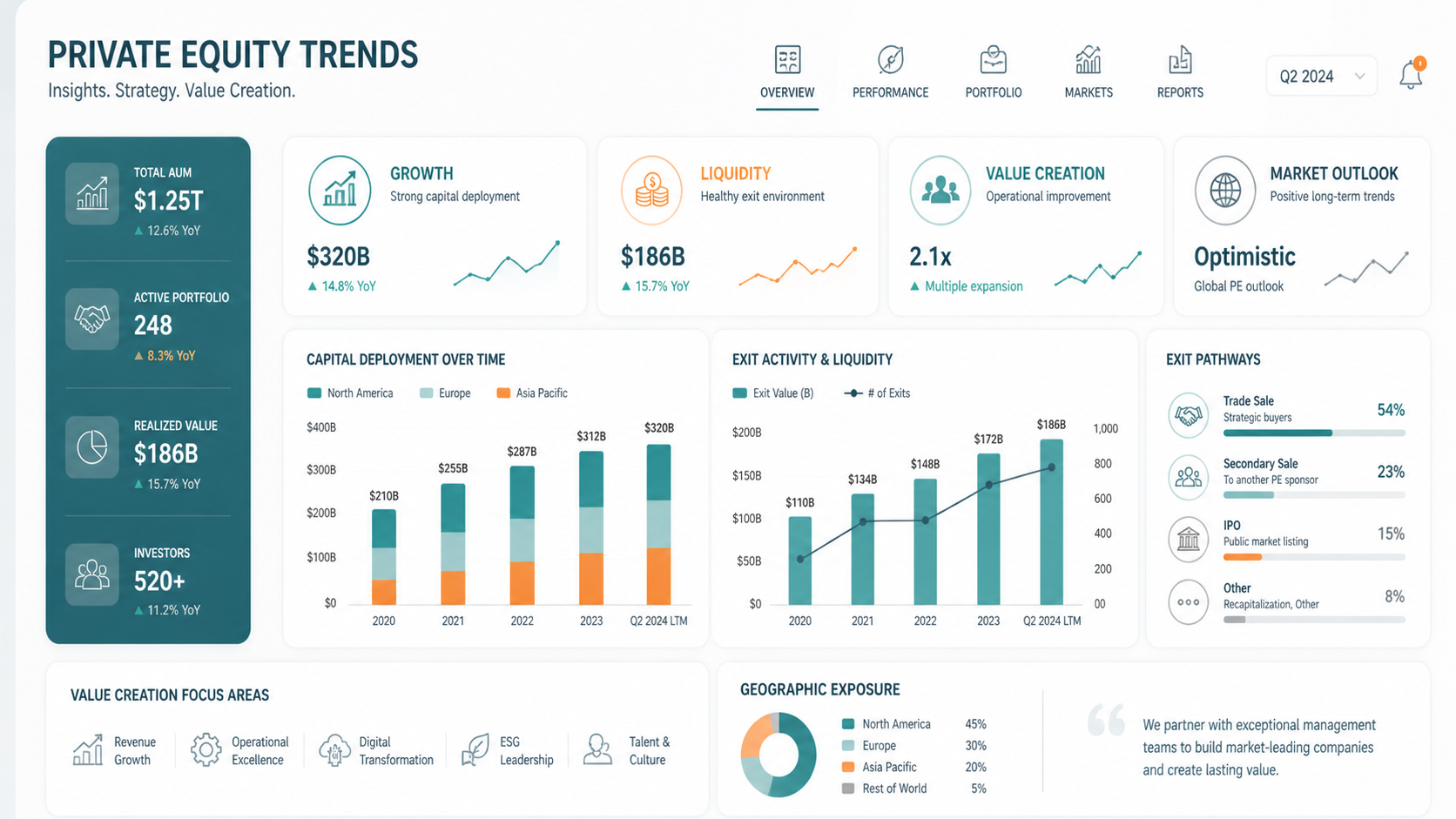
In today’s dynamic market, private equity is reshaping how companies change hands. With fundraising challenges pushing general partners to innovate and exit strategies evolving, understanding this landscape is crucial. Sellers who grasp private equity’s role—from growth outlooks to liquidity trends—position themselves for better deals. This guide breaks it down practically, drawing on real market shifts like 2026 private capital forecasts emphasizing growth, liquidity, and tax convergence, alongside trends in alternatives and private markets.
Whether you’re in Southeast Asia’s booming economies or global hubs, private equity offers pathways to maximize returns. Transformational M&A, for instance, has been shown to more than double shareholder value, providing a blueprint for redefining growth. But preparation is key to avoiding common pitfalls.
Table of Contents
- Why business owners need to understand private equity in M&A before selling
- Private equity in M&A from a seller’s perspective
- How investors view this issue
- Common seller mistakes
- Practical checklist or framework for business owners
- When should sellers start preparing
- How this connects to the overall business sale journey

Why business owners need to understand private equity in M&A before selling
Private equity isn’t just another buyer type; it’s a sophisticated engine driving M&A deals worth billions. For sellers, ignoring it means missing out on structured exits that can deliver 20-30% higher multiples compared to strategic acquirers in many cases. In a market where fundraising woes are knocking general partners off course, firms are hungrier for quality assets, creating opportunities for prepared owners.
Consider the global limited partner perspective on emerging private markets. Investors are eyeing high-growth regions, pouring capital into scalable businesses. Without understanding PE dynamics, sellers risk undervaluing their company or entering negotiations unprepared for rigorous due diligence.
Moreover, PE involvement often signals validation—your business has the potential for transformation. Recent outlooks point to private equity trends in 2026 focusing on leading through change, with themes driving alternatives like new frontiers in asset classes. Sellers who align with these trends attract premium offers.
Preparation empowers you to spot PE interest early. It also shields against aggressive tactics, such as lowball bids during liquidity crunches. In Southeast Asia, where IPO markets and M&A forums are buzzing, PE provides a reliable alternative to public listings, especially for mid-market firms.
Ultimately, knowledge of private equity equips you to negotiate from strength, ensuring your exit reflects true value. It’s not about chasing every PE firm but recognizing when their model fits your goals.
Private equity in M&A from a seller’s perspective
From the seller’s viewpoint, private equity in M&A revolves around partnership for growth. PE firms buy control stakes, often 70-100%, with a clear exit horizon of 3-7 years. They bring operational expertise, expanding your business through add-ons or international scaling before reselling.
For you, this means upfront capital plus hands-on support to boost EBITDA—key for higher valuations. A practical example: PE-backed companies often see revenue jumps via professionalization, making them exit-ready. In Vietnam and Southeast Asia, where best-managed companies are highlighted, PE targets firms with strong governance for transformational plays.
However, sellers must weigh trade-offs. PE demands transparency, with covenants on performance post-close. Exit strategies like continuation funds and carve-outs are rising, allowing GPs to extend holdings on top assets while divesting others. This flexibility benefits sellers indirectly by signaling market maturity.
Your role? Position your company as PE-ready: clean financials, diversified revenue, and scalable ops. Recent forums gathering dealmakers underscore active M&A in the region, with PE leading discussions. Sellers engaging early can leverage this momentum for smoother processes.
In essence, PE turns your business into a high-growth vehicle, rewarding patient owners with substantial payouts upon secondary sales.
How investors view this issue
Private equity investors, or limited partners (LPs), scrutinize opportunities through a risk-adjusted return lens. Global LPs view private markets like India’s as hotspots for outsized gains, prioritizing deployable capital amid liquidity shifts.
GPs face fundraising headwinds, prompting selective deployments. They seek platforms with defensible moats, recurring revenue, and management depth—avoiding founder-dependent models. 2026 outlooks highlight growth, liquidity, and tax convergence as pivotal, with alternatives driven by three key themes: innovation, resilience, and diversification.
In rebalancing capitalism for a reshaping world, PE emphasizes sustainable value creation. Transformational M&A doubles shareholder returns by redefining growth, a metric LPs track closely. Southeast Asia’s IPO capital markets add appeal, blending private and public paths.
Investors favor continuation funds for extending winners and carve-outs for unlocking value in non-core units. For sellers, this means your business must demonstrate alignment with these strategies to pique interest.
Bottom line: LPs back GPs who navigate change adeptly, creating tailwinds for sellers with aligned assets.
Common seller mistakes
Second, neglecting data rooms delays diligence. Read preparing a data room for M&A for essentials.
Third, ignoring fit—PE shuns cyclical businesses without scale. Fundraising woes amplify selectivity, sidelining mismatched targets.
Fourth, poor timing: Rushing amid GP liquidity needs leads to concessions. Finally, overlooking post-sale roles; PE often retains key talent.
Avoid these to streamline your deal.
Practical checklist or framework for business owners
Here’s a step-by-step framework to PE-ready your business:
- Assess scalability: Audit growth potential, targeting 20%+ CAGR.
- Strengthen financials: Normalize EBITDA; learn more via What Is EBITDA in M&A.
- Build governance: Emulate best-managed practices for appeal.
- Prepare teasers: Highlight synergies for PE playbooks.
- Engage advisors: Use our M&A glossary for terms.
- Model scenarios: Stress-test continuation funds or carve-outs.
- Network: Attend M&A forums for leads.
This framework minimizes risks, maximizing multiples.
When should sellers start preparing
Begin 18-24 months pre-sale. Early alignment with PE trends—like 2026 leadership through change—builds momentum. Factor in due diligence timelines amid GP fundraising pressures.
Monitor liquidity and tax shifts for optimal windows. In Southeast Asia, sync with IPO trends and transformational M&A waves.
How this connects to the overall business sale journey
Private equity fits mid-journey: Post-valuation, pre-close. It amplifies factors for successful exits. Ties to full process via readiness—download our seller checklist.
Explore more at our M&A blog.
Ready to explore PE options? Book a confidential call with our advisors.
Start your journey today. Begin the exit process.