Should You Separate Personal Expenses Before Selling Your Business?

Cleaning up your books: The hidden drag on your business sale value
As a business owner eyeing an exit, you’ve likely poured everything into building your company—from late nights strategizing growth to covering unexpected costs out of pocket. But one overlooked detail can quietly erode your sale proceeds: mingling personal expenses with business finances. That company credit card used for family vacations or the home office setup expensed as “marketing” might seem harmless day-to-day, but they become deal-killers during due diligence.
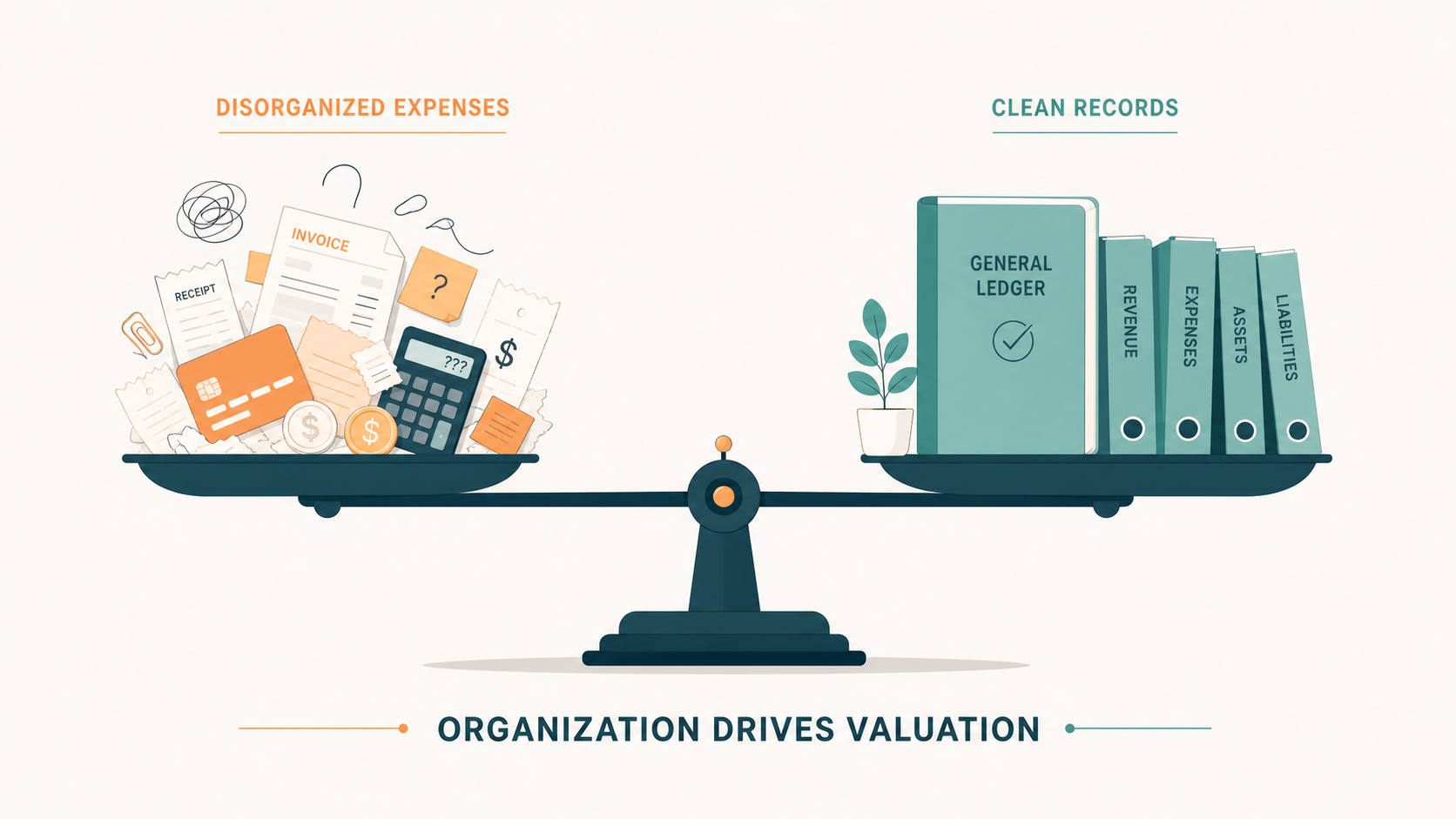
Buyers and their advisors comb through financials with a fine-tooth comb, adjusting earnings downward for non-recurring or personal items. This “add-back” process normalizes EBITDA, but if your books are messy, negotiations turn contentious. I’ve seen deals where unseparated expenses shaved 20-30% off valuations, turning a promising sale into a disappointing payout. Recent shifts in tax laws, like Vietnam’s draft Corporate Income Tax amendments, underscore the risks: unclear expense categorization can trigger audits or denied incentives, complicating exits further.
Understanding how to disentangle personal from business spending isn’t just accounting housekeeping—it’s a strategic move to maximize value. This guide breaks it down practically, from why it matters to a step-by-step framework, ensuring you’re positioned for a smoother, higher-value sale.
Table of Contents
- Why business owners need to understand separating personal expenses before selling
- Separating personal expenses from a seller’s perspective
- How investors view this issue
- Common seller mistakes
- Practical checklist for business owners
- When should sellers start preparing
- How this connects to the overall business sale journey

Why business owners need to understand separating personal expenses before selling
Picture this: You’re pitching your business to a strategic buyer. Your trailing twelve months EBITDA looks solid at $2 million, promising a 6x multiple and a tidy $12 million payout. But during financial review, the buyer identifies $300,000 in personal add-backs—meals at luxury resorts logged as “client entertainment,” vehicle leases for family cars as “fleet expenses,” and home renovations billed as “office upgrades.” Suddenly, normalized EBITDA drops to $1.7 million, valuation slips to $10.2 million, and you’re out $1.8 million before negotiations even heat up.
This isn’t hypothetical; it’s a routine reality in M&A. Clean financials build trust and support premium multiples. Mixed expenses signal sloppy management or hidden risks, prompting buyers to discount heavily or walk away. From a tax standpoint, commingled spending invites scrutiny. In jurisdictions with evolving rules, like proposed changes to corporate income tax incentives, improper categorization can lead to disallowed deductions, back taxes, or lost benefits—directly hitting your net proceeds.
Beyond valuation, separation streamlines due diligence. Buyers spend less time reconciling statements, deals close faster, and you avoid post-sale disputes over working capital adjustments. For owners, it’s about control: Enter the process with transparent books, and you dictate terms rather than reacting to buyer demands.
Ultimately, this step protects your legacy. A business sold at true market value funds your next chapter without regrets. Ignoring it risks leaving money on the table—or worse, derailing the entire transaction.
Separating personal expenses from a seller’s perspective
From where you sit as the owner, personal expenses often creep in innocently. Early-stage bootstrapping means using business accounts for everything to preserve cash. As the company grows, habits linger: that $5,000 family trip expensed for “team building,” or personal legal fees tucked into overhead. These aren’t fraud—they’re survival tactics—but they distort true business performance.
The key metric here is adjusted EBITDA, where sellers claim add-backs for one-time or non-operational items. Legitimate examples include owner perks like excessive salaries, personal travel, or non-arm’s-length transactions with family entities. Documenting these rigorously turns liabilities into valuation boosters. For instance, if you’ve been drawing a $500,000 salary in a business worth $5 million revenue, buyers may normalize it to market rate ($250,000), adding $250,000 to EBITDA.
Tax implications loom large too. Personal expenses run through the business reduce taxable income artificially, but buyers demand proof. Without separation, you face tax due diligence red flags, potential liabilities passed to you via indemnities. Proactive cleaning—reclassifying via journal entries, supported by receipts—positions you as professional and credible.
Sellers benefit most by viewing this through a buyer’s lens early. Run a mock add-back schedule: List all potential items, quantify impacts, and gather evidence. This not only quantifies upside but reveals blind spots, like recurring “miscellaneous” charges that erode multiples over time.
How investors view this issue
Buyers—whether private equity, strategics, or family offices—approach mixed expenses as risk indicators. Financial buyers prioritize predictable cash flows; any whiff of personalization suggests volatility or dependency on the owner. They apply conservative add-backs, often haircut by 50% if undocumented, to build a “worst-case” valuation.
Strategic acquirers go deeper, modeling post-acquisition synergies assuming clean ops. Personal bloat inflates costs, lowering projected margins and ROI. In due diligence, forensic accountants trace every line item. Short-sellers like those led by figures in investigative research circles have spotlighted similar issues in public companies, amplifying buyer caution in private deals.
From their perspective, separation demonstrates maturity. It signals the business runs independently, appealing to those seeking bolt-on acquisitions. Investors also eye tax exposure: Blurred lines can trigger transfer pricing audits or denied incentives under tightening regimes. Clean books mean fewer reps and warranties, lower escrow holds, and quicker closes.
In essence, buyers reward transparency with better terms. Messy finances? Expect aggressive pushes on price, extended indemnity periods, or demands for earn-outs tied to normalized performance.
Common seller mistakes
Many owners underestimate this step, leading to pitfalls that cost dearly. First, procrastination: Waiting until LOI stage leaves no time for fixes, forcing rushed adjustments that buyers reject. Second, over-optimistic add-backs: Claiming every family expense as “owner compensation” without comps or justification invites disputes. I’ve seen 40% of claimed add-backs disallowed, slashing valuations.
Third, inadequate documentation: Receipts exist, but no narrative linking to business purpose. Buyers demand bank statements, invoices, and board minutes—gaps kill credibility. Fourth, ignoring recurring personal items: One-off trips get added back; habitual ones (e.g., annual club dues) signal cultural issues, prompting deeper culture audits.
Fifth, tax oversight: Treating add-backs casually ignores VAT reclaim rules or CIT deductibility, leading to surprise liabilities. Finally, not involving advisors early: DIY separation often misses nuances, like intercompany loans disguised as expenses.
Avoid these by treating financial hygiene as core to your exit strategy. Link this to broader prep via our financial due diligence guide.
Practical checklist or framework for business owners
Here’s a actionable framework to separate expenses systematically. Start with a 12-month review of P&L and balance sheet.
- Audit all accounts: Pull last 3 years’ statements. Flag categories like travel, meals, vehicles, home office, and miscellaneous over 5% of revenue.
- Classify items: Use IRS-like rules (or local equivalents): Truly business? Recurring operational? Personal/one-off? Document with photos, emails, contracts.
- Quantify add-backs: Create a schedule: Description | Amount | Justification | Evidence. Normalize salary to market (use benchmarks). Total and impact on EBITDA.
- Journal adjustments: Work with your accountant for retroactive entries. Re-run financials showing pre/post normalized figures.
- Implement controls: Separate personal/business cards. Monthly reviews. Board-approved perks policy.
- Third-party validation: Get a review from an M&A accountant. Stress-test against buyer scrutiny.
- Update projections: Reflect clean ops in forward models for pitch decks.
For a full prep kit, download our seller readiness checklist. This process typically uncovers 10-25% EBITDA uplift.
When should sellers start preparing
Begin 12-24 months pre-market. Early allows natural normalization—e.g., phase out personal vehicle use over quarters, avoiding abrupt changes that raise flags. Align with annual audits for seamless integration.
If deal timelines compress, prioritize high-impact items (salaries, travel) first. But rushing risks errors; I’ve seen owners forfeit months of runway, delaying closes. Tie into fiscal year-ends to leverage tax planning.
Monitor external triggers: Tax law drafts signal heightened scrutiny, making now ideal. For most, starting yesterday positions you ahead of peers scrambling at term sheet stage.
How this connects to the overall business sale journey
Expense separation is a cornerstone of M&A prep, feeding directly into valuation drivers like EBITDA multiples. Clean books enhance financial due diligence, reduce legal risks, and boost buyer confidence—accelerating from teaser to close.
It interlinks with customer concentration fixes, IP audits, and growth initiatives. View your exit as a 18-36 month project: Q1-2 clean financials, Q3-4 market sounding, Q5+ negotiations. Resources like our M&A blog and glossary support the full path.
To kick off, start your M&A journey or book a confidential call with advisors.
Ready to maximize your exit value? Download our seller checklist.
Begin preparing today. Start here – The journey for business sellers.