Should You Tell Co-Founders Before Looking for Buyers?

The risks of keeping your exit plans secret from co-founders
As a business owner contemplating a sale, the idea of discreetly exploring buyers can feel like the smartest move. You want to test the waters without alerting your team, partners, or especially your co-founders. But what happens when those co-founders discover your plans through a slip-up, a leaked document, or an unexpected buyer outreach? The fallout can derail deals, fracture relationships, and slash your company’s value overnight.
I’ve advised countless founders through M&A processes, and this scenario plays out more often than you’d think. One seller I worked with nearly lost a prime deal because his co-founder felt blindsided during due diligence, leading to public discord that scared off the buyer. Co-founders aren’t just colleagues—they’re often equal stakeholders with legal rights, emotional ties, and veto power. Deciding whether, when, and how to tell them is a pivotal early step that demands careful strategy.
This isn’t about paranoia; it’s about protecting your equity and timeline. Missteps here can trigger non-compete disputes, shareholder lawsuits, or forced renegotiations. On the flip side, early alignment can unlock smoother transitions and higher valuations. Let’s break it down step by step so you can make an informed call tailored to your situation.
Table of Contents
- Why business owners need to understand telling co-founders before selling
- Telling co-founders from a seller’s perspective
- How investors view this issue
- Common seller mistakes
- Practical checklist for business owners
- When should sellers start preparing
- How this connects to the overall business sale journey
Why business owners need to understand telling co-founders before selling
Transparency with co-founders isn’t optional—it’s a foundational element of any successful exit. Failing to grasp this early exposes you to risks that compound as the process advances. Legal agreements, like shareholder pacts or co-founder contracts, often mandate disclosure for major decisions such as sales. Breaching these can lead to injunctions halting your deal.
Beyond legalese, trust is the currency of founder relationships. Co-founders have invested sweat equity alongside you, and secrecy breeds resentment. This emotional rift can manifest as sabotage: delayed approvals, leaked info to competitors, or demands for outsized payouts. Quantitatively, deals involving aligned founder teams close 20-30% faster, per patterns I’ve observed in Vietnam’s M&A landscape.
Understanding this dynamic helps you frame the conversation productively. It positions you as a leader steering the company toward growth, rather than a solo operator cashing out. Early clarity also lets you gauge their buy-in, identify blockers, and negotiate internal terms before external buyers enter the picture. In short, it’s your first valuation safeguard—disunity signals risk to acquirers, depressing offers by multiples.
Telling co-founders from a seller’s perspective
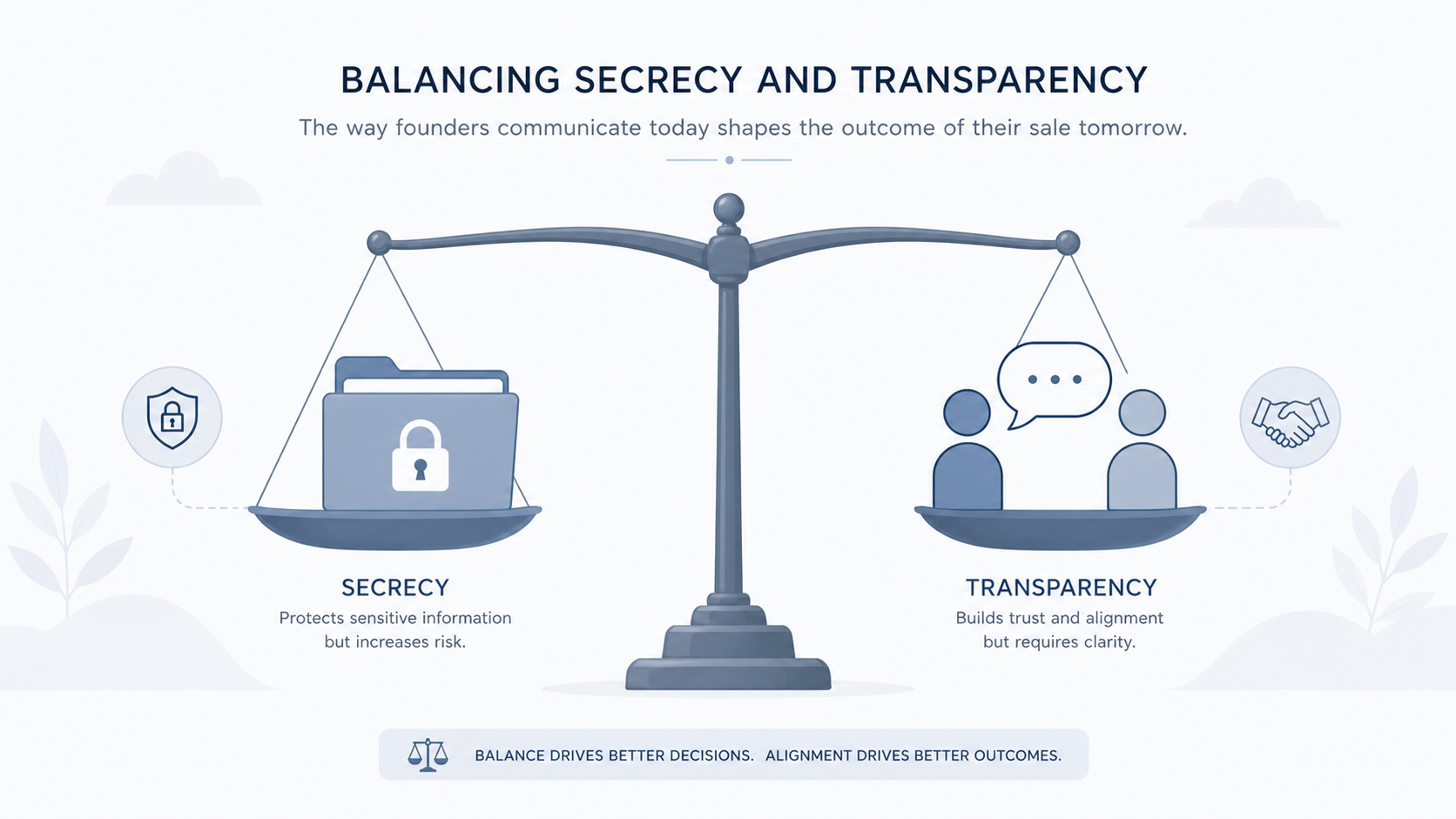
From the initiating seller’s viewpoint, the instinct to stay quiet stems from valid fears: fear of derailing operations, fear of premature leaks, fear of rejection. If your co-founder is risk-averse or deeply attached to the vision, broaching a sale might spark immediate pushback. Yet, this short-term comfort often costs long-term control.
Consider the power dynamics. If you’re the majority shareholder, you might legally proceed unilaterally, but practically, co-founders control key levers—customer relationships, IP knowledge, team loyalty. Their silence or subtle resistance can tank morale and metrics, which buyers scrutinize via financial due diligence.
The seller’s best path? Frame it as an evolution, not an end. Share market data showing why now is optimal—rising multiples in your sector, strategic buyer interest. Prepare a neutral one-pager outlining timelines, potential outcomes, and personal upsides like earn-outs preserving involvement. This shifts the dialogue from loss to opportunity, increasing alignment odds.
Timing matters too. Test waters informally over coffee before formal talks. Gauge reactions to ‘hypotheticals’ like ‘What if a buyer offered 8x EBITDA?’ This builds toward full disclosure without shock. Ultimately, sellers who lead with candor retain narrative control, avoiding reactive defenses later.
How investors view this issue
Buyers—strategic or financial—prioritize post-deal stability above all. Founder disharmony is a red flag, signaling integration risks, talent flight, or hidden liabilities. During initial outreach, they probe governance: ‘Are all shareholders aligned?’ A hesitant ‘yes’ prompts deeper scrutiny.
Strategic buyers, seeking synergies, view unified teams as execution multipliers. Financial buyers, focused on valuation multiples, discount for ‘key person’ dependencies exacerbated by founder rifts. In one case, a divided duo led to a 15% haircut as the buyer demanded escrow holds for dispute resolution.
Investors also assess disclosure ethics. If co-founders learn via buyer NDA requests, it erodes credibility, potentially killing momentum. Savvy acquirers build in clauses requiring full shareholder consent pre-LOI. They favor sellers who’ve pre-aligned, viewing it as maturity proof. Your pitch strengthens when you can say, ‘Our team is fully onboarded on the opportunity.’
Common seller mistakes
Initiating sellers often stumble into traps that amplify costs. First, total secrecy: Engaging advisors or teasers without co-founder knowledge risks leaks via shared networks. One founder lost a deal when his partner fielded a direct buyer call, sparking accusations of betrayal.
Second, delayed disclosure: Waiting until term sheet stage leaves no room for digestion. Co-founders react defensively, demanding vetoes or premiums. Third, poor framing: Announcing ‘I’m selling my shares’ versus ‘Exploring strategic options for us all’ poisons wells.
Fourth, ignoring legal nuances: Assuming equal founders means equal say overlooks vesting cliffs or drag-along rights. Fifth, neglecting emotional prep: Founders grieve visions lost; skipping empathy leads to passive resistance like slowed handovers.
Avoid these by documenting everything—meeting notes, shared docs. Use neutral advisors to facilitate. Common thread? Underestimating co-founders’ stakes turns allies into obstacles.
Practical checklist or framework for business owners
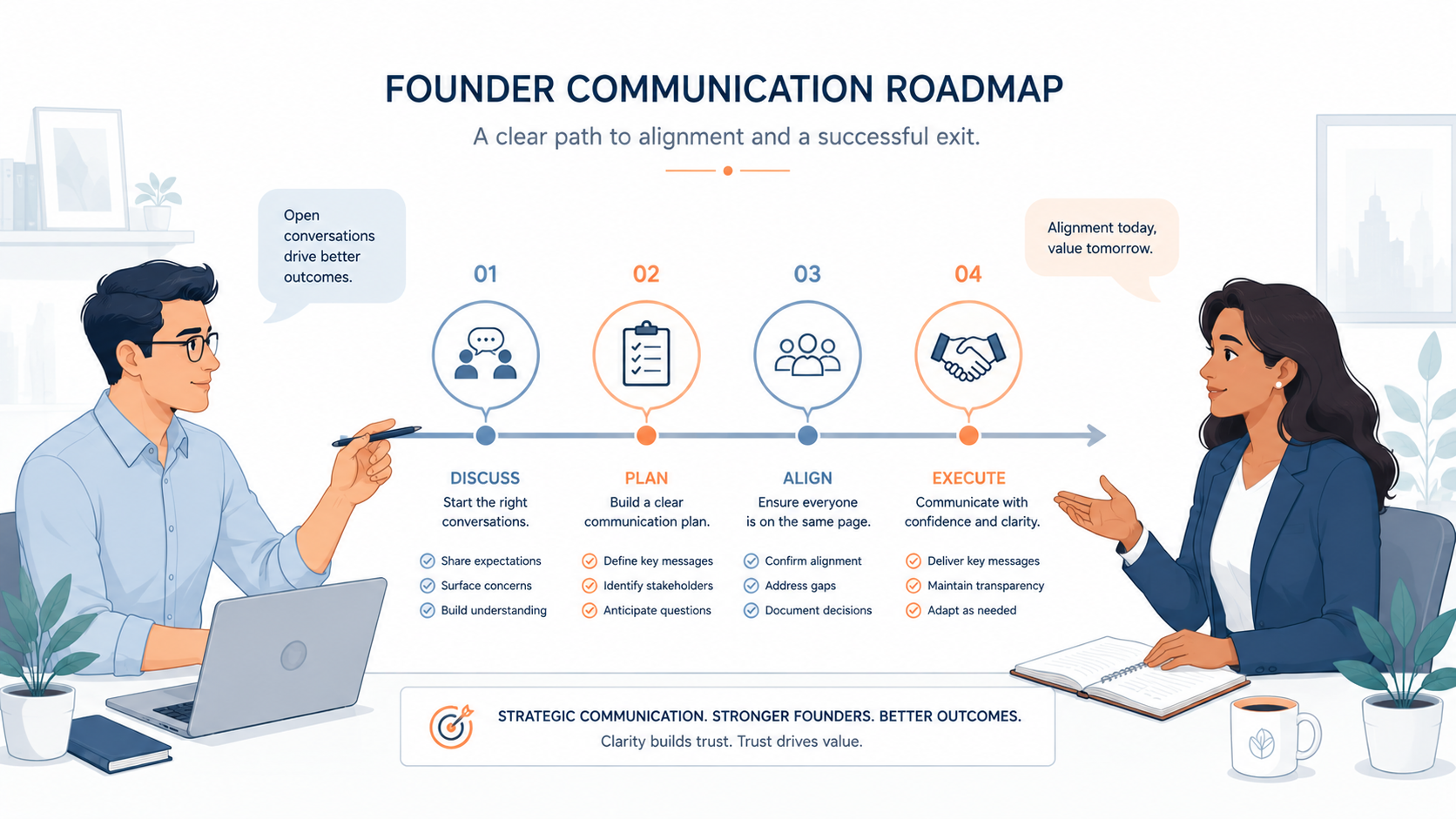
Here’s a step-by-step framework to handle co-founder disclosure effectively:
- Self-assess alignment potential: Review shareholder agreements for rights/obligations. Map each co-founder’s motivations—financial needs, legacy desires.
- Gather intel discreetly: Monitor market comps, buyer appetite without formal outreach. Use our M&A glossary for key terms like LOI or earn-out.
- Choose the setting: Off-site, neutral venue. One-on-one first if multiple founders.
- Prepare materials: Market overview, valuation range (e.g., 5-7x EBITDA), timeline sketch. Highlight shared benefits.
- Lead with questions: ‘How do you feel about scaling via acquisition?’ Listen actively.
- Propose next steps: Joint advisor engagement, confidentiality pact.
- Document consensus: Minutes, MOUs. Plan contingencies like buyouts.
- Monitor and iterate: Regular check-ins to sustain buy-in.
This checklist minimizes surprises, fostering collaboration. Download our seller checklist for a fuller prep guide.
When should sellers start preparing
Begin yesterday—ideally 12-18 months pre-market. Early signals alignment issues fixable via restructurings or incentives. If dynamics are tense, use this window for mediation or partial buyouts.
Trigger points: Personal milestones (retirement, liquidity needs), market peaks (sector M&A waves), or internal shifts (growth plateaus). Don’t wait for perfect conditions; preparation builds them.
Pro tip: Tie into annual planning. Frame as ‘succession strategy’ to normalize. Starting late compresses timelines, heightening emotions and errors.
How this connects to the overall business sale journey
Co-founder alignment is step one in the M&A roadmap: prep, market, negotiate, close. It underpins clean due diligence, strong teasers, and buyer confidence. Unresolved tensions ripple through key valuation factors, from EBITDA adjustments to retention clauses.
Integrate with broader efforts: Normalize financials, diversify leadership. Visit our M&A blog for more on these interconnections. Once aligned, start your M&A journey seamlessly.
Ready to align your team? Book a confidential call with our advisors.
Begin with structure. Download our seller readiness checklist.