A Strong Buyer List Is Built Before the Sale Begins
Many owners think finding a buyer is a marketing exercise: prepare a teaser, send it to a few names, wait for interest, and compare offers. In practice, the quality of the buyer list often determines the quality of the entire sale process. A weak list creates silence, slow responses, low offers, and excessive dependence on one interested party. A strong list creates tension, optionality, and a better chance of finding a buyer who understands the company’s value.
This matters even more in a market where buyers are selective. M&A activity may be resilient in certain markets, including Vietnam, but that does not mean every company attracts serious interest automatically. Buyers still need strategic logic, financial comfort, operational confidence, and a clear reason to act now.
For sellers, the goal is not to contact as many buyers as possible. The goal is to identify the right universe of credible acquirers, rank them intelligently, approach them discreetly, and protect confidentiality throughout the process. A disciplined buyer list helps owners avoid the two most common extremes: speaking to too few buyers or broadcasting sensitive information too widely.
This guide explains how business owners should think about building a buyer list before selling, how investors evaluate opportunities, and what practical steps can reduce valuation loss or deal failure.
Table of Contents
- Why business owners need to understand buyer lists before selling?
- Buyer list building from a seller’s perspective
- How investors view this issue?
- Common seller mistakes
- Practical checklist or framework for business owners
- When should sellers start preparing?
- How this connects to the overall business sale journey
Why Business Owners Need to Understand Buyer Lists Before Selling?
A buyer list is not just a spreadsheet of company names. It is a strategy document. It reflects who could buy the business, why they would buy it, how much they might value it, what risks they may see, and how likely they are to complete a transaction.
Owners who do not understand this often enter a sale process with unrealistic expectations. They assume that because the company is profitable, buyers will immediately compete for it. But buyers do not evaluate a business in the same emotional or historical way that founders do. They ask a narrower set of questions: Does this acquisition accelerate our strategy? Can we integrate it? Are the earnings sustainable? Are the risks manageable? Is the price justified compared with other opportunities?
The buyer list matters because different buyers value the same company differently. A strategic buyer may pay for market access, customer relationships, supply chain control, product capability, or management talent. A financial investor may focus more heavily on recurring earnings, cash conversion, growth runway, governance, and exit potential. A local competitor may see operational synergies. An international buyer may see platform expansion. A family office may value stable cash flow and succession continuity.
If the seller approaches only one category of buyer, the valuation conversation becomes narrow. If the seller approaches the wrong category, the process may produce interest but not credible offers. If the seller approaches too many unqualified parties, confidentiality risk rises sharply.
A strong buyer list also protects negotiation leverage. When a seller has only one interested party, that buyer often controls the pace, scope of diligence, and final price adjustment. When a seller has several credible parties, the owner can compare not only headline valuation but also payment structure, conditions, timing, cultural fit, and post-closing expectations.
This is especially important because buyers have become more disciplined in due diligence. AI-enabled tools are increasingly influencing how diligence teams review documents, identify inconsistencies, and analyze patterns. That does not replace human judgment, but it does mean sellers should expect faster and more detailed scrutiny once buyers engage. The buyer list must therefore include parties that are not only interested, but also capable of processing information professionally and closing responsibly.
Buyer List Building from a Seller’s Perspective
From the seller’s perspective, the buyer list should begin with a simple question: Who has a stronger business case for owning this company than we do?
That question changes the process. Instead of looking for anyone with capital, the owner starts looking for parties with strategic motivation. The best buyers usually have a clear reason to acquire: they want to enter a market, expand capacity, add customers, secure supply, acquire technology, consolidate competitors, or build a platform.
A seller should think in layers. The first layer includes obvious buyers: direct competitors, suppliers, distributors, customers, and companies in adjacent sectors. These names are easy to identify, but they are not always easy to approach because confidentiality risk may be high. A direct competitor may be a logical buyer, but sharing sensitive information too early can be dangerous.
The second layer includes strategic buyers that are not immediately obvious. These may be companies in neighboring industries, regional players seeking expansion, or larger groups that have publicly signaled interest in the sector. They may value the business more highly because the acquisition solves a specific growth problem.
The third layer includes financial buyers: private equity funds, family offices, holding companies, search funds, and investment groups. These buyers may not have direct operating synergies, but they can be attractive if the business has stable earnings, strong management, growth potential, and clean governance.
The fourth layer includes hybrid buyers, such as strategic investors backed by financial sponsors or industry operators building acquisition platforms. These buyers can be particularly relevant when the company is too specialized for broad auction interest but attractive to a focused consolidation strategy.
For each category, the seller should consider three dimensions: strategic fit, financial capacity, and execution credibility. A buyer who loves the business but lacks capital is not enough. A buyer with capital but no strategic logic may not pay a strong price. A buyer with both logic and capital but no transaction experience may create delays and uncertainty.
This is where preparation matters. Before contacting anyone, owners should clarify what they are selling. Is the goal a full exit, majority sale, minority investment, growth capital transaction, or phased succession? Different buyer types are suitable for different objectives. A buyer list for a 100 percent sale may look very different from a buyer list for a majority recapitalization where the founder stays involved.
Owners preparing for this stage can benefit from reviewing a seller readiness checklist before outreach begins. The list of potential buyers should be built alongside the company’s preparation work, not after the decision to sell has already become urgent.
How Investors View This Issue?
Investors do not view a buyer list the same way sellers do. Sellers often ask, “Who might be interested?” Investors ask, “Why would we win this asset, and what must be true for us to own it?”
That difference matters. A buyer may appear relevant from the outside but still decline quickly if the acquisition does not fit its mandate, size range, geography, sector focus, return target, or integration capability. Serious investors screen opportunities efficiently. If the teaser does not match their investment logic, they may not proceed even if the company is profitable.
Strategic buyers usually evaluate the opportunity through a business-case lens. They ask whether the acquisition improves revenue, reduces cost, strengthens distribution, adds capabilities, or removes a competitive threat. They will also assess integration complexity. If the target depends heavily on the owner, has weak reporting, or lacks transferable systems, the buyer may reduce valuation or require earn-outs and retention conditions.
Financial buyers look at the company as an investment platform. They assess EBITDA quality, cash flow, growth potential, customer concentration, margin stability, management depth, and exit routes. They may be open to strong businesses in fragmented sectors, but they usually need confidence that the company can scale beyond the current owner.
Both groups care deeply about diligence readiness. Once buyers show interest, they will expect coherent financials, legal documents, operational information, customer data, contracts, tax records, employment matters, and governance records. As AI becomes more involved in due diligence workflows, inconsistencies that once took weeks to uncover may surface much earlier. That makes it harder for sellers to rely on charm, relationships, or broad narratives if the underlying data is weak.
Buyers also evaluate the sale process itself. A clean, controlled process signals professionalism. A chaotic process raises concerns. If buyers sense that the seller is contacting the market randomly, leaking information, or changing expectations frequently, they may question whether the transaction can close.
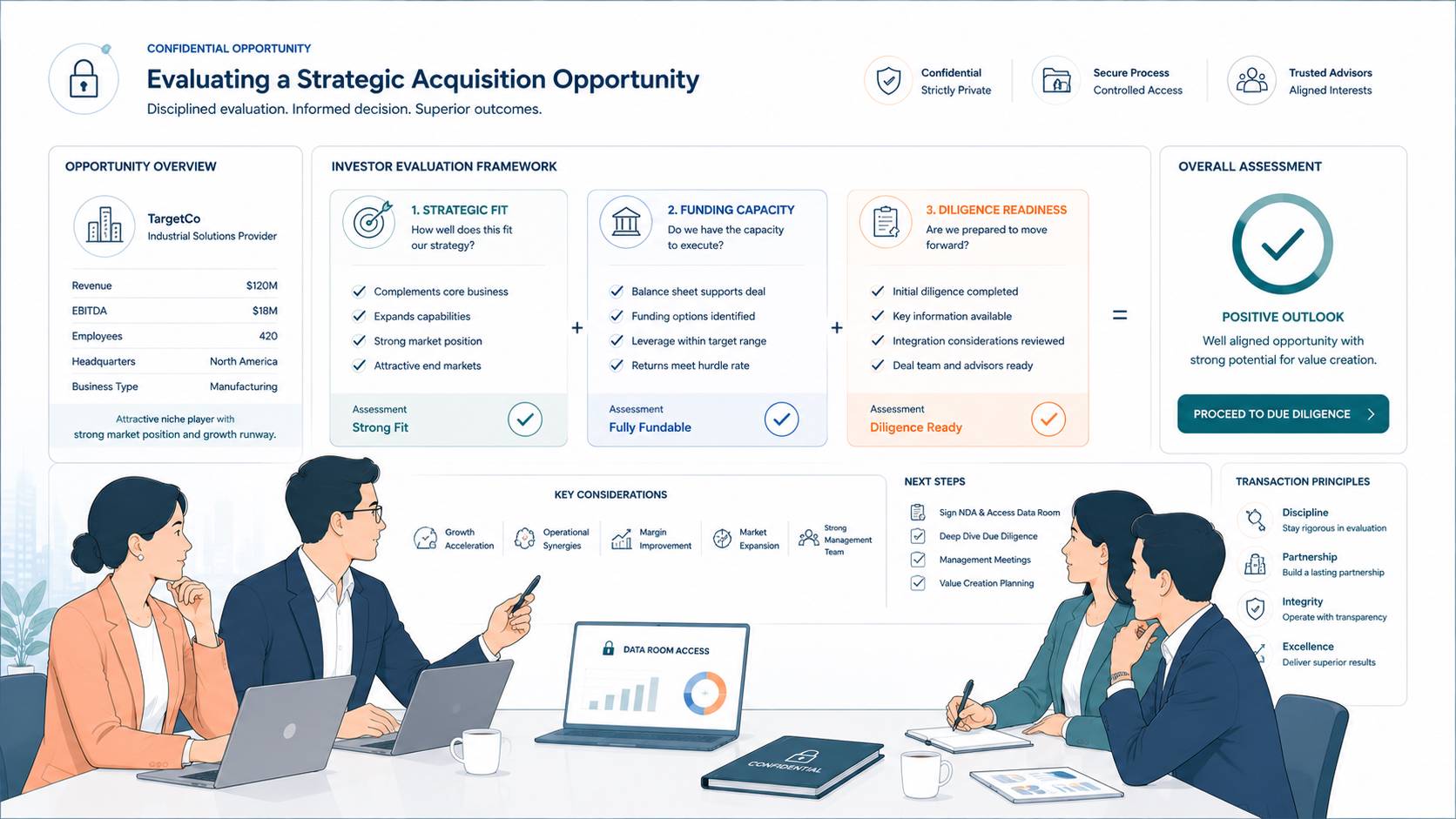
From an investor’s perspective, the best seller is not necessarily the one with the most aggressive valuation expectation. It is the seller who understands value drivers, provides credible information, manages confidentiality, and engages with buyers who have a genuine reason to transact.
For owners who want to understand how the diligence stage affects buyer confidence, this guide on what investors look for during due diligence is a useful companion to buyer list planning.
Common Seller Mistakes
Building a buyer list looks simple from the outside, but many sale processes underperform because the list is poorly designed. The mistakes usually begin before the first buyer is contacted.
1. Treating the Buyer List as a Contact List
A list of names is not enough. Sellers need to know why each buyer is relevant, how to approach them, what information to disclose, and what concerns they may raise. Without that analysis, outreach becomes generic and weak.
2. Contacting Competitors Too Early
Competitors may be logical buyers, but they also create the highest confidentiality risk. A competitor can use leaked information to target customers, employees, suppliers, or pricing strategy. Sellers should not exclude competitors automatically, but they should control timing, information access, and confidentiality protections carefully.
3. Assuming the Biggest Buyer Is the Best Buyer
A large company may have capital, but it may also have slow decision-making, internal politics, strict approval processes, or limited interest in smaller acquisitions. Sometimes a mid-sized strategic buyer with a clear growth need is more motivated than a large multinational with many competing priorities.
4. Ignoring Financial Buyers
Some owners assume private equity or investment groups are only relevant for very large companies. That is not always true. Financial buyers can be suitable when a company has stable earnings, professional systems, and growth potential. However, they will typically require strong evidence of financial quality and management depth.
5. Overlooking Buyer Mandates
A buyer may like the sector but still be unsuitable because the company is too small, too large, too early-stage, too owner-dependent, or outside its geographic focus. Approaching buyers outside their mandate wastes time and can make the process look unfocused.
6. Revealing Too Much in the First Approach
The first outreach should create interest without exposing sensitive details. Sellers should not disclose customer names, exact margins by product, employee-sensitive information, proprietary processes, or supplier terms before proper screening and confidentiality agreements.
7. Building the List Too Late
If the buyer list is created only after the owner is ready to sell, the process becomes reactive. The best buyer relationships often take time to understand. Owners should study potential acquirers long before formal outreach.
8. Failing to Rank Buyers
Not all buyers deserve the same priority. A disciplined seller should rank buyers by strategic fit, ability to pay, likelihood of closing, confidentiality risk, and preferred transaction structure. This helps determine outreach sequencing.
9. Running an Uncontrolled Process
Some sellers allow buyers to set the agenda. One buyer asks for a call, another asks for detailed financials, another requests site access, and the owner responds case by case. This creates inconsistency. A structured process protects both leverage and credibility.
10. Confusing Interest with Commitment
Many buyers will take a meeting. Fewer will sign a non-disclosure agreement. Fewer still will submit an indication of interest, complete due diligence, and fund a closing. Sellers should distinguish polite curiosity from real transaction intent.
Practical Checklist or Framework for Business Owners
A practical buyer list should be built in stages. The following framework helps owners move from a broad universe to a qualified outreach plan.
Step 1: Define the Seller’s Objectives
Before listing buyers, clarify the desired outcome. The owner should answer:
- Do I want a full exit or partial sale?
- Am I willing to stay for a transition period?
- Do I want cash at closing, deferred payments, or an earn-out?
- How important are employees, brand continuity, and customer relationships?
- Would I accept a minority investor instead of selling control?
These answers determine which buyers are realistic. A founder seeking a clean exit may not fit a buyer that requires long-term founder involvement. A seller who cares deeply about legacy may reject a buyer known for aggressive integration.
Step 2: Map Buyer Categories
Create separate categories rather than one combined list:
- Direct strategic buyers: competitors, consolidators, or companies in the same sector.
- Adjacent strategic buyers: companies that could expand into the seller’s market or product line.
- Vertical buyers: suppliers, distributors, or customers seeking control over the value chain.
- Financial buyers: private equity funds, family offices, holding companies, and investment groups.
- Hybrid buyers: operator-investor groups or platforms backed by capital partners.
This structure prevents the seller from overlooking buyers who do not appear obvious at first glance.
Step 3: Identify Strategic Logic
For every buyer name, write one or two sentences explaining why that party might acquire the business. If you cannot explain the logic clearly, the buyer may not belong on the priority list.
Examples of strategic logic include market entry, customer access, product expansion, manufacturing capability, technology acquisition, distribution reach, talent acquisition, or consolidation advantage. Avoid vague reasons such as “they are large” or “they have money.” Capital alone is not a strategic rationale.
Step 4: Assess Financial Capacity
A buyer must be able to fund the deal. This does not mean the seller needs perfect knowledge of the buyer’s balance sheet, but there should be reasonable evidence of capacity. Consider company size, acquisition history, investor backing, market position, and likely access to financing.
For financial buyers, review their investment criteria: sector focus, deal size, control preference, geography, return expectations, and holding period. If a buyer’s mandate does not match the company, interest is unlikely to become a serious offer.
Step 5: Evaluate Confidentiality Risk
Each buyer should be scored for confidentiality sensitivity. A direct competitor may offer strong strategic logic but high information risk. A financial buyer may present lower competitive risk but higher diligence requirements. A customer or supplier may be attractive, but disclosure could affect commercial relationships if the deal does not close.
Confidentiality risk should influence outreach sequence. In many cases, sellers approach lower-risk financial or adjacent strategic buyers before contacting direct competitors.
Step 6: Rank Buyers by Priority
Use a simple ranking system:
- Tier 1: strongest strategic fit, credible capacity, reasonable confidentiality risk, high likelihood of serious engagement.
- Tier 2: plausible buyers with some uncertainty around fit, capacity, or timing.
- Tier 3: opportunistic or lower-probability buyers that may be useful later if the process needs broader reach.
This ranking allows the seller to manage outreach in waves. It also prevents a common mistake: contacting everyone at once and losing control of the process.
Step 7: Prepare Buyer-Specific Messaging
Different buyers care about different points. A strategic buyer may respond to market access and synergies. A financial buyer may focus on cash flow, growth runway, and management depth. A vertical buyer may care about supply security or distribution control.
The teaser and outreach message should be consistent but not identical for every buyer. The core facts must remain accurate, but the emphasis can be tailored to the buyer’s likely rationale.
Step 8: Control Information Release
Information should be released in stages:
- Anonymous teaser or high-level introduction.
- Confidentiality agreement.
- Information memorandum or management discussion.
- Preliminary offer or indication of interest.
- Data room access for shortlisted parties.
- Detailed due diligence after clear process milestones.
This staged approach protects the seller while allowing serious buyers to build conviction. Owners should also prepare a clean data room before deep diligence begins. For practical guidance, see this article on how to structure an M&A data room.

Step 9: Track Buyer Responses Professionally
A buyer list becomes more valuable when it is actively managed. Track who was contacted, when they responded, what questions they asked, what concerns they raised, and whether they should remain in the process. This helps the seller identify patterns. If multiple buyers raise the same concern, the issue may need to be addressed before formal offers are requested.
Step 10: Revisit the List as the Process Evolves
The first buyer list is rarely perfect. As discussions progress, the seller may learn that certain buyer categories are more interested than expected, while others are not active. The list should be refined, not treated as fixed.
When Should Sellers Start Preparing?
Sellers should begin thinking about the buyer universe at least 12 to 24 months before a planned sale. That may sound early, but buyer list preparation is not only about contacting buyers. It is about understanding what the market will value and what may reduce buyer confidence.
Early preparation allows owners to ask important questions:
- Which buyers would see the strongest strategic value in this company?
- What weaknesses would make those buyers hesitate?
- What financial, legal, or operational improvements would increase buyer confidence?
- Which buyer types would require the founder to remain after closing?
- Which buyers may create unacceptable confidentiality or cultural risks?
If the likely buyers are strategic acquirers, the owner may need to strengthen management, reduce founder dependency, document processes, and clarify customer contracts. If financial buyers are likely, the owner may need to improve reporting, normalize earnings, strengthen governance, and demonstrate scalable growth.
Timing also affects market positioning. When M&A markets are uncertain, buyers become more selective and process discipline becomes more important. In resilient pockets of activity, sellers still need to show why their company deserves attention ahead of other opportunities. A thoughtful buyer list helps the owner identify who is most likely to act despite uncertainty.
Owners should not wait until they are tired, under pressure, or facing succession urgency. A rushed sale often leads to a rushed buyer list, and a rushed buyer list often leads to limited leverage. Preparation gives the seller more options: sell now, wait, improve the business, or pursue a different transaction structure.
If you are not sure whether your company is ready for buyer outreach, you can get an initial assessment before launching a formal process.
How This Connects to the Overall Business Sale Journey
The buyer list is one part of a larger sale journey. It connects directly to valuation, preparation, confidentiality, negotiation, due diligence, and closing.
First, it connects to valuation. Valuation is not created only by financial performance. It is also shaped by buyer motivation. A company may be worth more to a buyer that can unlock clear synergies or strategic advantages. Without the right buyer list, that value may never be discovered.
Second, it connects to preparation. If the most likely buyers will care about recurring revenue, customer concentration, management depth, or compliance quality, the seller can improve those areas before going to market. The buyer list becomes a roadmap for readiness.
Third, it connects to confidentiality. A sale process exposes sensitive information. The buyer list determines who receives that information and when. Poor buyer selection can create commercial damage even if no deal closes.
Fourth, it connects to negotiation. Sellers with multiple credible buyers can negotiate from a position of greater confidence. Sellers with only one buyer often face difficult trade-offs, especially if diligence uncovers issues late in the process.
Fifth, it connects to deal certainty. The best buyer is not always the highest initial bidder. A buyer that understands the sector, has funding capacity, respects confidentiality, and can complete diligence efficiently may be more valuable than a buyer who submits an aggressive but unreliable offer.
A disciplined sale process therefore starts well before buyer outreach. Owners should prepare their company, define their objectives, build a thoughtful buyer universe, control the release of information, and remain objective about buyer quality.
The international M&A environment rewards sellers who are prepared, realistic, and selective. A market may show resilience, but individual transactions still depend on fundamentals. Buyers will test the story. They will examine the numbers. They will compare the opportunity with alternatives. Increasingly, they will use more advanced tools to identify inconsistencies and diligence issues quickly.
For owners, the practical lesson is clear: do not treat the buyer list as an administrative task. Treat it as a strategic asset. The right list can create competition, protect confidentiality, improve valuation tension, and increase the probability of a successful closing. The wrong list can waste months, weaken leverage, and expose the business to unnecessary risk.
If you are preparing for a sale, start by asking not only “Who could buy my company?” but “Who has the strongest reason to buy it, the ability to close, and the discipline to be trusted with confidential information?” That is the foundation of a serious buyer list.
Prepare before the market sees your business. Download our seller checklist.
Thinking about a future exit? Start your M&A journey.