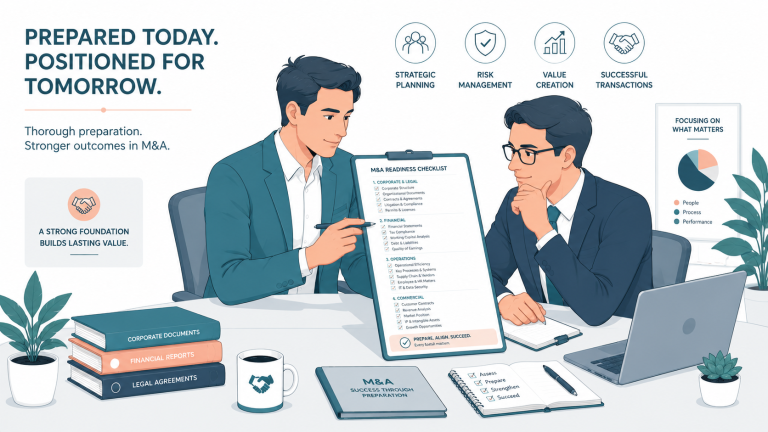
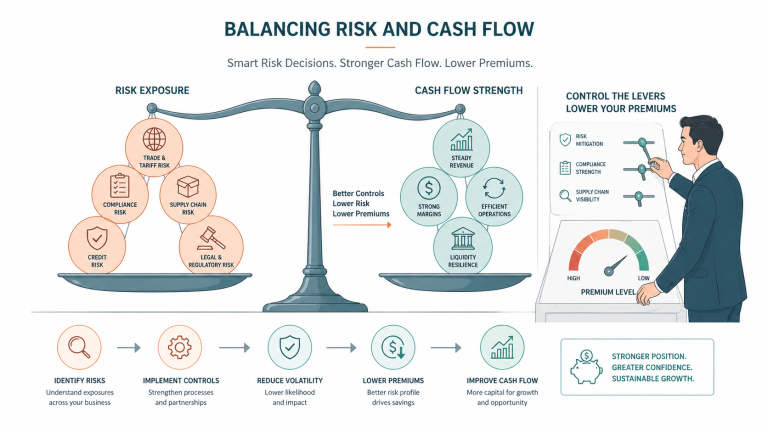
The Hidden Risk Buyers Notice Before You Do
Many owners think founder dependency is a personality issue: the company relies on them because they are committed, trusted, and unusually capable. In a sale process, buyers see it differently. They see concentration risk. If the founder controls key customer relationships, pricing decisions, supplier negotiations, cash discipline, hiring, product knowledge, and informal problem-solving, the business may be profitable today but fragile after completion.
This matters even more in a market where supply chains, tariffs, capital flows, and buyer priorities are changing quickly. Trade tensions have shown how exposed companies can be when their sourcing, inventory, or customer base is tied too closely to one geography or one decision-maker. Even large global groups face questions about China exposure, India diversification, and the difficulty of moving complex supply chains. For a privately owned company, the equivalent risk is often the founder.
Reducing founder dependency before a sale does not mean removing the owner from the business overnight. It means turning personal know-how into institutional capability. It means making the company easier to understand, easier to diligence, easier to transfer, and easier to scale under new ownership. Done well, it can protect valuation, reduce buyer anxiety, and create a smoother handover for everyone involved.
Table of Contents
- Why business owners need to understand founder dependency before selling
- Founder dependency from a seller’s perspective
- How investors view this issue
- Common seller mistakes
- Practical checklist or framework for business owners
- When should sellers start preparing?
- How this connects to the overall business sale journey
Why Business Owners Need to Understand Founder Dependency Before Selling
Founder dependency is one of the most common reasons a good company receives a cautious valuation. The company may have healthy revenue, loyal customers, and strong margins, but if buyers believe those strengths depend mainly on the owner’s personal involvement, they will adjust their view of risk.
In practical terms, founder dependency appears when the business cannot operate predictably without the founder’s daily judgment. The founder may be the only person who can calm an angry key customer, approve unusual discounts, negotiate with the main supplier, manage the bank, resolve production issues, or motivate senior staff. These activities may feel normal because they have evolved over years. During due diligence, however, buyers ask a simple question: what exactly are we acquiring if the founder steps back?
That question becomes sharper when the market environment is uncertain. Tariffs aimed at Asian supply chains and consumer products have made sourcing decisions more sensitive. Baby products have been expected to become more expensive and harder to find under tariff pressure. Some small businesses tethered to China have reportedly sold off inventory and cut jobs amid escalating trade tensions. These examples point to a broader lesson for sellers: resilience is no longer a nice-to-have. Buyers want companies that can manage disruption through systems, teams, and data, not only through the founder’s personal instincts.
The same principle applies to succession. Many small-business owners lack a formal succession plan, which means the company may be operationally successful but strategically unprepared for ownership transition. In M&A, that gap can reduce buyer confidence. A buyer may still proceed, but they may demand a lower price, a larger earn-out, a longer founder transition period, or stronger warranties around customer retention.
Understanding founder dependency before selling allows owners to address the issue while they still have time. It is far better to show buyers a company that has already reduced key-person risk than to promise that it can be fixed after signing.
Founder Dependency from a Seller’s Perspective
From the seller’s perspective, founder dependency often feels like strength. The founder knows the history of every customer, remembers supplier commitments without checking contracts, spots operational problems early, and can make decisions faster than a committee. In the early years, this concentration of knowledge is often the reason the business survives.
Over time, however, the same strength can become a constraint. The business grows around the founder rather than beyond the founder. Senior managers wait for approval. Customers ask for the founder directly. Finance teams rely on informal explanations. Salespeople discount based on what they think the founder would accept. The company may look efficient, but the efficiency depends on one person absorbing complexity.
Before a sale, sellers need to separate value created by the founder from value trapped inside the founder. Buyers will give credit for the first and discount the second. A founder who has built a trusted brand, trained a competent management team, and created repeatable processes has created transferable value. A founder who personally holds the only meaningful relationships and decision logic has created value that may walk out the door.
This distinction is especially important for owners who expect to exit fully after completion. If the founder wants a clean sale, the company must demonstrate that it can operate without constant founder intervention. If the founder is willing to stay for a transition period, dependency still matters because buyers will assess how long that transition needs to be and how much risk remains after it ends.
For family-owned or founder-led companies, the issue is also emotional. Delegating key relationships can feel risky. Documenting decisions can feel bureaucratic. Letting management make mistakes can feel inefficient. But a sale process is not only about today’s operating convenience. It is about proving that the business has an independent future.
A useful mindset shift is to think like an acquirer. The goal is not to make the founder less important historically. The goal is to make the business more investable tomorrow.
How Investors View This Issue
Investors assess founder dependency through the lens of downside protection. They are not only asking whether the business has performed well. They are asking whether performance is repeatable under new ownership, new incentives, and potentially new strategic direction.
Private equity buyers, strategic acquirers, and family offices may evaluate the issue differently, but their concerns often overlap. They want to know whether customer revenue will remain stable, whether the management team can execute the plan, whether margins depend on special founder-negotiated arrangements, and whether the business can absorb shocks without the founder acting as the central control point.
This is particularly relevant in Asia’s M&A market, where private equity and supply-chain repositioning are increasingly connected. Investors are not only buying profit streams; they are also evaluating operating resilience, supplier alternatives, management depth, and the ability to scale across markets. A founder-dependent company may be attractive, but it may be harder to finance, integrate, and grow.
Large global companies show the same dynamic at a different scale. Questions around whether a major technology company could exist without its China ties highlight how deeply operational value can be embedded in relationships, manufacturing ecosystems, and accumulated know-how. Separate discussion around that company’s India strategy being tested by political pressure shows that diversification is not simply a slogan; it is operationally difficult. For privately owned businesses, founder dependency is a similar embedded risk. It cannot be fixed by one presentation slide.
Investors will usually test founder dependency in several ways:
- Management interviews: Can senior leaders explain strategy, risks, KPIs, pricing logic, and customer issues without deferring to the founder?
- Customer diligence: Do customers buy because of the company’s capabilities or because of a personal founder relationship?
- Financial review: Are margins supported by documented pricing discipline, or by founder judgment that others cannot replicate?
- Operational review: Are processes documented, measured, and owned by accountable managers?
- Transition planning: Can the founder step back in stages without disrupting performance?
If the answer to these questions is weak, investors may not walk away immediately. Instead, they may reprice risk. They may propose contingent payments, request a longer founder employment agreement, ask for non-compete and non-solicitation protections, or insist on retaining certain senior staff as a condition to closing.
For sellers, this is why founder dependency should be treated as a valuation issue, not a cosmetic governance issue.
Common Seller Mistakes
Founder dependency becomes costly when sellers recognize it too late. Many owners only start addressing it after a buyer has already raised concerns. At that point, any fix may look reactive rather than credible.
1. Assuming Loyalty Equals Transferability
Owners often believe that long-standing customers will remain because they are loyal to the company. During diligence, buyers will ask whether customers are loyal to the brand, the product, the service model, or the founder personally. If the answer is unclear, the buyer may treat customer retention as uncertain.
A practical test is simple: when a top customer has a problem, who do they call first? If the answer is always the founder, the relationship may not be fully transferable.
2. Keeping Pricing Logic Informal
Many founder-led businesses price through experience rather than documented policy. The founder knows which customers can accept an increase, which products can carry higher margin, and which orders should be rejected. That knowledge is valuable, but if it is not documented, buyers may question whether margins are sustainable.
Pricing discipline should be visible in approval thresholds, margin reports, discount policies, and customer profitability analysis. It should not live only in the founder’s memory.
3. Delegating Tasks but Not Authority
Some founders believe they have delegated because managers handle daily tasks. But if important decisions still require founder approval, the company remains dependent. Buyers distinguish between administrative delegation and real management authority.
Effective delegation means managers own outcomes, make defined decisions, report against KPIs, and can explain trade-offs. The founder may still supervise, but they should not be the operating bottleneck.
4. Preparing the Data Room Without Preparing the Business
A polished data room helps, but it cannot hide operational dependency. If documents show that contracts, customer correspondence, supplier negotiations, and strategic decisions all flow through the founder, the data room may actually expose the risk more clearly.
Sellers should prepare documentation and operating structure together. If you are building your diligence materials, our guide on how to structure an M&A data room can help you think about what buyers expect to see, but the underlying business must also support the story.
5. Waiting Until the Sale Process Starts
The most damaging mistake is timing. Founder dependency cannot be convincingly fixed in a few weeks. Buyers want evidence, not intention. They want to see that managers have already led customer meetings, processes have already worked, and reporting has already guided decisions without the founder controlling every detail.
A late fix may still help, but it rarely carries the same credibility as a pattern established over several quarters.
Practical Checklist or Framework for Business Owners
Reducing founder dependency requires a structured approach. The objective is not to create bureaucracy for its own sake. The objective is to make the business easier to transfer, diligence, and operate after a sale.
Step 1: Map Where the Founder Is Still Essential
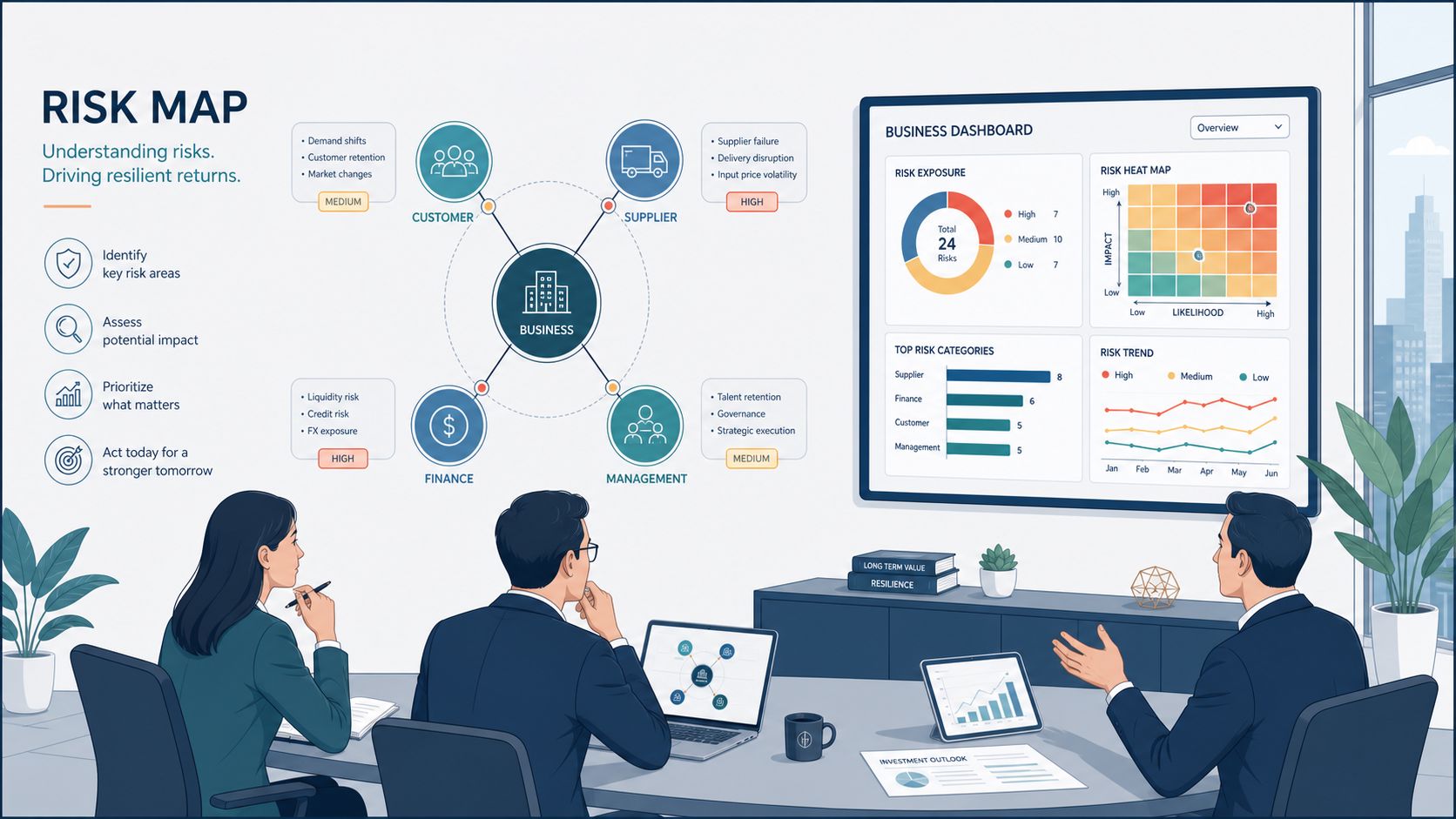
Start with an honest dependency map. List the areas where the founder is still personally required. Common categories include sales, key accounts, supplier negotiations, finance, hiring, product decisions, regulatory relationships, bank communication, and crisis management.
For each area, ask three questions:
- What decision or relationship depends on the founder?
- What would happen if the founder were unavailable for 30 days?
- Who could own this area with training, authority, and documentation?
This exercise often reveals that the business is not equally dependent everywhere. Some areas may already be professionalized. Others may need urgent attention before any sale process begins.
Step 2: Build a Management Layer Buyers Can Trust
A credible management team is one of the strongest antidotes to founder dependency. Buyers do not expect every private company to have a large corporate structure, but they do expect clear accountability.
At minimum, each core function should have an identifiable owner. That person should understand the numbers, know the risks, manage the team, and participate in business planning. If all senior managers are loyal executors but not decision-makers, buyers may still see the founder as the real operating system.
Management depth is also important for wealth and succession planning. As private wealth and ownership transitions develop in markets such as Vietnam, more owners will need to think not only about valuation but also about continuity, governance, and intergenerational transfer. Even if the intended outcome is a third-party sale rather than family succession, the same principle applies: the company should not depend on one person’s daily presence.
Step 3: Transfer Key Relationships Gradually
Customer and supplier relationships should be transferred before buyers test them. This does not mean abruptly removing the founder. It means introducing managers as genuine relationship owners over time.
For key customers, the founder can move from lead contact to executive sponsor. A commercial director or account manager should run regular meetings, handle operational issues, and discuss forecasts. For suppliers, procurement or operations leaders should manage negotiations within approved parameters. The founder can remain available for strategic matters, but the relationship should no longer collapse without them.
This gradual transfer creates evidence. Meeting notes, account plans, renewal records, and customer feedback can all show buyers that the relationship is institutional rather than personal.
Step 4: Document the Decisions That Drive Profit
Buyers care deeply about the repeatability of earnings. Therefore, owners should document the decisions that directly affect revenue, margin, working capital, and risk.
Important areas include:
- Pricing: discount limits, margin thresholds, exception approvals, and annual review processes.
- Sales pipeline: qualification criteria, conversion rates, customer segmentation, and forecast discipline.
- Suppliers: contract terms, alternative sources, lead times, payment terms, and concentration exposure.
- Inventory: reorder logic, slow-moving stock reviews, safety stock policy, and write-off procedures.
- Cash management: credit terms, collection escalation, capex approval, and bank covenant monitoring.
Supply-chain documentation has become especially important. A battery chain that reduced China reliance through sourcing strategy illustrates how resilience can come from deliberate supplier planning rather than last-minute reaction. In a sale process, sellers should be able to explain their own sourcing logic with similar clarity, without overstating what the business has actually achieved.
Step 5: Create Management Reporting That Works Without the Founder
Many founder-led companies have financial statements but not management reporting. Buyers need more than annual accounts. They want timely information that explains what is happening in the business.
Useful reporting may include monthly revenue by segment, gross margin by product or customer, working capital trends, customer concentration, churn, sales pipeline, production efficiency, inventory aging, and headcount movements. The key is not volume. The key is whether management uses the reports to make decisions.
If the founder is the only person who can interpret performance, reporting is incomplete. The leadership team should be able to explain variances, propose actions, and track follow-up.
Step 6: Test the Business Without the Founder
Before going to market, run controlled tests. Let managers lead customer meetings. Let the finance head present monthly results. Let the operations leader handle supplier issues. Let the sales team manage pricing within defined authority.
The founder should observe what breaks. Do decisions slow down? Do customers resist? Do managers lack data? Do staff escalate unnecessarily? These weaknesses are not failures; they are the preparation agenda.
A useful goal is to create a business that can run through a normal operating month with the founder acting as chairperson rather than chief firefighter.
Step 7: Prepare the Founder Transition Story
Even after reducing dependency, most buyers will ask about the founder’s post-completion role. Sellers should prepare a realistic transition plan. This may include a handover period, customer introductions, management coaching, strategic advisory support, or a defined role in business development.
The plan should be specific enough to give comfort but not so heavy that it proves the company still cannot stand on its own. A good transition story says: the founder is available to support continuity, but the business does not require the founder to operate.
Prepare before buyers ask the hard questions. Download our seller checklist.
When Should Sellers Start Preparing?
The best time to reduce founder dependency is 12 to 24 months before a sale. That timeline gives the owner enough time to transfer relationships, strengthen management, document decision processes, and show a track record of independent execution.
Some improvements can happen faster. A company can create better reporting, clarify approval limits, and organize customer documentation within a few months. But the most valuable evidence takes time. Buyers are more persuaded by patterns than promises. If management has already run the business through several reporting cycles, handled customer renewals, negotiated supplier terms, and delivered budget performance, the buyer’s confidence increases.
Owners who may sell within the next year should prioritize the highest-risk areas first. Usually, these are customer concentration, pricing authority, supplier dependency, and management credibility. A perfect organization chart is less important than proving that the business can protect revenue and earnings after the founder steps back.
For owners who are unsure whether they will sell, the work is still worthwhile. Reducing founder dependency improves resilience, creates internal accountability, and gives shareholders more options. It can support a full sale, partial sale, management buyout, family succession, or external investment.
Tax and legal planning should also begin early, especially where intergenerational transfers may be relevant. Changing tax rules for business transfers can affect timing, structure, and after-tax outcomes. Sellers should not wait until a buyer is already negotiating exclusivity before considering these issues.
In practice, preparation should follow the owner’s likely timeline:
- 24 months before sale: build management depth, identify successor roles, and reduce customer dependence on the founder.
- 12 months before sale: document key processes, formalize reporting, and test delegation in real operating situations.
- 6 months before sale: prepare data room materials, refine the transition plan, and address obvious diligence gaps.
- During the sale process: keep the founder involved strategically while allowing management to demonstrate competence.
If you are unsure where your company stands, it may be useful to get an initial assessment before launching a formal process. Early feedback can help identify which dependency risks are most likely to affect valuation or deal structure.

How This Connects to the Overall Business Sale Journey
Founder dependency touches almost every stage of the sale journey. It affects valuation, buyer targeting, due diligence, negotiation, closing conditions, and post-completion integration.
At the valuation stage, buyers assess whether earnings are sustainable. If earnings depend heavily on the founder, the buyer may normalize profit downward or apply a lower multiple. They may also distinguish between enterprise value and equity value more cautiously, especially if working capital, debt-like items, or contingent payments become part of the discussion. Sellers who want a clearer grounding in that distinction can review our explanation of enterprise value vs equity value.
At the buyer targeting stage, founder dependency influences which buyers are suitable. A strategic buyer with an existing management platform may be more comfortable absorbing a founder-led business. A financial buyer may need the management team to remain and execute the growth plan. A family office may value continuity but still want governance and reporting discipline. The right buyer is not only the highest bidder; it is the buyer whose operating model fits the company’s transition risk.
At the due diligence stage, dependency becomes visible. Buyers will interview managers, review contracts, analyze customer concentration, test reporting, and look for signs that the founder is still the only person who truly understands the business. This is where preparation either supports the equity story or undermines it.
At the negotiation stage, unresolved dependency often appears in deal structure. Buyers may propose earn-outs, deferred consideration, retention conditions, or extended founder involvement. These tools are not automatically negative, but they can shift risk back to the seller. A well-prepared company gives the seller more room to negotiate cleaner terms.
At the post-completion stage, reduced founder dependency supports smoother integration. The buyer can work with managers, customers can adjust gradually, and the founder can transition without being pulled back into every operational issue. This is often where the quality of preparation becomes most visible.
For owners, the central lesson is simple: reducing founder dependency is not about making yourself irrelevant. It is about making the company more valuable because it no longer depends on your constant presence. The founder’s legacy becomes stronger when the business can continue, adapt, and grow under new ownership.
A sale process rewards clarity. Buyers want to understand what drives the business, who runs it, where the risks are, and how performance can continue after completion. When those answers are institutionalized rather than personal, the seller enters the process with a stronger position.
If you are considering a sale, start with readiness rather than timing. Speak with an M&A advisor.
Build a practical roadmap for your exit. Start your M&A journey.