How to Structure an M&A Data Room: Guide for Sellers

Unlocking Deal Success: Mastering Your M&A Data Room
In the high-stakes world of mergers and acquisitions, your data room is the silent powerhouse that can make or break a deal. Imagine this: a potential buyer dives into your company’s information, only to find a disorganized mess of outdated files, missing contracts, and security gaps. Frustration mounts, trust erodes, and the deal slips away. On the flip side, a meticulously structured data room signals professionalism, transparency, and readiness, accelerating due diligence and boosting your valuation.
For business owners eyeing an exit, understanding how to structure an M&A data room isn’t optional—it’s essential. Buyers expect instant access to critical documents while maintaining ironclad security. A poorly managed room can lead to prolonged negotiations, renegotiated terms, or outright walkaways. Recent innovations, such as Valutico’s launch of the first self-auditing virtual data room, highlight how technology is transforming this process, embedding automated compliance checks to minimize risks.
This guide draws from real-world M&A transactions to equip you with practical strategies. Whether you’re using a virtual data room (VDR) platform or preparing physical documents, the principles remain the same: organization, completeness, and security. By getting this right, you position your business as an attractive target, saving time and maximizing proceeds.
Table of Contents
- Why business owners need to understand data rooms before selling
- Data rooms from a seller’s perspective
- How investors view this issue
- Common seller mistakes
- Practical checklist for structuring your data room
- When should sellers start preparing
- How this connects to the overall business sale journey
Why business owners need to understand data rooms before selling
Entering an M&A process without a grasp of data room fundamentals is like navigating a merger blindfolded. Data rooms serve as the central repository for all due diligence materials, from financials to legal agreements. Buyers rely on them to verify claims, assess risks, and justify their investment.
Without proper structure, even the strongest businesses falter. Deals can drag on for months as buyers hunt for elusive documents, increasing costs and fatigue. In competitive auctions, a sluggish data room eliminates you from contention—buyers move to the next opportunity with seamless access.
Moreover, transparency builds credibility. A well-organized room demonstrates operational maturity, reassuring buyers that what you present matches reality. This understanding empowers you to anticipate buyer needs, front-load preparations, and negotiate from strength. For first-time sellers, it’s a game-changer: proactive data room management can shave weeks off timelines and prevent value erosion from discovered issues.
Consider the ripple effects. Incomplete disclosures lead to post-LOI surprises, triggering price chips or indemnities. By mastering data room setup early, you mitigate these pitfalls, ensuring a smoother path to closing.
Data rooms from a seller’s perspective
As a seller, your data room is your storefront—a curated showcase of your business’s health. Start by selecting a reliable VDR provider with features like granular permissions, audit trails, and watermarking. Platforms vary, but prioritize those with user-friendly indexing and Q&A modules.
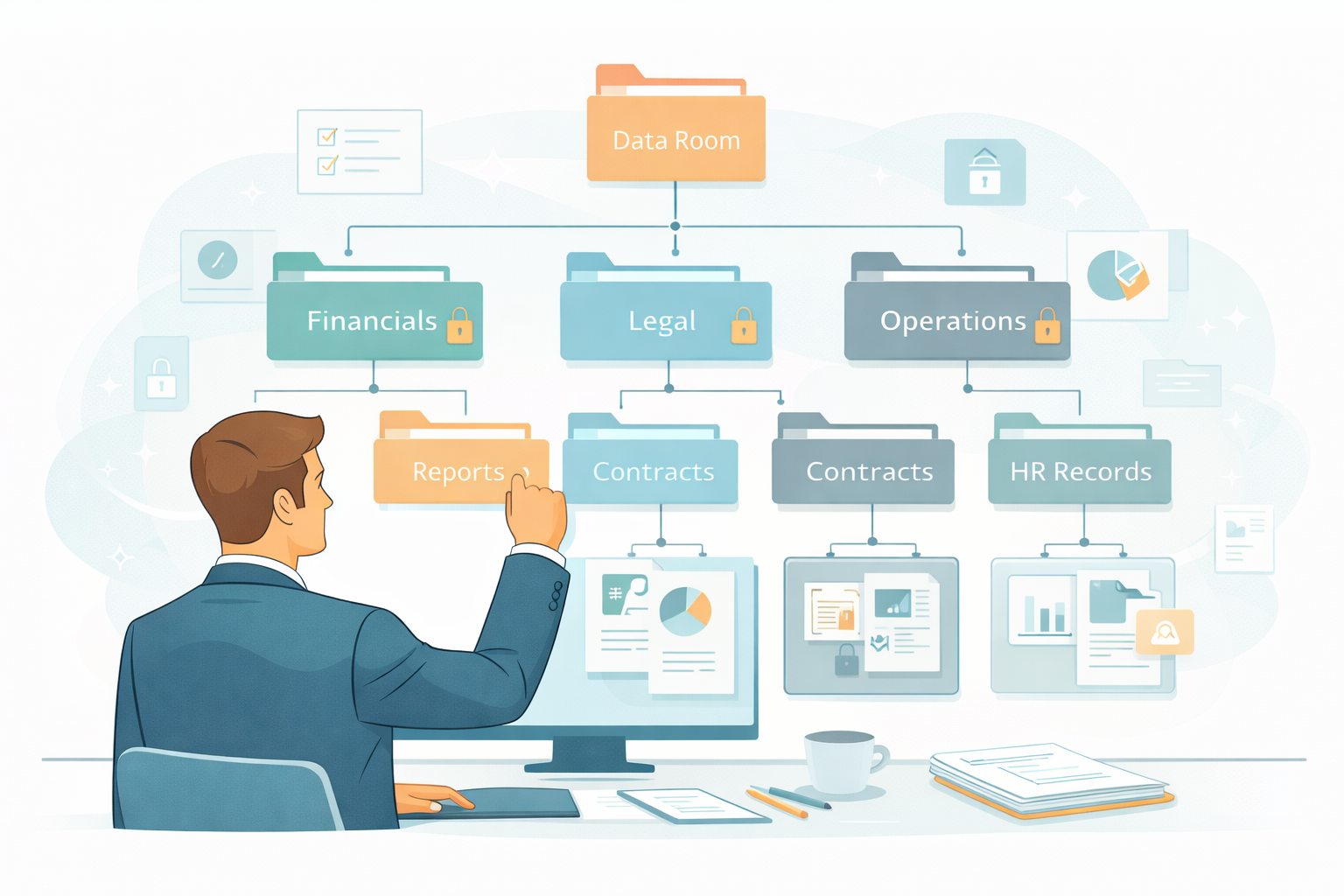
Structure revolves around logical categories: financials, operations, legal, commercial, and HR. Within each, use subfolders for chronology or asset type. For instance, under financials, separate audited statements, tax returns, and management accounts. Index everything with a clear table of contents, hyperlinked for navigation.
Security is paramount. Implement role-based access: view-only for most, download rights for trusted parties. Track every view and download to monitor interest levels. Redact sensitive info proactively, like customer names in contracts.
From experience, sellers who invest in clean, annotated documents stand out. Include explanatory notes or FAQs addressing known red flags, turning weaknesses into strengths. This seller-centric approach not only expedites diligence but also fosters buyer confidence.
How investors view this issue
Buyers approach data rooms with a risk lens, scouring for discrepancies that could torpedo the deal. Strategic acquirers prioritize synergies, so highlight integration-friendly docs like customer contracts and IP portfolios. Financial buyers dissect numbers for cash flow sustainability.
A structured room allows parallel reviews by legal, finance, and operational teams, speeding decisions. They appreciate watermarking to prevent leaks and real-time Q&A for clarifications. Delays from poor organization signal deeper issues, prompting deeper scrutiny or lower bids.
Investors value completeness: cap tables, litigation histories, employee agreements. Missing items raise flags, often leading to extended exclusivity periods or earn-outs. Advanced buyers use analytics tools to flag anomalies—ensure your data is scrubbed accordingly.
In essence, buyers see the data room as a litmus test for management quality. A polished setup conveys efficiency, aligning with their post-acquisition expectations.
Common seller mistakes
Sellers often underestimate data room pitfalls, leading to avoidable setbacks. Here’s a rundown of frequent errors:
- Dumping everything indiscriminately: Overloading with irrelevant files overwhelms buyers. Curate ruthlessly—only include what’s requested or anticipated.
- Ignoring version control: Multiple file versions confuse diligence. Use naming conventions like “Q4_2023_Final_Audited.pdf”.
- Weak security protocols: Public links or broad access invite breaches. Enforce NDAs, timed access, and IP logging.
- Neglecting updates: Stale data erodes trust. Refresh monthly during marketing.
- No index or searchability: Without a master index, navigation grinds to a halt. Leverage VDR search functions fully.
Avoiding these keeps momentum high. For deeper insights on seller pitfalls, check our post on Common Mistakes First-Time Sellers Make (And How to Avoid Them).

Practical checklist or framework for business owners
Building a robust data room follows a proven framework. Begin with a core structure:
- Financial Documents: Audited financials (3-5 years), budgets, forecasts, debt schedules, tax returns.
- Legal & Compliance: Incorporation docs, shareholder agreements, material contracts, IP registrations, litigation history.
- Commercial: Customer/supplier lists (anonymized), sales pipeline, pricing models.
- Operations: Org charts, SOPs, key KPIs, IT infrastructure overviews.
- HR: Employee handbooks, key personnel CVs, benefit plans (no PII).
- Other: Insurance policies, real estate leases, environmental reports.
Implementation steps:
- Week 1: Inventory all docs, gap analysis against buyer teasers.
- Week 2-4: Cleanse, redact, standardize formats (PDF preferred).
- Ongoing: Set permissions, test access, populate index.
For terminology clarity, refer to our M&A glossary. Download our seller readiness checklist to align this with broader prep.
When should sellers start preparing
Don’t wait for inbound interest—initiate data room setup 6-12 months pre-market. This timeline allows scrubbing issues, like resolving minor legal disputes or normalizing financials.
If urgency hits, a 90-day sprint is feasible for organized owners, but risks oversights. Early starters benefit from iterative buyer feedback in pre-marketing teasers.
Align with personal readiness: post-peak earnings, stabilized operations. Read more on timing in When Is the Right Time to Sell a Business?.
How this connects to the overall business sale journey
The data room anchors due diligence, bridging teaser to SPA. It follows NDA signing, enabling deep dives that inform LOIs. Post-LOI, it expands for confirmatory work.
Integrate with the full process: prep (financial clean-up), marketing (teaser/IM), diligence (data room), negotiation, closing. For a step-by-step overview, see Business Sale Process: How M&A Works in Real Life.
Explore further insights at our M&A blog.
Ready to organize your data room? Download our seller checklist.
Start your M&A journey today. Get an initial assessment or book a confidential call with an advisor.


