How to Manage Accounts Receivable Before an M&A Sale

Hidden risks in accounts receivable that could sink your M&A deal
As a business owner eyeing an exit, you’ve poured years into building your company. But when M&A talks heat up, one often-overlooked line item on your balance sheet—accounts receivable—can suddenly become a deal-breaker. Buyers scrutinize AR closely during due diligence, probing for signs of inflated revenues, collection weaknesses, or hidden bad debts. A bloated or aging AR portfolio doesn’t just raise red flags; it can slash your valuation by millions, trigger price adjustments, or scare off investors entirely.
Picture this: You’re negotiating a strong multiple based on trailing EBITDA, only for the buyer to discover 30% of your receivables are over 90 days old. Suddenly, they’re demanding working capital true-ups or walking away. In today’s competitive M&A landscape, where buyers demand clean financials, poor AR management signals operational sloppiness. Sellers who ignore this pay the price—literally.
This guide cuts through the complexity, offering practical steps to optimize your AR before sale. We’ll explore why it matters, how buyers see it, pitfalls to avoid, and a actionable framework to strengthen your position. Get this right, and you’ll not only safeguard your deal but potentially boost your exit value.
Table of Contents
- Why business owners need to understand accounts receivable before selling
- Accounts receivable from a seller’s perspective
- How investors view accounts receivable
- Common seller mistakes with accounts receivable
- Practical checklist for managing accounts receivable
- When should sellers start preparing accounts receivable
- How accounts receivable connects to the overall business sale journey
Why business owners need to understand accounts receivable before selling
Accounts receivable represents money your customers owe you—essentially, sales booked but cash not yet in hand. In M&A, it’s a critical component of working capital, directly impacting cash flow forecasts and enterprise value. Sellers often focus on topline growth or EBITDA tweaks, sidelining AR cleanup. This oversight can erode trust and value.
Buyers use AR to gauge revenue quality. High days sales outstanding (DSO) suggests collection issues, potential revenue reversals, or customer disputes. In due diligence, they’ll age your AR, test provisions for doubtful accounts, and reconcile to cash receipts. Weaknesses here lead to post-closing indemnities or earn-out cliffs.
From experience advising sellers, I’ve seen deals where AR problems halved the purchase price. One manufacturing firm had $5M in AR; 40% proved uncollectible post-sale, triggering a $2M adjustment. Proactive management flips this script, demonstrating robust operations and reliable cash conversion.
Understanding AR equips you to present a healthier balance sheet. It minimizes surprises, accelerates closing, and justifies premium valuations. In a market where buyers hunt for leverage, clean AR is your defensive moat—and offensive weapon.

Accounts receivable from a seller’s perspective
For sellers, AR is both an asset and a liability. It’s your largest current asset in many cases, tying up capital that could fund growth or distributions. Pre-M&A, aggressive revenue recognition—booking sales without ironclad collectibility—pumps figures but risks blowback.
Key metrics matter: DSO (average days to collect), aging buckets (current, 30-60, 60-90, over 90), bad debt reserve adequacy, and customer concentration. A seller-friendly AR profile shows low DSO (under 45 days ideally), minimal overdue balances, and diversified payers.
Consider credit policies. Loose terms attract risky clients, inflating AR. Tighten them pre-sale: shorten payment windows, enforce deposits, or outsource collections. Document everything—customer disputes, payment plans—to defend against buyer challenges.
Valuation linkage is direct. Buyers normalize working capital; excess AR means you’re handing over cash they’ll collect, often via true-up mechanisms. For more on financial scrutiny, see our Financial Due Diligence Explained.
Sellers should view AR as a value lever. Cleaning it up frees cash for debt paydown or capex, enhancing multiples. Track trends quarterly; aim for consistent improvement to signal stability.
How investors view accounts receivable
Buyers—strategic or financial—dissect AR through a risk lens. Strategic acquirers worry about integration hiccups; private equity flags cash drag. They model post-acquisition DSO, stress-test collections, and haircut AR values based on aging.
Standard playbook: Request 24-36 months of AR reports, trial balances, and remittances. They’ll vouch customer ledgers, confirm balances, and assess concentration (e.g., top 10 customers >50%?). Provisions get stress-tested; inadequate reserves trigger disputes.
Financial buyers prioritize normalized working capital. They benchmark your DSO against peers—if yours is 60 days vs. industry 40, expect adjustments. Strategic buyers might tolerate higher AR if synergies justify, but still demand audits.
Red flags abound: spiking DSO, channel stuffing (pushing inventory to distributors end-of-quarter), or round-number receivables signaling fictions. Clean AR builds credibility, smoothing negotiations.
In practice, buyers peg AR at 90-100% of book value for pristine portfolios, discounting 20-50% for aged ones. Optimize to capture full credit.
Common seller mistakes with accounts receivable
Sellers trip up in predictable ways. First, neglect: Failing to age AR regularly lets problems fester. Buyers spot this instantly.
Second, over-optimism: Under-provisioning bad debts to beautify net income. Post-close discoveries lead to claims.
Third, inconsistent policies: Varying terms by customer breeds disputes. Standardize pre-sale.
Fourth, ignoring concentration: Heavy reliance on few clients amplifies risk. Diversify or disclose.
Fifth, poor documentation: Missing contracts or emails leaves AR undefendable.
Sixth, last-minute rushes: Cramming collections pre-LOI alarms buyers, suggesting manipulation.
Avoid these by starting early. One seller I advised recovered $1.2M in overdue AR over six months, dodging a valuation hit.
Practical checklist for managing accounts receivable
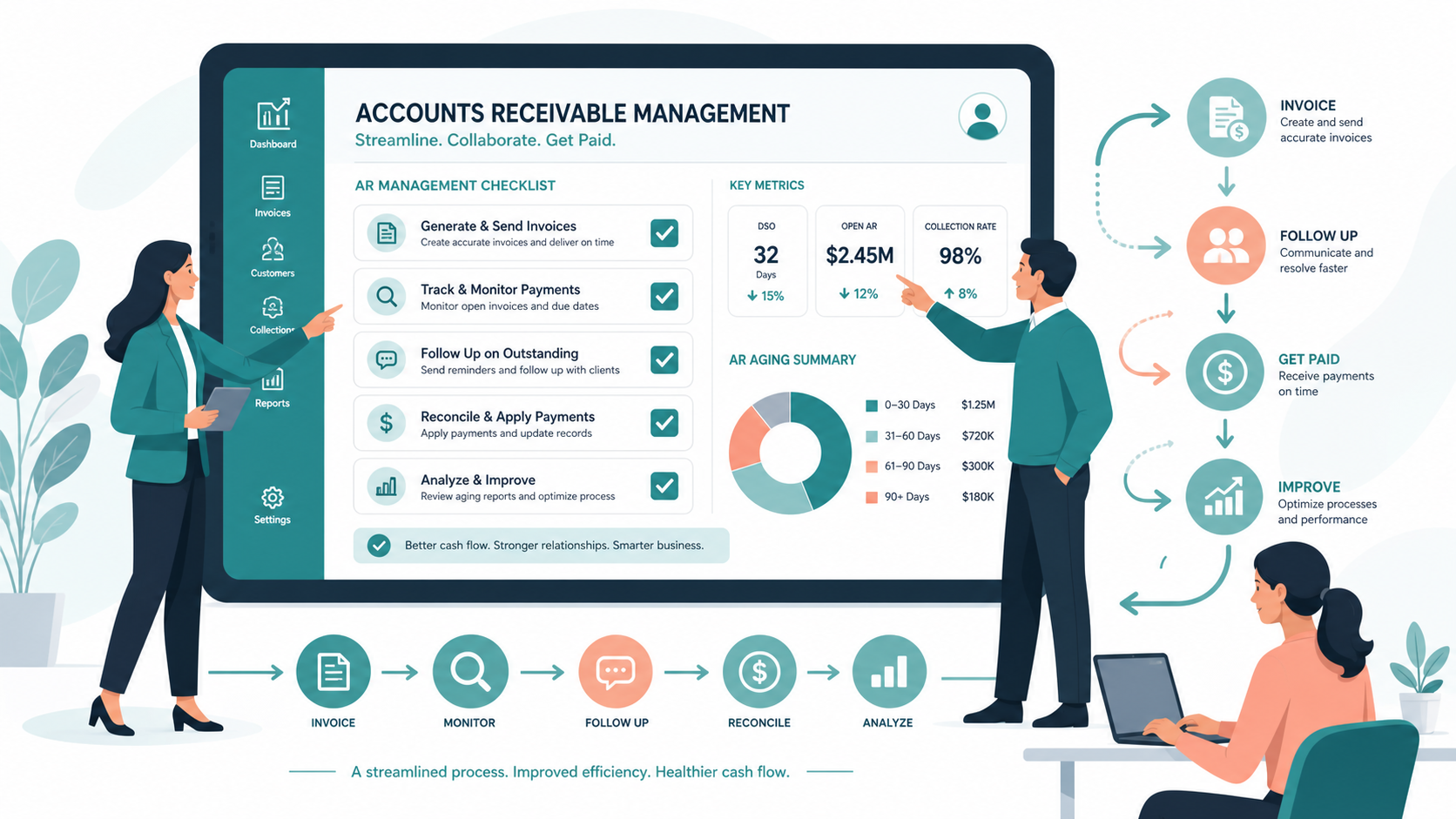
Here’s a step-by-step framework to fortify your AR. Implement 6-12 months out.
1. Audit and age your AR portfolio
- Generate detailed aging reports for last 3 years.
- Identify overdue accounts (>60 days).
- Calculate DSO: (AR / Sales) x 365.
2. Strengthen collections
- Contact overdue clients weekly.
- Offer early-pay discounts (e.g., 2/10 net 30).
- Escalate to collections agencies for >90 days.
- Secure payment plans with documentation.
3. Refine credit policies
- Shorten terms to 30 days standard.
- Run credit checks on new clients.
- Require 20-50% deposits for large orders.
4. Bolster bad debt provisions
- Review historical write-offs.
- Provision 5-10% for 60-90 days, 50-100% for older.
- Document rationale for auditors.
5. Reduce concentration
- Cap top customer exposure <20%.
- Push diversification sales.
6. Tech and reporting upgrades
- Implement AR automation (e.g., invoicing software).
- Weekly dashboards for management.
7. Prepare due diligence binders
- Compile customer contracts, ledgers, reconciliations.
- Third-party confirmations ready.
To benchmark readiness, download our seller checklist. For terms like DSO, check our M&A glossary.
When should sellers start preparing accounts receivable
Don’t wait for inbound interest. Begin 12-18 months pre-marketing. Early action allows organic improvement, avoiding red flags.
If LOI-signed, intensify within 60 days—align with financial DD timelines. Post-signing, maintain momentum to hit closing targets.
Triggers: Annual planning, advisor engagement, or peer sales. Quarterly reviews keep AR lean year-round.
Timeline: Months 1-6: Policy tweaks, collections drive. 7-12: Stabilize metrics, document. Sale phase: Defend position.
How accounts receivable connects to the overall business sale journey
AR threads through every M&A stage. Pre-marketing: Clean it for teasers/CIM. DD: Withstand scrutiny. Negotiation: Avoid true-ups. Closing: Smooth handoff.
It influences valuation (working capital pegs), buyer selection (strategic vs financial), and earn-outs (tied to cash flow).
Holistically, strong AR signals operational excellence, complementing revenue growth and margins. Integrate with full prep: financials, legal, commercial.
Visit our M&A blog for more insights on the journey.
Ready to assess your business? Start your M&A journey.
Planning an exit? Book a confidential call with our advisors.