Should You Standardize Compensation Before Selling Your Business?

Overpaid owners and undervalued businesses: The compensation trap
As a business owner eyeing an exit, you’ve built something valuable. But what if your generous salary, family perks, or personal expenses are quietly eroding that value? Many sellers overlook how non-standard compensation inflates costs and distorts profitability, leading buyers to slash offers by 20-30% or more during due diligence.
Standardizing compensation means aligning owner and executive pay with market norms. It’s not about cutting corners—it’s about presenting a clean, realistic financial picture that reflects what the business truly earns without founder dependencies. Ignore this, and you risk deal-killing surprises. Get it right, and you unlock a higher, defensible valuation.
In this guide, we’ll break down why this matters, how buyers scrutinize it, pitfalls to avoid, and a step-by-step framework to normalize your books. Drawing from real M&A deals, you’ll see how small adjustments can add millions to your proceeds.
Table of Contents
- Why business owners need to understand standardizing compensation before selling
- Standardizing compensation from a seller’s perspective
- How investors view this issue
- Common seller mistakes
- Practical checklist for business owners
- When should sellers start preparing
- How this connects to the overall business sale journey
Why business owners need to understand standardizing compensation before selling
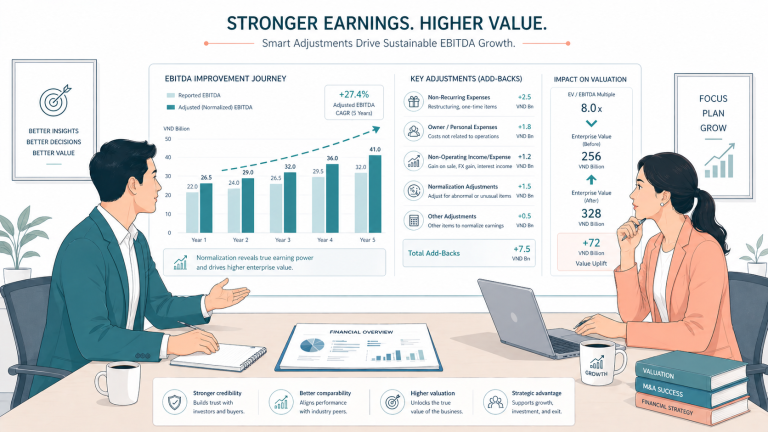
Valuation in M&A hinges on normalized EBITDA—earnings before interest, taxes, depreciation, and amortization, adjusted for one-time or non-recurring items. Compensation sits at the heart of this, often comprising 20-50% of operating expenses in owner-operated firms.
Without standardization, your financials show inflated costs. A manufacturing CEO paying himself $500,000 annually when market rate is $250,000? Buyers won’t accept that as sustainable. They’ll add back the excess to EBITDA, but only after rigorous scrutiny, potentially questioning other areas too.
Consider a mid-sized tech services firm. The founder drew $1.2 million in salary and perks, far above peers. Post-diligence, buyers normalized it to $400,000, boosting EBITDA by $800,000 and justifying a $10 million higher enterprise value. Sellers who prep this upfront close faster and at better multiples.
Beyond valuation, standardization signals maturity. Buyers seek turnkey operations, not founder-centric models. It reduces key person risk, making your business more attractive to strategic and financial acquirers alike. In competitive auctions, normalized comp can differentiate you, drawing premium bids.
Failure to address it invites red flags. Buyers probe for hidden founder benefits—personal travel, family hires, excessive bonuses. Unexplained items erode trust, leading to lower offers or walkaways. Understanding this equips you to present a professional, buyer-ready business.
Market data reinforces urgency: Firms with normalized financials sell at 0.5-1.0x higher EBITDA multiples. It’s a foundational step in preparation, directly impacting your net proceeds after taxes and fees.
Standardizing compensation from a seller’s perspective
From where you sit, compensation often evolves organically. Early bootstrapping means lean teams; success brings generous rewards. Family members on payroll, company cars, club memberships—these feel earned. But in M&A, they’re scrutinized as add-backs.
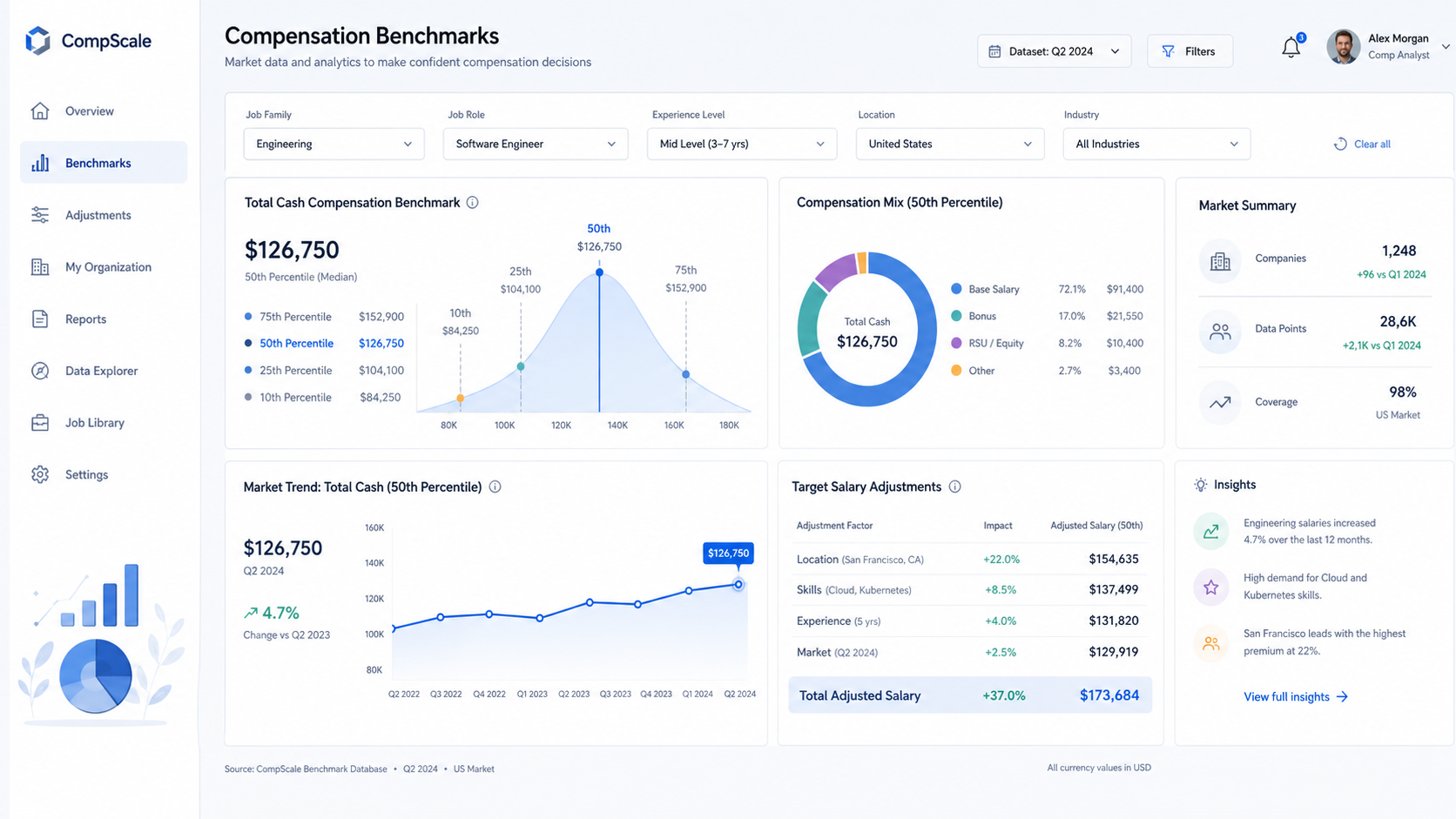
Start with benchmarking. Use industry surveys to peg fair market value (FMV) for roles. A $10M revenue SaaS firm might justify $300K-$450K CEO pay, per benchmarks. Excess over FMV gets added back to EBITDA, but documentation is key.
Family compensation demands extra care. Paying a relative $150K for part-time work? Normalize to $50K FMV, adding back the difference. Buyers verify via resumes, time logs, and comparables. Poor records mean conservative adjustments—or no add-back at all.
Perks and benefits add layers. Company-paid vacations disguised as “conferences,” home office setups exceeding norms, or 401(k) contributions beyond policy—these must be quantified. A common approach: List all non-arm’s-length expenses, justify FMV alternatives, and adjust accordingly.
Sellers benefit by acting early. Normalize via salary reductions or reclassifications 12-18 months pre-sale. This smooths trailing twelve-month (TTM) financials, avoiding abrupt changes that raise flags. It also tests business resilience without the founder safety net.
Tax implications matter too. Add-backs boost pre-tax EBITDA but may trigger personal tax on deemed distributions. Consult advisors to structure cleanly. Ultimately, standardization paints your business as scalable, appealing to buyers planning post-acquisition growth.
How investors view this issue
Buyers—strategic corporates or private equity—approach compensation through a sustainability lens. They project future cash flows assuming market-rate staffing, not founder privileges.
Financial buyers prioritize EBITDA quality. They apply normalization adjustments during quality of earnings (QoE) analysis. Over 70% of deals involve QoE reports flagging comp discrepancies. Excessive pay signals weak governance; they’ll haircut multiples accordingly.
Strategic buyers focus on integration. High owner comp hints at cultural mismatches or dependency. They model synergies assuming normalized costs, rejecting deals where adjustments exceed 10-15% of EBITDA.
Both demand evidence. Expect requests for comp studies, peer data, and contracts. In one case, a consumer goods seller’s $2M owner perks were normalized by 80%, lifting valuation—but only after providing FMV affidavits.
PE firms often push further, requiring 2-3 years of normalized comp history. They view it as a proxy for operational discipline. Clean books correlate with smoother exits on their end, justifying higher bids.
Global trends amplify scrutiny. With rising multiples, buyers nitpick more. Asian markets, including Vietnam, see increasing inbound interest from disciplined funds demanding FMV alignment.
Common seller mistakes
Sellers trip up in predictable ways. First, ignoring benchmarking. Gut-feel salaries don’t fly; buyers use data from sources like Salary.com or industry reports.
Second, incomplete add-backs. Listing a $100K car lease as fully additive ignores FMV alternatives like mileage reimbursements. Partial credits weaken your case.
Third, timing issues. Slashing pay sale-year spikes suspicion. Gradual normalization over years looks organic.
Fourth, family payroll opacity. Vague titles like “consultant” invite deep dives. Document duties rigorously.
Fifth, overlooking incentives. Unearned bonuses or guaranteed payouts get zeroed out. Tie comp to performance metrics.
Sixth, tax oversights. Treating add-backs casually can create IRS issues. Structure as legitimate business expenses where possible.
Avoid these by engaging experts early. For deeper valuation context, see our post on key factors affecting business valuation for sellers.
Practical checklist for business owners
Follow this framework to standardize effectively:
- Benchmark roles: Identify all compensated individuals. Use surveys for FMV by revenue, industry, location.
- Quantify excesses: Calculate deltas (actual vs. FMV). Aggregate for EBITDA impact.
- Document rigorously: Comp studies, org charts, time sheets. Prepare adjustment schedules.
- Normalize gradually: Adjust pay over 12+ months. Reclassify perks.
- Stress-test: Run pro formas. Ensure business thrives at normalized levels.
- Third-party validation: QoE preview from accountants.
- Update CIM: Disclose adjustments transparently in teasers.
Download our seller readiness checklist for a full prep guide.
Pro tip: Link comp to enterprise value vs equity value discussions for holistic valuation.

When should sellers start preparing
Begin 18-24 months pre-marketing. This allows normalization to permeate financials, reducing buyer pushback. If urgency hits, prioritize documentation for immediate add-backs.
Trigger points: Revenue plateaus, personal goals shift, or inbound interest. Early action maximizes multiples.
How this connects to the overall business sale journey
Compensation standardization feeds every stage—from valuation to close. It underpins financial due diligence, buyer confidence, and negotiations. Ties into growth initiatives, governance, and exit planning.
Integrate with financial due diligence. For broader insights, visit our M&A blog.
Ready to proceed? Start your M&A journey with an initial assessment.
Prepare thoroughly: Download our seller checklist.
Next step: Book a confidential call with an M&A advisor.