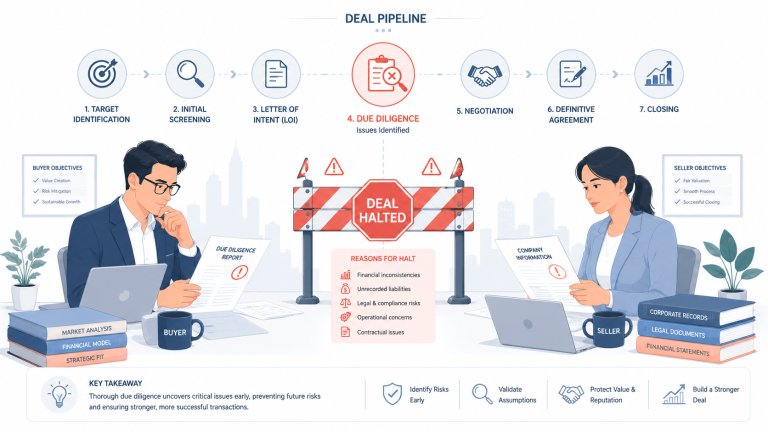
When the Business Still Revolves Around the Founder
Many business owners believe valuation is mainly about revenue, profit, margins, and growth. Those numbers matter, but buyers also ask a more uncomfortable question: what happens when the founder is no longer in the room?
If key customers call only the founder, senior managers wait for the founder’s approval, pricing sits in the founder’s head, and supplier relationships depend on personal trust built over decades, the company may be profitable but fragile. In an M&A process, that fragility becomes visible. Buyers do not only buy historical performance; they buy confidence that future cash flows will continue after completion.
This is why founder risk can directly affect M&A valuation. It can reduce the price a buyer is willing to pay, change the deal structure, extend due diligence, increase earn-out demands, or even cause a buyer to walk away. For owners preparing to sell, the issue is not whether the founder has been important. In most private companies, the founder is central. The real question is whether the company can prove that it has become an institution rather than a personality-led operation.
Understanding founder risk early gives owners time to protect value before going to market.
Table of Contents
- Why business owners need to understand founder risk before selling?
- Founder risk from a seller’s perspective
- How investors view this issue?
- Common seller mistakes
- Practical checklist for business owners
- When should sellers start preparing?
- How this connects to the overall business sale journey
Why Business Owners Need to Understand Founder Risk Before Selling?
Founder risk is the risk that a company’s performance, relationships, decision-making, or institutional knowledge depends too heavily on one individual. In seller conversations, this is often treated as a soft management issue. In buyer conversations, it is treated as a valuation issue.
The distinction matters. A buyer may admire a founder’s commercial instinct, resilience, industry reputation, and personal relationships. Those strengths may be exactly what built the company. However, admiration does not automatically translate into a higher valuation. If the buyer believes the business cannot perform at the same level after the founder exits, the buyer will price that uncertainty into the offer.
Founder risk affects valuation because it touches the core assumptions behind a transaction:
- Revenue continuity: Will customers continue buying if the founder steps back?
- Margin stability: Will pricing discipline and purchasing terms remain intact without founder involvement?
- Operational control: Can the team run the company without daily founder intervention?
- Management depth: Is there a credible leadership bench below the founder?
- Strategic transferability: Can the buyer inherit a business system, not just a founder’s personal network?
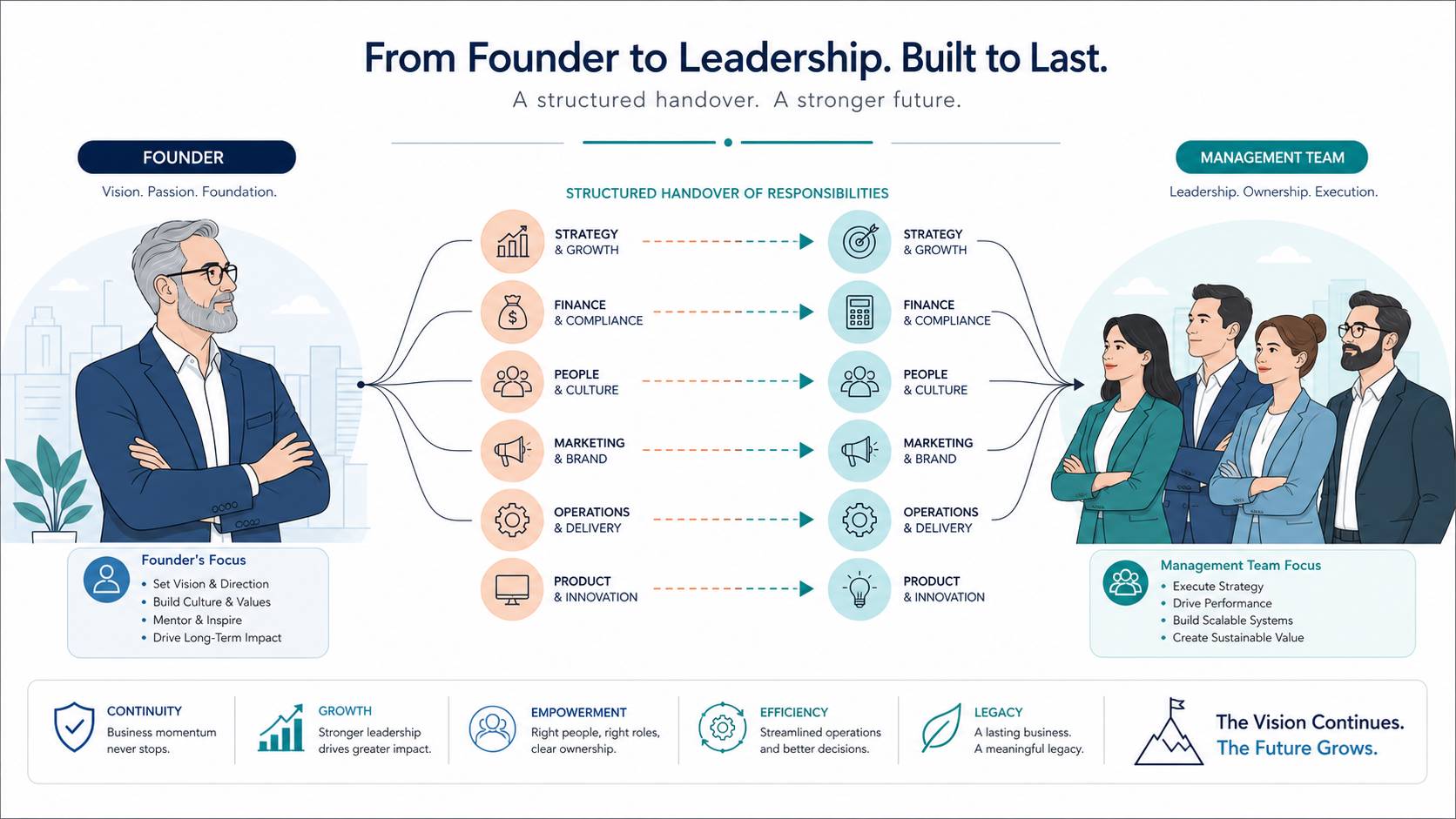
For many owner-led companies, the founder has solved problems through speed, intuition, and personal authority. That can be effective while building the company, but it creates ambiguity during a sale. Buyers prefer businesses where knowledge, authority, and accountability are distributed through systems, people, contracts, data, and governance.
This does not mean a founder-led company is unattractive. In many sectors, founder energy is part of the company’s advantage. The issue is whether that advantage has been converted into transferable value. A strong founder who has built a capable management team, documented processes, diversified customer relationships, and delegated authority can be a major asset. A strong founder who remains the only real decision-maker can become a discount factor.
Owners who understand this early can prepare the company before launching a sale process. They can identify where dependence is highest, strengthen the second layer of management, and demonstrate that performance is not personally fragile. For a structured starting point, many sellers use a seller readiness checklist to assess whether the business is genuinely prepared for buyer scrutiny.
Founder Risk from a Seller’s Perspective
From the seller’s side, founder risk can be emotionally difficult to assess objectively. The founder may see deep involvement as proof of commitment. Buyers may see the same involvement as evidence that the business is not yet self-sustaining.
This disconnect is common because the founder’s operating reality is very different from the buyer’s investment logic. The founder often thinks, “I know every major customer personally, so the business is stable.” The buyer thinks, “If those relationships are personal rather than institutional, what exactly am I acquiring?”
Seller-side founder risk usually appears in several practical forms.
Customer Relationships Sit with the Founder
The most obvious risk is customer concentration around the founder. If the largest customers call the founder for pricing, complaints, renewals, product changes, or urgent problem-solving, the buyer will question whether those customers are loyal to the company or to the individual.
This issue becomes more serious when customer contracts are informal, renewal histories are not documented, account managers have limited authority, or customer feedback has never been systematically captured. Even if the business has strong recurring revenue, the buyer may still apply caution if the commercial relationship depends on founder trust.
Key Decisions Are Not Delegated
Many founders approve hiring, discounts, supplier negotiations, capital spending, product changes, and even routine operational exceptions. This may keep standards high, but it also makes the company slower and more dependent.
During due diligence, buyers often interview management teams. If managers cannot explain how decisions are made without referring back to the founder, it signals weak delegation. A buyer may then assume the founder must remain after closing for a long transition period. That can affect price, payment timing, and deal terms.
Institutional Knowledge Is Undocumented
Founder-led businesses often carry important knowledge informally: why certain customers receive special terms, which suppliers are reliable, which employees can handle pressure, which products create hidden after-sales issues, and which market risks matter most. If this knowledge is not documented, transferable, or embedded in management routines, the buyer sees execution risk.
This is where founder risk overlaps with operational due diligence. A company that appears simple from the outside may be heavily dependent on unwritten knowledge. Sellers who want to understand this connection can review how buyers assess operating systems in operational due diligence.
The Founder Is the Culture
Culture can be a powerful advantage, especially in businesses where loyalty, speed, and customer service matter. But if culture is maintained only through the founder’s personal presence, it may not survive transition. Buyers look for evidence that culture is reinforced by hiring standards, performance management, communication rhythms, incentives, and leadership behaviour across the team.
A founder’s charisma cannot be transferred through a share purchase agreement. A company’s operating culture can be transferred if it has become part of how the organisation functions.
How Investors View This Issue?
Investors usually view founder risk through one central lens: quality of future earnings. Historical financial performance is important, but valuation depends on the buyer’s confidence that earnings will continue, grow, and convert into cash after the transaction.
When founder dependence is high, buyers may not reject the company immediately. Instead, they adjust their risk assessment. That assessment can influence valuation in several ways.
Lower Valuation Multiple
If two companies have the same EBITDA, growth profile, and market position, the one with lower founder dependence will usually be more attractive. The reason is simple: transferable cash flow deserves a stronger valuation than fragile cash flow.
A buyer may apply a lower multiple when revenue is relationship-driven, management depth is thin, or key processes are informal. The seller may feel this is unfair because the numbers are strong. But buyers are not only pricing what happened last year; they are pricing the probability that the same performance can continue under new ownership.
More Deferred Consideration
Founder risk can also shift value from upfront cash to deferred payments. A buyer may propose an earn-out, retention-based payment, or staged consideration to ensure the founder remains involved during transition and that customers do not leave after closing.
This does not always reduce headline valuation, but it changes certainty. A seller may receive an attractive headline price, yet a meaningful portion may depend on future performance, founder involvement, or customer retention. For owners seeking clean exit certainty, this can be a major issue.
Longer Founder Lock-In
Buyers may require the founder to stay for 12, 24, or even 36 months after completion if they believe the business cannot transition smoothly. This can be acceptable if the founder wants a phased exit. It becomes problematic if the owner expects to step away quickly.
The more the company depends on the founder, the more the buyer will try to protect itself through transition obligations, restrictive covenants, and operational involvement. Sellers should not treat these terms as legal details only. They are commercial signals of perceived dependency risk.
Deeper Due Diligence
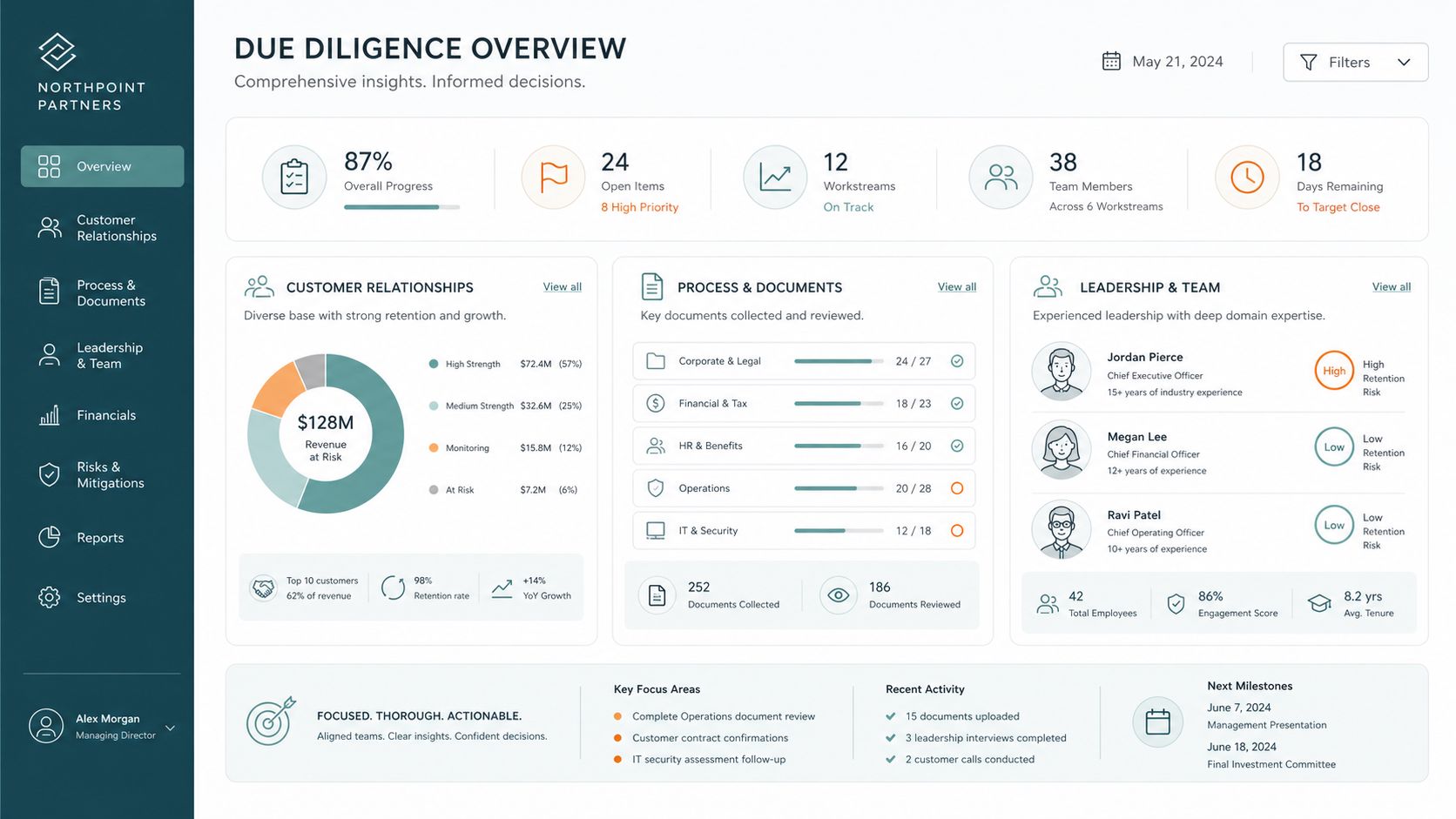
Founder risk often triggers more intensive due diligence. Buyers may request customer calls, management interviews, employee retention analysis, authority matrices, sales pipeline evidence, CRM data, contract reviews, and operational documentation. They may also test whether reported performance can be explained by systems rather than founder intervention.
This is why preparation matters. If a seller waits until due diligence to discover that all important knowledge sits with one person, the process becomes reactive. A better approach is to prepare evidence before going to market. Sellers who are preparing materials should also understand how investors examine information in what investors look for during due diligence.
Higher Concern Around Integration
Strategic buyers also think about integration. If the company is acquired by a larger group, the buyer needs to integrate reporting, controls, sales processes, procurement, compliance, and leadership structures. A business that depends heavily on the founder may be harder to integrate because informal decision-making does not map neatly into a corporate environment.
Private equity buyers may view the issue slightly differently. They often want the founder to remain involved for growth, but they still need management depth. A founder who is willing to stay but has no team underneath remains a scaling constraint. A founder who has built a strong team can be an investment advantage.
Common Seller Mistakes
Founder risk rarely appears suddenly. It builds over years as the company grows around the founder’s habits. The challenge is that many of those habits are initially strengths. They only become weaknesses when the company is being evaluated as a transferable asset.
Mistake 1: Assuming Profitability Solves Everything
Strong profit is important, but it does not eliminate founder dependence. A buyer may still ask whether the profit is repeatable without the founder’s pricing decisions, customer relationships, supplier negotiations, and cost control discipline.
Sellers sometimes believe that if EBITDA is attractive, operational concerns will be secondary. In reality, founder risk can directly affect how EBITDA is valued. The same earnings can attract very different valuations depending on how transferable they appear.
Mistake 2: Introducing the Management Team Too Late
Some founders keep the management team in the background during early buyer conversations because they want to control the message. This can backfire. If buyers only hear from the founder, they may conclude that nobody else can represent the business.
A stronger approach is to prepare the leadership team before the process starts. Managers should understand the business plan, key metrics, operational priorities, customer dynamics, and their role in the future. They do not need to sound scripted, but they must sound competent and aligned.
Mistake 3: Keeping Customer Relationships Too Personal
Founders often take pride in personal customer loyalty. That loyalty is valuable, but it should be institutionalised. Account managers, customer success teams, technical leads, and finance contacts should all have meaningful relationships with key customers.
Before selling, owners should gradually shift from founder-owned relationships to company-owned relationships. This does not mean disappearing from customers overnight. It means creating a deliberate transition where the customer’s trust expands from the founder to the organisation.
Mistake 4: Failing to Document the Operating Model
Many founder-led companies operate through experience rather than documented process. The founder knows which exceptions are acceptable, which costs are flexible, which customers need special attention, and which operational shortcuts are dangerous. Buyers cannot value what they cannot understand.
Documentation does not need to become bureaucratic. It should clarify how the business actually works: sales processes, pricing authority, procurement rules, reporting cycles, approval limits, customer escalation procedures, and key performance indicators. This gives buyers confidence that the business is manageable without daily founder intervention.
Mistake 5: Treating Founder Transition as an Afterthought
Some sellers only begin discussing transition after receiving an offer. By then, the buyer may already have built conservative assumptions into valuation. Transition planning should happen before the sale process, not after signing the letter of intent.
A credible transition plan should explain what the founder will do after closing, what responsibilities will transfer, who will lead each function, how customer relationships will be managed, and how the buyer can monitor continuity. Without this plan, buyers will create their own protection mechanisms, usually in their favour.
Practical Checklist for Business Owners
Reducing founder risk is not about making the founder irrelevant. It is about making the company stronger, more scalable, and more transferable. The following checklist can help owners assess where value may be exposed before starting an M&A process.
1. Map Founder Dependency Across the Business
Start by identifying where the founder is still essential. Be honest. The most important areas are usually customer relationships, supplier negotiations, pricing, cash management, hiring, product strategy, crisis resolution, and informal problem-solving.
- Which decisions cannot happen without the founder?
- Which customers would be concerned if the founder stepped back?
- Which employees rely on founder approval rather than defined authority?
- Which processes exist only in the founder’s memory?
- Which relationships would be difficult for a buyer to inherit?
This exercise should be practical, not theoretical. The goal is to identify the highest-risk areas that could affect buyer confidence.
2. Build a Credible Second Layer of Management
Buyers want to know who will run the company after closing. A capable second layer of management is one of the clearest ways to reduce founder risk. This does not always mean hiring a full corporate executive team. It means having functional leaders who can explain performance, manage people, make decisions, and maintain accountability.
Owners should assess whether the leadership team is visible, trusted, and prepared. If the founder remains the only person who can speak confidently about strategy, finance, customers, and operations, the business will feel dependent regardless of its financial results.
3. Transfer Customer Trust Before the Sale
Customer transition should begin long before buyer meetings. The founder can remain involved with key accounts, but other team members should gradually take ownership of day-to-day contact, reporting, issue resolution, and renewal discussions.
Evidence matters. Buyers will be more comfortable if they can see account plans, CRM records, contract histories, customer satisfaction data, and multiple contact points across major accounts. The objective is to prove that customer loyalty belongs to the company, not only to the founder.
4. Document Core Processes
Process documentation should focus on the areas that protect earnings. These typically include sales conversion, pricing and discount authority, procurement, inventory control, quality management, financial reporting, customer escalation, employee onboarding, and compliance routines.
The documentation should be clear enough for a buyer to understand how the business runs, but not so heavy that it becomes artificial. Buyers can usually tell the difference between real operating discipline and documents created only for due diligence.
5. Create a Founder Transition Plan
A good transition plan answers the buyer’s practical concerns. It should explain the founder’s post-closing role, expected time commitment, key relationship handovers, leadership responsibilities, decision rights, and milestones for reducing founder involvement.
This plan can support stronger negotiation. If the seller presents a credible transition path, the buyer has less reason to demand excessive earn-outs, long lock-ins, or heavy control rights. The founder appears thoughtful, prepared, and realistic.
6. Align Incentives for Key People
Founder risk is often linked to people risk. If senior managers are underpaid, unclear about the future, or personally loyal only to the founder, the buyer may worry about retention. Sellers should review compensation, incentives, employment terms, and communication plans for key staff.
Retention does not always require complex schemes, but it does require planning. Buyers want assurance that the people who understand the business will remain engaged after completion.
7. Prepare the Data Room Around Transferability
The data room should not simply contain documents; it should tell a coherent story of a transferable company. Management structure, customer contracts, reporting packs, process documents, employment agreements, and historical performance data should all support the same message: the business can operate beyond the founder.
If sellers are unsure where to begin, a practical first step is to get an initial assessment of sale readiness and identify which areas require work before approaching buyers.
When Should Sellers Start Preparing?
Founder risk is best addressed 12 to 24 months before a planned sale. Some improvements can be made quickly, but genuine transferability takes time to prove. Buyers are more convinced by a track record than by promises.
For example, appointing a general manager one month before going to market may raise more questions than it answers. Buyers may see it as cosmetic. By contrast, a leadership team that has already managed budgets, customer issues, hiring decisions, and operational KPIs for several reporting periods provides stronger evidence.
The same applies to customer transition. Introducing account managers to key customers just before due diligence may feel rushed. A buyer may wonder whether customers are truly comfortable with the new structure. A gradual transition over multiple quarters is more credible.
Preparation should usually follow a staged approach:
- 12 to 24 months before sale: assess founder dependency, strengthen management, begin customer handovers, and improve reporting discipline.
- 6 to 12 months before sale: document core processes, formalise decision rights, prepare key managers, and track evidence of independent execution.
- 3 to 6 months before sale: organise the data room, refine the transition plan, review buyer concerns, and prepare management for due diligence.
- During the sale process: communicate the founder’s role clearly, demonstrate management depth, and avoid overcentralising buyer interactions around the founder.
The earlier the owner starts, the more natural the changes appear. Buyers are not looking for perfection. They are looking for evidence that the company has reduced avoidable dependency and can sustain performance under new ownership.
Owners should also be realistic about their own exit expectations. A founder who wants to leave immediately after completion must prepare more thoroughly than a founder who is willing to remain for a structured transition. The desired exit timeline should shape the preparation plan.
How This Connects to the Overall Business Sale Journey
Founder risk is not an isolated issue. It connects to valuation, buyer selection, due diligence, deal structure, negotiation, and post-closing transition. A seller who ignores it may still complete a transaction, but often with less certainty, weaker terms, or more conditions than expected.
In the early stage of a sale journey, founder risk affects positioning. The seller must decide how to present the company: as a founder-led business requiring continued owner involvement, or as a mature platform with a capable team and transferable systems. Each positioning attracts different buyers and different deal structures.
During valuation, founder risk influences the buyer’s confidence in sustainable earnings. If the company appears too dependent on one person, buyers may reduce the valuation multiple, normalise earnings more aggressively, or require downside protection. Sellers who understand concepts such as enterprise value, equity value, debt-like items, and working capital adjustments will be better prepared to see how operational risk flows into price. For a helpful explanation, sellers can refer to enterprise value vs equity value.
During due diligence, founder risk shapes the questions buyers ask. They may test whether managers understand the business, whether reporting is reliable, whether customer relationships are transferable, and whether processes are repeatable. If the seller has prepared properly, these questions become opportunities to build confidence rather than threats to the deal.
During negotiation, founder risk affects terms. A buyer who is comfortable with transferability may offer cleaner consideration and a shorter transition. A buyer who is uncertain may demand earn-outs, retention conditions, founder lock-ins, or stronger warranties. In this sense, reducing founder risk before the process can improve both valuation and deal certainty.
After completion, founder risk affects whether the transaction actually succeeds. Even when the seller receives payment, a poorly managed transition can damage relationships, unsettle employees, and create friction with the buyer. A thoughtful handover protects the legacy of the founder as well as the economics of the transaction.
For business owners, the practical message is clear: do not wait for buyers to identify founder risk. Identify it first, reduce it deliberately, and prepare evidence that the company can thrive beyond the founder. That preparation does not weaken the founder’s importance. It proves that the founder has built something larger than themselves.
Prepare before buyers ask the hard questions. Download our seller checklist.
Thinking about a future sale? Start your M&A journey.