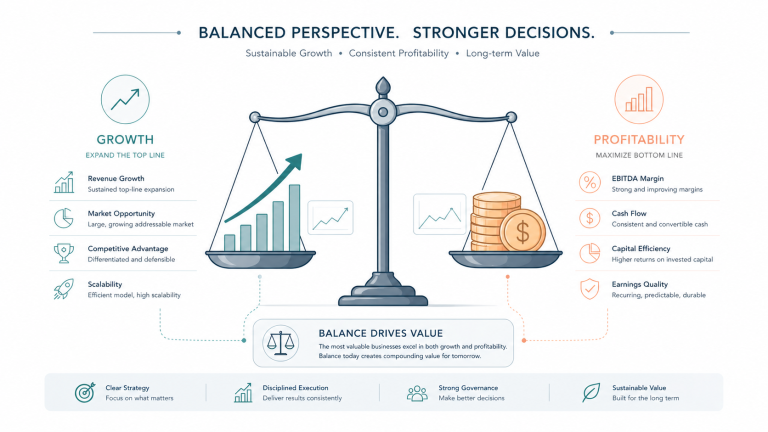
Structuring Your Company Before a Sale: Essential Steps for Sellers

Unlocking higher valuations through smart company structuring
In the high-stakes world of business sales, many owners focus on immediate financials or market timing, only to discover that their company’s underlying structure is the silent deal-breaker. A poorly organized entity—be it tangled ownership, inefficient legal setups, or suboptimal capital stacks—can slash valuations by 20-30% or more, as buyers demand discounts for cleanup costs and risks. I’ve seen deals collapse because sellers ignored these fundamentals, leaving millions on the table.
Structuring your company before a sale isn’t just paperwork; it’s about creating a clean, scalable asset that appeals to strategic buyers and financial investors alike. In dynamic markets like Vietnam, where M&A activity is bucking global downturns, companies are actively restructuring to facilitate exits. For instance, firms are divesting stakes—like one major player offloading a $1 billion interest in a prominent conglomerate as part of broader restructuring—or raising capital to bolster balance sheets ahead of transactions. Retail chains are expanding to record store counts, signaling operational maturity that buyers crave.
This guide breaks down why structuring matters, how to approach it from a seller’s viewpoint, and actionable steps to prepare. Whether you’re contemplating a full exit or partial divestment, getting this right positions you for smoother negotiations and better terms.
Table of Contents
- Why business owners need to understand company structuring before selling
- Company structuring from a seller’s perspective
- How investors view this issue
- Common seller mistakes
- Practical checklist or framework for business owners
- When should sellers start preparing
- How this connects to the overall business sale journey
Why business owners need to understand company structuring before selling
Company structure dictates everything from tax efficiency to exit flexibility. Without a solid foundation, even thriving businesses face hurdles. Consider how capital gains tax on share transfers can erode proceeds if your ownership isn’t optimized—investors scrutinize this closely in jurisdictions with evolving rules.
In active M&A environments, structuring enables smoother transitions. Businesses are raising hundreds of millions to restructure debts and augment capital, creating cleaner balance sheets for sales. Others are divesting overseas units or assets in key markets to unlock value. Ignoring this leaves you vulnerable: buyers walk away from complex holding companies or inter-company loans that obscure true profitability.
Understanding structuring empowers you to maximize enterprise value. It aligns your setup with buyer preferences—whether private equity seeking scalable ops or corporates hunting synergies. Early attention prevents last-minute scrambles that delay closings or trigger price chips.
Moreover, in regions where firms choose restructuring for agility, like optimizing for growth or divestments, proactive owners stay ahead. This knowledge isn’t optional; it’s your leverage in negotiations.
Company structuring from a seller’s perspective
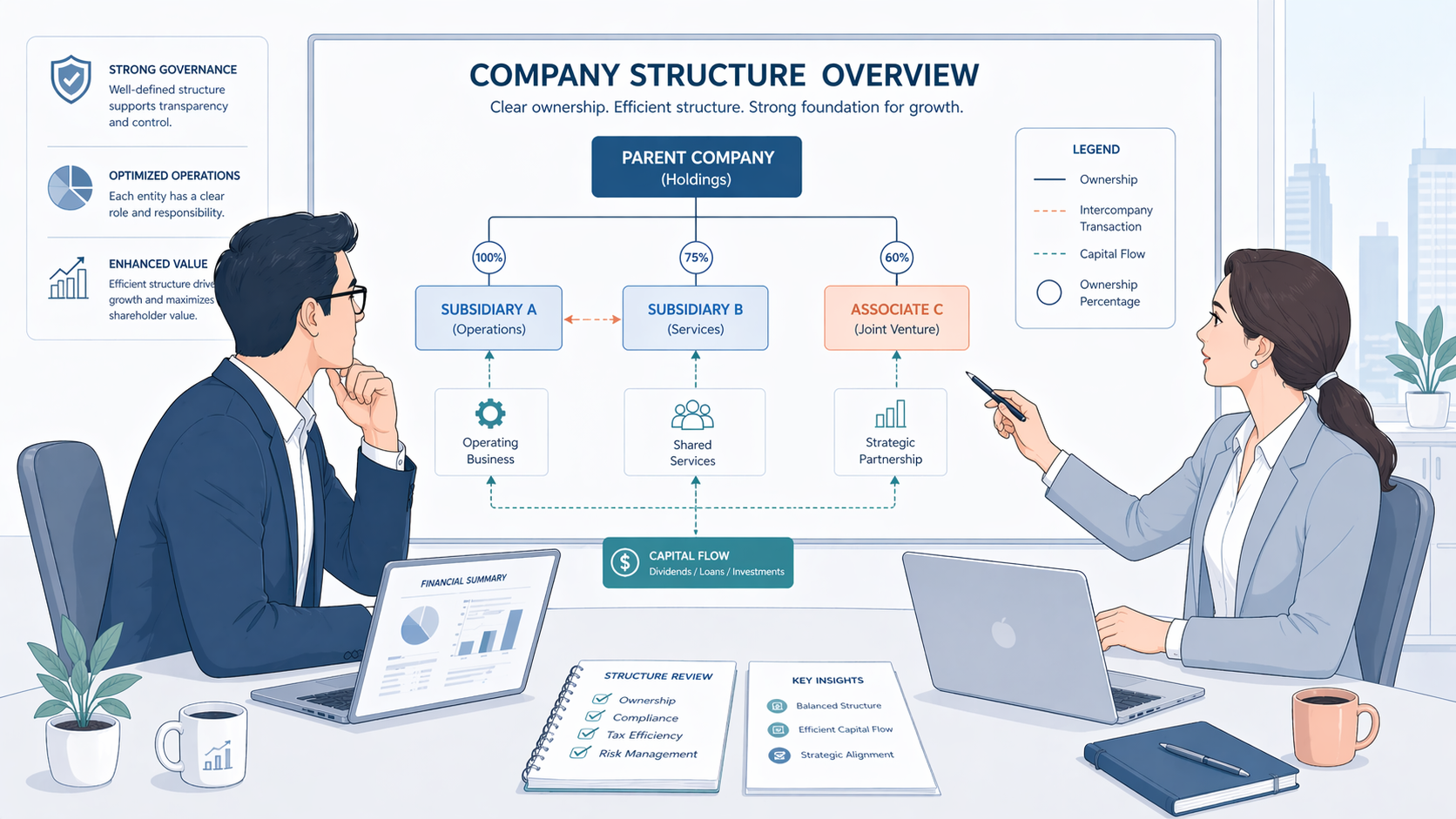
As a seller, view structuring as packaging your business for premium pricing. Start with entity choice: sole proprietorships or partnerships limit appeal due to personal liability risks. Limited liability companies or joint-stock setups offer cleaner transfers.
Ownership clarity is paramount. Multiple shareholders with drag-along rights mismatches can stall deals. Consolidate shares pre-sale to streamline approvals. Debt structures matter too—high leverage signals risk, while equity-heavy stacks attract PE buyers.
Tax considerations loom large. Optimizing for capital gains—such as through share transfers—requires foresight. In Vietnam, companies restructure to facilitate such moves, enhancing liquidity without punitive hits.
Operational silos, like segregated IP or subsidiaries, demand integration. One developer is raising $236 million to handle debts and boost capital, illustrating how restructuring preps for investor scrutiny. From your seat, this means auditing contracts, IP ownership, and governance docs now, not during diligence.
Ultimately, a well-structured company tells buyers: “This is turnkey.” It reduces perceived risks, speeds due diligence, and justifies higher multiples.
How investors view this issue
Buyers—strategics and financials—prioritize structure for post-deal integration. PE firms dissect capital stacks, flagging mezzanine debt or preferences that complicate waterfalls. Corporates eye synergies but balk at regulatory entanglements from messy holdings.
Tax efficiency is non-negotiable. Investors model after-tax IRRs; suboptimal structures inflate effective rates, killing deals. Share transfer taxes prompt demands for warranties or escrows.
Risk allocation hinges on clarity. Opaque intercompany transactions raise fraud flags. Divestment examples abound: conglomerates selling assets in Vietnam and Malaysia to raise billions, or offloading acquired units from global giants, show buyers favor carved-out, standalone entities.
Scalability matters. Record expansions in retail signal robust ops, but only if governance supports growth. Investors apply discounts for founder-centric boards or unproven management.
In essence, they seek frictionless ownership transfer. Clean structures mean faster closings, lower advisory fees, and unhindered value creation.
Common seller mistakes
Sellers often underestimate structuring’s impact. Here’s a rundown of pitfalls:
- Neglecting ownership cleanup: Uneven share classes or missing transfer docs lead to consents delays.
- Ignoring tax traps: Failing to model capital gains on transfers results in surprises.
- Overlooking debt hierarchies: Subordinated loans confuse valuations.
- Fragmented assets: IP in personal names or side entities requires costly migrations.
- Governance gaps: Weak bylaws expose to minority vetoes.
One frequent error: rushing without holistic review. Read more on common mistakes first-time sellers make. These amplify in carve-outs, where risks like shared services multiply.
Global frameworks like BEPS Pillar II add M&A complexities, demanding compliant structures. Avoid by benchmarking against peers restructuring for exits.
Practical checklist or framework for business owners
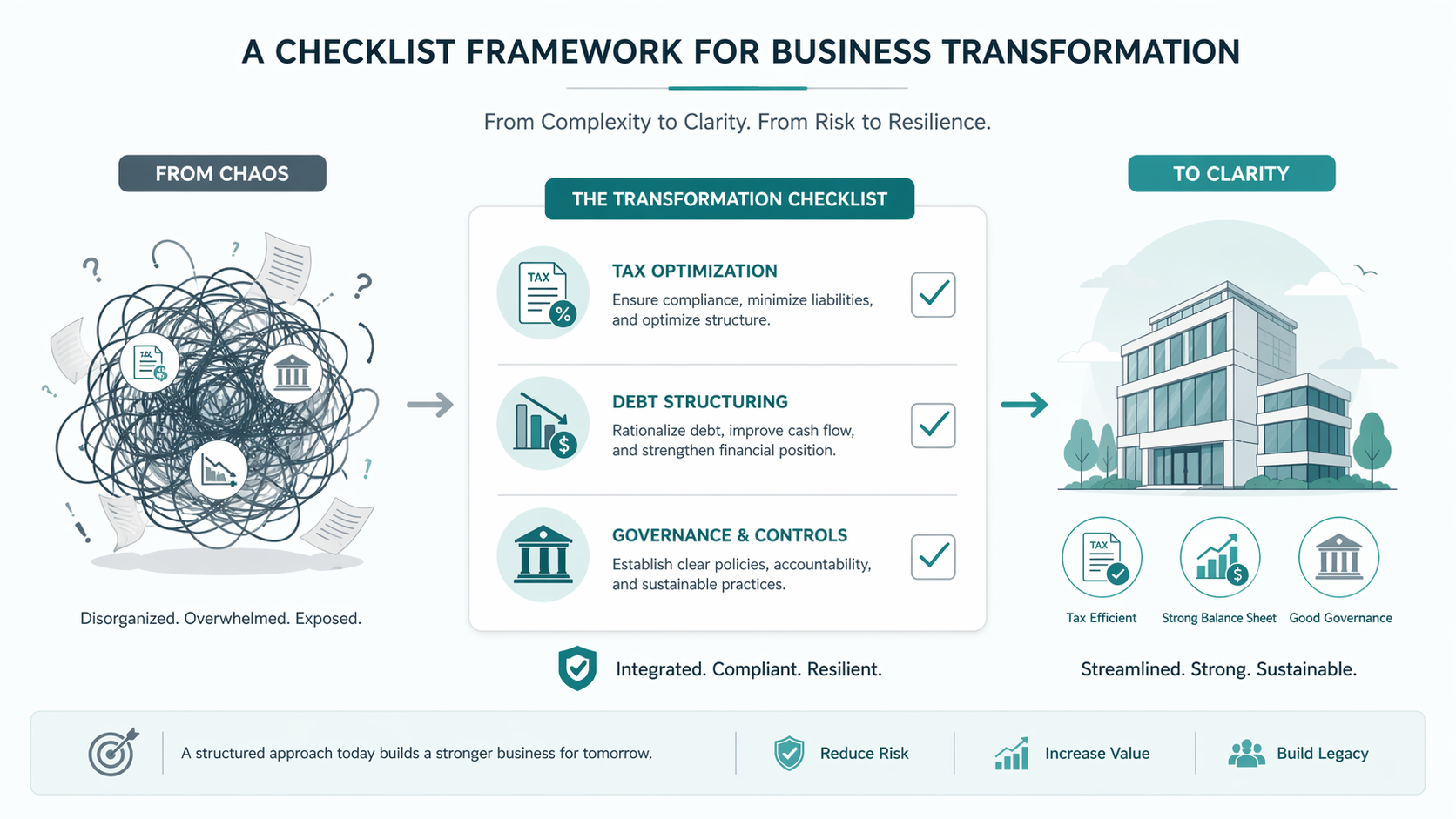
Here’s a step-by-step framework to structure effectively:
- Assess current setup: Map entities, ownership, debts. Identify red flags like cross-guarantees.
- Optimize ownership: Consolidate shares; implement tag-along/drag-along.
- Refine capital structure: Refinance high-cost debt; model tax-efficient transfers.
- Secure assets: Transfer IP, contracts to target entity.
- Strengthen governance: Update charters, board compositions.
- Tax planning: Simulate share sale gains; consult locals on Vietnam specifics.
- Operational carve-out: Ring-fence non-core for potential divestments.
- Document everything: Virtual data room ready.
For deeper prep, check our 12-month preparation checklist. Also, prepare financials as outlined here.
Adapt for carve-outs: separate IT, HR shared services early.
When should sellers start preparing
Begin 12-24 months pre-marketing. Early allows organic fixes, like gradual debt paydown. If eyeing sale amid growth—like retail chains hitting records—structure supports momentum.
Restructuring waves, such as debt workouts raising $236 million, take quarters. Tax restructurings need regulatory nods.
Triggers: Approaching peak multiples, personal milestones, or market shifts. In buoyant Vietnam M&A, time for inbound interest.
Pro tip: Link to when is the right time to sell.
How this connects to the overall business sale journey
Structuring threads through the M&A lifecycle. Pre-sale: Builds data room integrity. Due diligence: Minimizes queries. Negotiation: Bolsters warranties. Closing: Ensures seamless transfer.
It ties to readiness phases—legal, financial, team building. See legal preparation essentials and building a management team.
Post-sale, clean structure eases earn-outs. In Vietnam’s restructuring trend, it’s key to exits.
Ready to assess your structure? Download our seller readiness checklist.
Start your M&A journey today. Get an initial assessment.
Need expert guidance? Book a confidential call with our team.